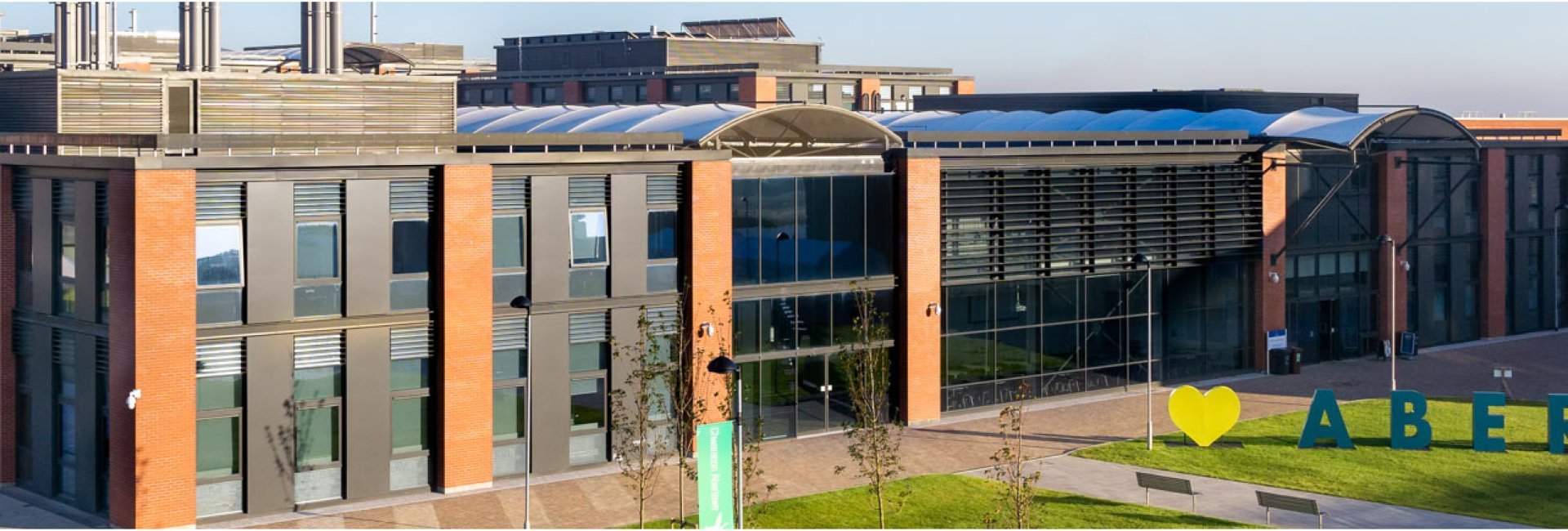
Undergraduate On-Campus Open Day at Swansea University - Singleton Park Campus and Bay Campus - 13 June 2026
13 Jun 2026, 07:30
Swansea

Swansea University’s BSc in Rehabilitation Engineering will give you the expert training you need to begin a rewarding and highly skilled career in the healthcare profession as a rehabilitation engineer.
You will learn about the application of engineering principles to develop technological solutions and devices to assist individuals with disabilities and long-term conditions. You will combine in-depth academic work with practical clinical and technological skills in a range of specialised healthcare settings.
Over the three years you will learn about the design, construction and testing of a range of assistive technologies, including wheelchairs, artificial limbs, robotic aids and specialist seating. Using pressure mapping systems, goniometers, inclinometer, joystick controllers and programmers you will learn to build standard and custom-made devices, as well as learning about their importance towards revolutionising patient care and independence.
Rehabilitation engineering is an exciting, challenging and continually evolving field requiring a high level of responsibility and technical skill. As a rehabilitation engineer, you will work as part of a rehabilitation team including prosthetics and orthotists, physiotherapists, occupational therapists, as well as patients and clinics in acute and community services. As your career progresses, you will have excellent opportunities for advanced practice and further study to Masters and doctoral level.
Our state-of-the-art facilities allow you to learn and practice your clinical and technical skills in our simulated clinical practice rooms. Equipped with the latest technology and equipment, each room offers a unique environment that replicates a wide range of realistic clinical settings. The rooms provide an excellent opportunity for you to put theory into practice and gain confidence and experience in clinical environments.
You will spend around half of your course on clinical placements giving you greater insight into the skills you have learnt with our expert clinical teaching team. Clinical Placements will teach you how to present to patients and will embed your learning into your practise.
The course is accredited by all the major regulatory bodies including the National School of Healthcare and Science. You will also benefit from our strong links with the NHS and local health boards, with our nearest hospital being next to our Singleton Park campus. Many of our academic staff in Health Sciences are also practising clinicians, providing invaluable professional insight and expertise.
You will also be joining a Top 25 UK University (Guardian University Guide 2024)
In Year 1, you will typically study areas including:
· Scientific Basis of Engineering
· Professional Practice 1
· Anatomy and Physiology Healthcare Science
· Pathophysiology for Healthcare Science
· Basics of Mathematics and Physics for Healthcare Science
· Informatics and Statistics
In Year 2, you will typically study areas including:
· Professional Practice 2
· Research Methods and Statistics
· Instrumentation Signal Processing and Imaging
· Healthcare Science Work Based Placement 1 (Rehabilitation Engineering)
· Medical Equipment Lifecycle
· Fluid Mechanics, Biomechanics and Materials
· Innovation and Medical Devices
In Year 3, you will typically study areas including:
· Rehabilitation Engineering in the Clinical Environment
· Science and Principles Supporting Rehabilitation Engineering
· Professional Practice 3
· Healthcare Science Research Project
· Healthcare Science Work Based Placement 2 (Rehabilitation Engineering)
You will be assessed via a variety of methods throughout the three years of study. You will complete written examinations, written assignments, presentations, case-based discussions and assessments of clinical competency. In year three, you will have the chance to complete a research project in your chosen healthcare science programme. The results of this will be presented as part of your dissertation and you will be involved in a peer-assessment scientific poster presentation.
The following entry points are available for this course:
Discover what it's like to study Healthcare Science (Rehabilitation Engineering) at Swansea University: insights on the course, making friends, personal statement tips, uni prep, and recommended books, podcasts, and videos.

At least one in a science subject (biology, physics, chemistry, mathematics or engineering).
Distinction and Merit profile against the rules of combination. We do not accept Access to Healthcare or Access to Healthcare and Nursing.
Swansea University accepts the Advanced Skills Baccalaureate Wales as fully equivalent to x1 A-Level.
345
B and either BB at A level (including Maths or Physics) or DD at BTEC
GCSE requirements: Minimum five grade A*-C/9-4 GCSE passes including Welsh/English language, Maths and Science.
If you are offered a place you will also need: - A Disclosure and Barring Service (DBS) check, or approved equivalent - NHS Wales Values and Standards of Behaviour. All applicants will be required to have a satisfactory enhanced disclosure and barring service (DBS) check and occupational health check. Any concerns arising from these may be considered at the School of Health and Social Care’s Professional Suitability and Fitness to Practice Panel and may result in admission to the programme being withdrawn.
This section shows the range of grades that students who received offers were previously accepted on to this course with (learn more).
It is designed to support your research but does not guarantee whether you will or won't get a place.
Admissions teams consider various factors, including interviews, subject requirements, and entrance tests. Check all course entry requirements for eligibility.
We are unable to show previous accepted grades for this course. This could be because the course is new, it's a postgraduate course, there isn't enough historical data, or the provider has opted out of sharing their entry grades data for this course - learn more.
No fee information has been provided for this course
Tuition fee status depends on a number of criteria and varies according to where in the UK you will study. For further guidance on the criteria for home or overseas tuition fees, please refer to the UKCISA website.
Please refer to the Swansea course pages for tuition fee information.
This course is funded by the NHS Wales Bursary Scheme meaning students have their tuition fees covered providing they commit to work in NHS Wales for 2 years following graduation.
Email:chhspostgrad@swansea.ac.uk
Phone:01792 518672
Singleton Park
Swansea
SA2 8PP
At Swansea University