Skip navigation
You are viewing our beta course page.

Sports Therapy

Course details
  • BSc (Hons)
  • 3 Years
  • Full-time
  • 09/2026
  • Undergraduate
Course location
High Wycombe Campus

Course summary

Turn your passion for sport and recovery into a rewarding career. Our Society of Sport Therapists (SST) accredited BSc (Hons) Sports Therapy degree gives you the hands-on experience, knowledge, and industry connections to thrive in the world of sports rehabilitation. Whether you're treating professional athletes or supporting everyday clients, you’ll graduate ready to make an impact.

Why study BSc Sports Therapy?
Real-world experience in our on-campus Sports Therapy Clinic
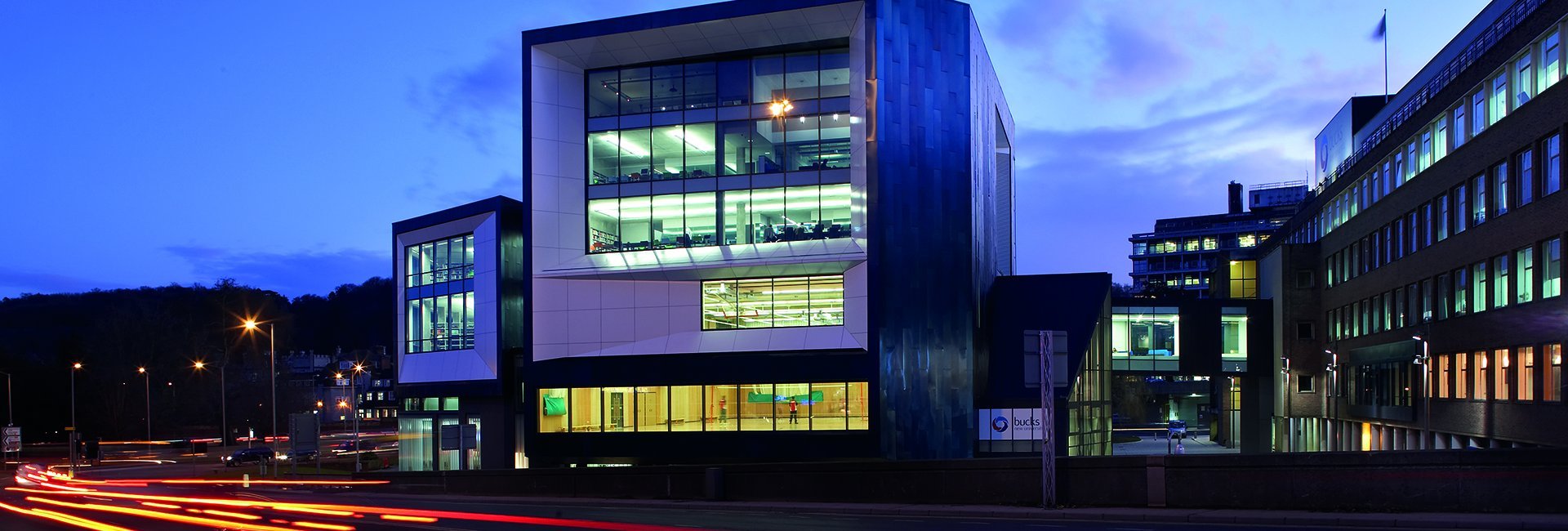
We’ve invested in state-of-the-art clinical facilities on our High Wycombe Campus, including our student-led Sports and Wellbeing Clinic.
You’ll be able to:

  • work with real clients from the local community - including the public, professional athletes, and sports teams – in a clinic setting

  • gain valuable experience for your CV

  • learn alongside course mates in a supportive, professional environment

  • guided by expert and supportive lecturers with clinical experience on hand to answer questions and help you grow in confidence

We also have a Human Performance Lab, a facility designed to test and research the human body. It has been designed to enhance athletes performance through data analysis and can be used to develop the most effective strength and conditioning regime for different body types.

  • Industry links and placement opportunities that prepare you for work*

As part of your course, you’ll complete placements in sports therapy settings - putting theory into practice and building your confidence with clients.

You’ll benefit from our on-campus Sports and Wellbeing teaching clinic. We also maintain strong links with:

  • Stoke Mandeville Hospital – birthplace of the Paralympics

  • Wycombe Hospital

  • Bisham Abbey National Sports Centre – home to top-level sport

  • Wycombe Wanderers FC

  • Norwich City FC

  • Reading Ladies FC

  • The FA

You may also have opportunities to support major events, such as the London Marathon.

What will I study?
On our Society of Sports Therapists (SST) accredited degree, we'll help you gain the skills and experience you need to become a successful sports therapist.

We’ll guide you through the entire process of sports therapy, including injury prevention, assessment, therapeutic treatments, and exercise rehabilitation, preparing you to return clients to fitness and performance safely and effectively.

You’ll cover areas such as:

  • human anatomy, biomechanics, and physiology

  • injury assessment, treatment techniques, and rehabilitation

  • therapeutic interventions and hands-on clinical skills

  • exercise science and recovery programming.

We’ll also help you develop the skills to work in private practice or as a freelance sports therapist, including business awareness and client communication.

Career Prospects
We’re here to support you into a successful and fulfilling career. After graduating, you’ll be qualified to work in a range of roles, including:

  • sports therapist in professional teams, clubs or private clinics

  • exercise rehabilitation specialist

  • injury prevention adviser

  • physiotherapy assistant

You’ll also have gained the training you need to work in professional sport therapy context within football and rugby.

Alternatively, you may choose to further your studies at postgraduate level in areas, such as:

  • sports medicine

  • physiotherapy

  • sports science and performance analysis.

With the practical experience, confidence, and clinical skills gained on our course, you’ll be well prepared for your future career in the rewarding sports therapy profession.

Modules

Year one
Human Anatomy and Movement Analysis
Health and Human Physiology
Fundamentals Skills in Sports Therapy Practice
Foundations of Sports Therapy
Introduction to Research in Sport
Principles of Biomechanics in Sport

Year two
Research Methods
Applied Exercise Physiology
Musculoskeletal Injury Rehabilitation
Principles of Sports Therapy 1
Principles of Sports Therapy 2
Principles of Sports Therapy 3

Year three
Extended Independent Work
Professional Practice
Advanced Sports Therapy
Special Populations in Sports Therapy Practice

Assessment method

Blending academic theory with practical experience, we keep your learning relevant and engaging.

We use a mix of assessments that reflect industry expectations, including:

practical assessments
presentations
vivas
reports/essays
case studies
work-related assessments with evidence of achievements in practice.

Our approach ensures you graduate confident, competent, and job-ready.

Professional bodies

Professionally accredited courses provide industry-wide recognition of the quality of your qualification.

  • The Society of Sports Therapists

How to apply

Apply by
14 January

This is the deadline for applications to be completed and sent for this course. If the university or college still has places available you can apply after this date, but your application is not guaranteed to be considered.

Application codes

Course code:
67V9
Institution code:
B94
Campus name:
High Wycombe Campus
Campus Code:
-

Points of entry

The following entry points are available for this course:

  • Year 1
  • Year 2
  • Year 3

International applicants

Visit bnu.ac.uk/international to find out more about applying to BNU as an international student.

Entry requirements

Qualification requirements

UCAS Tariff - 112 - 136 points

A typical offer will require a UCAS Tariff score between 112- 136. A minimum of two full A-levels (or equivalent) is required. Every application is considered on an individual basis. Qualifications will also need to include a pass in one of the following subjects; Physical Education, Sports Studies or Science (Human Biology or similar).

A level - BCC - ABB

Pearson BTEC Level 3 National Extended Diploma (first teaching from September 2016) - MMM - DDM

GCSE/National 4/National 5

GCSE Grade 4 or above in Maths and English are required. We will consider equivalent qualifications.

Find out more about qualification requirements for this course.

Additional entry requirements

Criminal records declaration (DBS/Disclosure Scotland)

English language requirements

TestGradeAdditional details
IELTS (Academic)6We require an IELTS score of 6.0 (with no element lower that 5.5) or a recognised equivalent.
If English is not your first language or if you have studied in a non-majority English-speaking country, then you will typically be required to demonstrate your English language ability (speaking, listening, reading & writing) by way of a test such as IELTS.

BNU English Language Requirements https://www.bnu.ac.uk/study/general-entry-requirements

Contextual admissions

Universities and colleges consider more than grades when assessing applications and may make offers based on a range of criteria. Learn more about contextual offers.

We aim to cultivate an environment where individuality, diversity, and academic excellence thrive.
Our decision-making process is not just about grades; we assess the entire application, including personal statements, relevant experience and where appropriate portfolios. Within our Contextual Offer Scheme, we strive to embrace students whose educational and social backgrounds may have influenced their academic journey.
This underpins how we champion an inclusive community that transforms lives.

Historical entry grades data BETA

This section shows the range of grades students (with UK A-Levels or Pearson BTEC Level 3 National Extended Diplomas) who received offers were previously accepted with (learn more). It is designed to support your research but does not guarantee whether you will or won't get a place. Admissions teams consider various factors, including interviews, subject requirements, and entrance tests. Check all course entry requirements for eligibility.

Not enough data available

We are unable to show previous accepted grades for this course. This could be because the course is new, it's a postgraduate course, there isn't enough historical data, or the provider has opted out of sharing their entry grades data for this course - learn more.

Student Outcomes

Operated by the Office for Students

80 Employment after 15 months (Most common jobs)

100 Go onto work and study

The number of student respondents and response rates can be important in interpreting the data – it is important to note your experience may be different from theirs. This data will be based on the subject area rather than the specific course. Read more about this data on the Discover Uni website.

Fees and funding

Tuition fees

LocationFeeYear
England£9790Year 1
Northern Ireland£9790Year 1
Scotland£9790Year 1
Wales£9790Year 1
Channel Islands£9790Year 1
Republic of Ireland£9790Year 1
EU£15910Year 1
International£15910Year 1

Tuition fee status depends on a number of criteria and varies according to where in the UK you will study. For further guidance on the criteria for home or overseas tuition fees, please refer to the UKCISA website.

Additional fee information

Buckinghamshire New University tuition fees cover the cost of instruction, assessment, and core academic materials. However, additional costs may be incurred for course-related items or requirements, such as, but not limited to:

  • Text books and supplementary reading materials
  • Specialised equipment or resources required for specific courses
  • Field trips, placements, or external activities
  • Printing, photocopying, and binding
  • Accommodation, travel, and living expenses

Additional costs will vary by course. It is your responsibility as a student to budget for any additional expenses associated with your studies.

For further details on what is included in your tuition fees, please check bnu.ac.uk/fees-and-funding

Sponsorship information

There are several ways you can fund your studies, including sponsorship and student loans. You may be able to use ELCAS credits for some of our courses. We also have scholarships and bursaries to help support our students.

Like this page