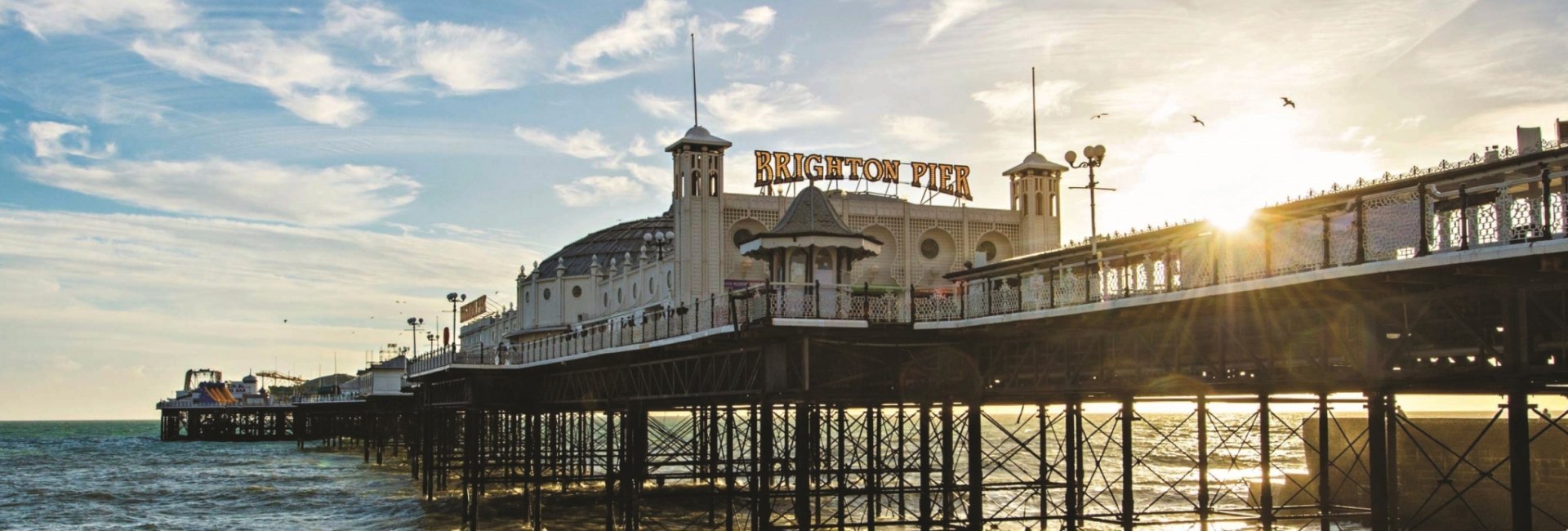
University of Brighton open day - City campus
6 Jun 2026, 08:30
Brighton

Immerse yourself in the world of fashion and design history with our exciting course, exploring the significance of what we wear and use, from designer items to everyday objects.
On our Fashion and Design History degree you'll learn from an expert teaching team about the history and current trends of clothing and design, engaging with diverse images, objects, and texts. You will uncover the connections between fashion, design, and social, political, and cultural identities.
With access to exclusive resources like our Teaching Collection and renowned Design Archives, you will become a hands-on researcher, as well as developing valuable skills in critical thinking and communication.
Our students graduate ready for rewarding careers in fashion, museums, heritage and countless other industries.
TOP REASONS TO CHOOSE THIS COURSE
Staff include academics who develop leading research as part of the Centre for Design History on the museums and heritage sector
Opportunity to take a second-year placement
You will work with important local collections at Brighton Museum and Art Gallery and Worthing Museum, and there will be opportunities for field trips beyond Brighton.
At the end of your degree, you will exhibit your dissertation and accompanying poster in the annual graduate show.
As a university we offer excellent resources including the Design lab, a space housing our extensive collection of historic dress and textiles, the Design Archives, St Peters House Special Collection and Screen Archive South East.
Off-site study visits and hands-on sessions.
Join a vibrant community, featuring visiting researchers and practitioners, reading groups, lectures and workshops.
The specialist course team have research expertise on the Middle East, North Africa, South and East Asia, North America and Britain.
Year 1
Local and Global: Concepts and Ideas in Cross-cultural Histories of Art and Design, Fashion and Visual Culture
Local and Global: Themes and Topics in Cross-cultural Histories of Art and Design, Fashion and Visual Culture
Art and Design History in Brighton: Places and Processes
Artist, Designer and the Prosumer: Theories and Debates
Artist, Designer and the Prosumer: Approaches and Practices
Material Matters: Histories of Production, Consumption and Sustainability
Year 2
Reading Fashion and Design
Spaces and Bodies
Constructing Histories: Research Methods and Professional Practice in History of Art and Design
The Cultural Politics of Fashion and Design
Options*
Reconstruct, Recreate, Remake
A Trip to Europe: Visual Culture, Art and Design in a European City
Understanding Exhibitions and Creating Displays
Words and Pictures, Texts and Textiles
Museums, Material Culture, Representation
I Click Therefore I Am: Self and Selfies
Modernism in Asia
Cold War Cultures: Art, Design and Fashion 1946–1989
Behind the Scenes: Placements in Arts and Heritage
Staging and Screening Fashion and Design
Optional Placement Year
Final year
Networks and Sustainability in Fashion and Design
Professional Paths in Art and Design History
Communicating Research
Dissertation in History of Art and Design
Options*
Participation, Performance and Politics
The Past in the Present: Vintage, Retro, Revival
Fashion Contexts
Contemporary Art and Design in Asia
Making and Representing the Modern Home: Art, Design, Domesticity and Discourse
*Option modules are indicative and may change, depending on timetabling and staff availability.
This is the equal consideration deadline. You can still apply after this date, but your application may not receive guaranteed consideration.

University of Brighton has participated in the Teaching Excellence Framework. These ratings were awarded in 2023, for four years.
See why these ratings were awarded
What does this TEF outcome mean?
The following entry points are available for this course:
Pass Access to HE Diploma with 60 credits, to include at least 45 credits at Level 3. Access courses in Humanities, History or Politics are preferred.
Must include three subjects at Higher Level.
Or equivalent combination of grades.,
| Test | Grade | Additional details |
|---|---|---|
| IELTS (Academic) | 6 | 6.0 overall with a minimum of 5.5. in each element, or equivalent English Language qualification. |
Review our English Language requirementshttps://www.brighton.ac.uk/international/applying-here/how-to-apply/english-language-requirements/index.aspx
At Brighton we recognise that not everyone's background provides the same advantages, and we know that grades are not the only indicator of potential.
If you meet our contextual admissions criteria we will make you an offer which is at least 16 UCAS points lower than our standard offer. You may also be eligible for additional financial and practical support from us through the Brighton Boost cost of living support package.
This section shows the range of grades that students who received offers were previously accepted on to this course with (learn more).
It is designed to support your research but does not guarantee whether you will or won't get a place.
Admissions teams consider various factors, including interviews, subject requirements, and entrance tests. Check all course entry requirements for eligibility.
We are unable to show previous accepted grades for this course. This could be because the course is new, it's a postgraduate course, there isn't enough historical data, or the provider has opted out of sharing their entry grades data for this course - learn more.
| Location | Fee | Year |
|---|
Tuition fee status depends on a number of criteria and varies according to where in the UK you will study. For further guidance on the criteria for home or overseas tuition fees, please refer to the UKCISA website.
Fees are payable each year and will increase annually in line with inflation.
Tuition fees for full-time UK / Home undergraduate students in academic year 2026–27
Annual course fees:
Honours degree £9,790
Placement year £1,958
Integrated foundation year (except the School of Business and Law) £9,790
Integrated foundation year in the School of Business and Law* £5,760*
*The £5,760 fee is for the foundation year only. Subsequent years are charged at the regulated undergraduate fee.
Many courses include the option of a salaried placement year. Tuition fees for a placement year are charged at a lower rate.
Regulated fees:
Tuition fees for UK / Home students on undergraduate courses in England are set by the UK government and are known as regulated fees. From academic year 2026–27 onwards, regulated fees will increase annually in line with forecast inflation. The regulated fee will be £9,790 in academic year 2026–27 and £10,050 in academic year 2027–28 (subject to parliamentary approval).
Standard tuition fees for full-time international students in academic year 2026–27:
Classroom-based courses £17,796–19,692
Laboratory or studio-based courses £17,796–19,692
Placement year £1,958
Phone:01273 644644
Mithras House
Lewes Road
Brighton
BN2 4AT
At University of Brighton