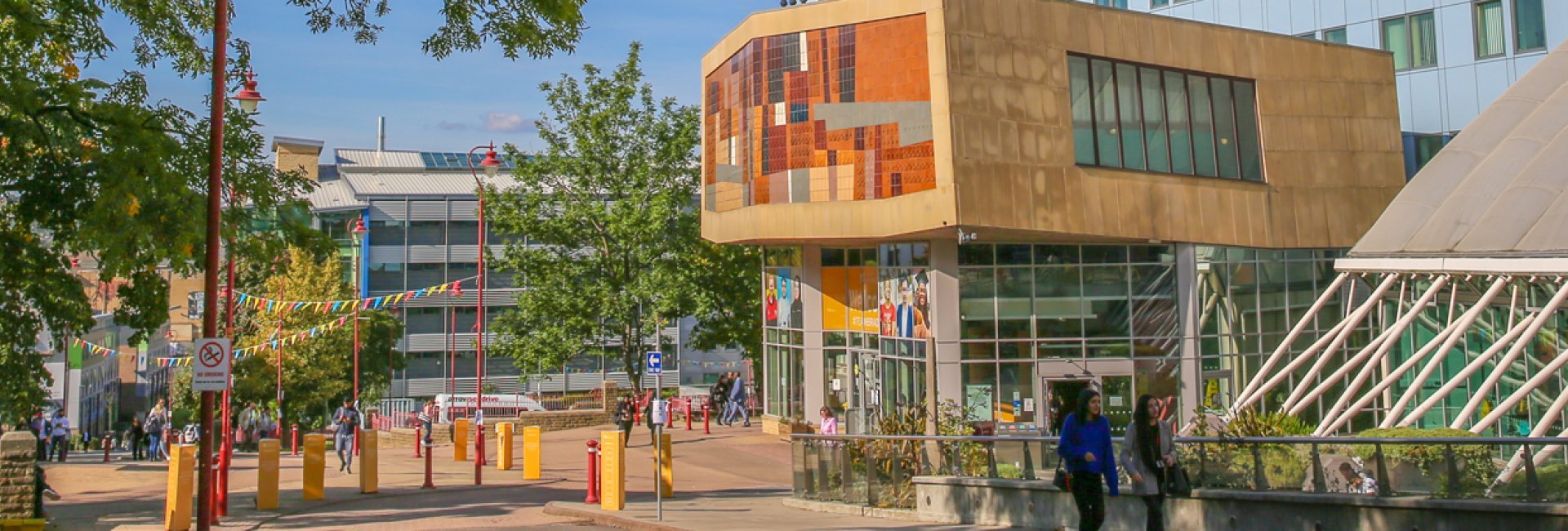
University of Bradford - Undergraduate Open Day
27 Jun 2026, 08:00
Bradford

If you are interested in how emerging technologies are reshaping global politics, security and governance, our MA International Relations and Emerging Technologies will equip you with the knowledge and skills to understand and respond to these changes.
This interdisciplinary programme builds on international relations and peace studies, exploring how technologies such as artificial intelligence, space systems and other emerging innovations are influencing global power, conflict and cooperation. You will examine how states, organisations and other actors engage with these technologies, and the implications for international security, human rights and global governance.
You will develop a strong understanding of international relations alongside the ability to engage critically with technological change. The programme introduces key concepts in areas such as technology governance, ethics and responsible innovation, while building your confidence in analysing complex global issues.
As you progress, you will explore how emerging technologies intersect with issues such as security, conflict, development and global inequality. You will develop the skills to assess risks, evaluate policy responses and understand the wider societal and political implications of technological change.
The programme prepares you for careers in international policy, governance, security and development, as well as further postgraduate study or research in international relations, peace studies and related fields.
The programme will deploy a wide range of teaching, learning and assessment methods to enable you to understand and develop skills for engagement and employment with important policy and practitioner communities (International organisations, governments, NGOs, business associations, etc). You will have opportunities to engage through simulation exercises and training workshops, as well as facilitated contacts with practitioners.
Applicants will normally hold an undergraduate degree at minimum of a 2:2. Consideration may be given to applicants with relevant professional experience.
| Test | Grade | Additional details |
|---|---|---|
| IELTS (Academic) | 6 | International applicants will be required to demonstrate English language proficiency, typically IELTS 6.0 overall (no sub-test below 5.5), or equivalent. |
| Location | Fee | Year |
|---|
* This is a provisional fee and subject to change.
Tuition fee status depends on a number of criteria and varies according to where in the UK you will study. For further guidance on the criteria for home or overseas tuition fees, please refer to the UKCISA website.
No additional fees or cost information has been supplied for this course, please contact the provider directly.
Email:admissionsmls@bradford.ac.uk
Phone:01274 236088
Richmond Road
Bradford
BD7 1DP
At University of Bradford