Course contact details
Admissions Officer
Email:admissions@cityandguildsartschool.ac.uk
Phone:020 7091 1683
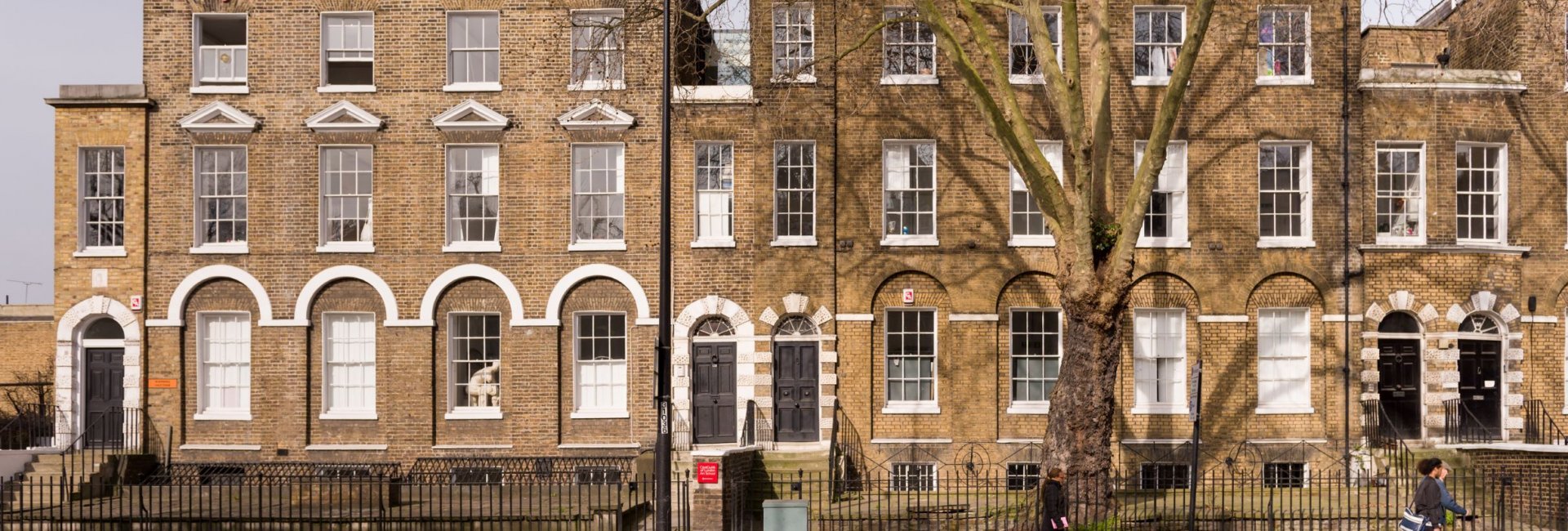
City & Guilds of London Art School
124 Kennington Park Road
Lambeth
SE11 4DJ

The Graduate Diploma Arts: Conservation provides an opportunity for you to build on your existing skills and knowledge and gain the skill-set and knowledge-base required to undertake our MA Conservation. It’s ideal if you are moving from another specialist area to the conservation of historic objects or books and paper, or have had a significant gap since your previous studies, and it is equivalent to the final year of our BA (Hons) Conservation (Level 6).
On the course, your learning will be supported in a number of ways through lectures, tutorials, seminars, field trips, workshops, demonstrations and group critiques as well as individual supervision of projects. You will be encouraged and supported to develop your research and practice skills and to develop communication skills to articulate your ideas and document your work through writing, verbal presentations, and visual recording.
When completed, this Graduate Diploma Arts course will equip you with the skills and confidence to pursue postgraduate study through our MA Conservation.
The Graduate Diploma Arts: Conservation is delivered full-time across one academic year or part-time across two academic years. If you are not able to complete the course and need to leave after successfully completing the first unit, you may be awarded a Graduate Certificate.
The Graduate Diploma Arts: Conservation is divided into two parts. The first part focuses on skills development and will give you the opportunity to gather the skills and experience necessary to complement your pre-existing skill-set, supporting you to access postgraduate level study on our MA Conservation course. The second part centres around developing your portfolio, enabling you to synthesise pre-existing and newly acquired skills, knowledge and understanding.
UNIT ONE – SKILLS DEVELOPMENT
Working with our specialist tutors to analyse your existing skills and knowledge and identify areas that require development, you will form an agreed study plan. Your study plan will include a range of projects from our BA programme combined with your specific tasks and goals. Tutorials provide opportunities to reflect on and review your progress towards your goals. Throughout your learning programme you will maintain a Personal Development Archive, which will record and reflect upon your research findings and skills development. You will present your work as a project portfolio for assessment and your work will be assessed as equivalent to Level 6 or third year BA.
Your programme will be delivered by specialist tutors from our Conservation Department and you will learn alongside students studying on the BA(Hons) Conservation courses, specialising in either 3D objects made from stone, wood and the treatment of decorative surfaces, or books and paper. You’ll learn through a range of methods including workshops, seminars, lectures, 1 to 1 tutorials, group critiques, self-directed study and work on live projects.
The standard assessment requirements for this unit will include a portfolio of project work, your Personal Development Archive and an illustrated self-evaluation report of 500-750 words.
UNIT TWO – PORTFOLIO DEVELOPMENT
Following feedback and discussion of the outcomes of the assessment of the Skills Development unit, you will propose the next phase of your study plan by selecting relevant taught sessions and projects from the BA courses. Whilst being supported by regular meetings with your tutor, this unit requires you to take increasing responsibility for the direction of your work.
The main focus of the unit is to enable you to develop a strong portfolio that evidences the range and depth of the knowledge and skills you have acquired and/or further developed through the course. Your project work should therefore be sufficiently ambitious to ensure that you can demonstrate the necessary depth of understanding and technical proficiency required to tackle the challenges of postgraduate study in the conservation.
Select a course option at the top of this page to view entry requirement information.
Choose a specific option to see funding information.
Course optionsEmail:admissions@cityandguildsartschool.ac.uk
Phone:020 7091 1683
124 Kennington Park Road
Lambeth
SE11 4DJ
At City & Guilds of London Art School