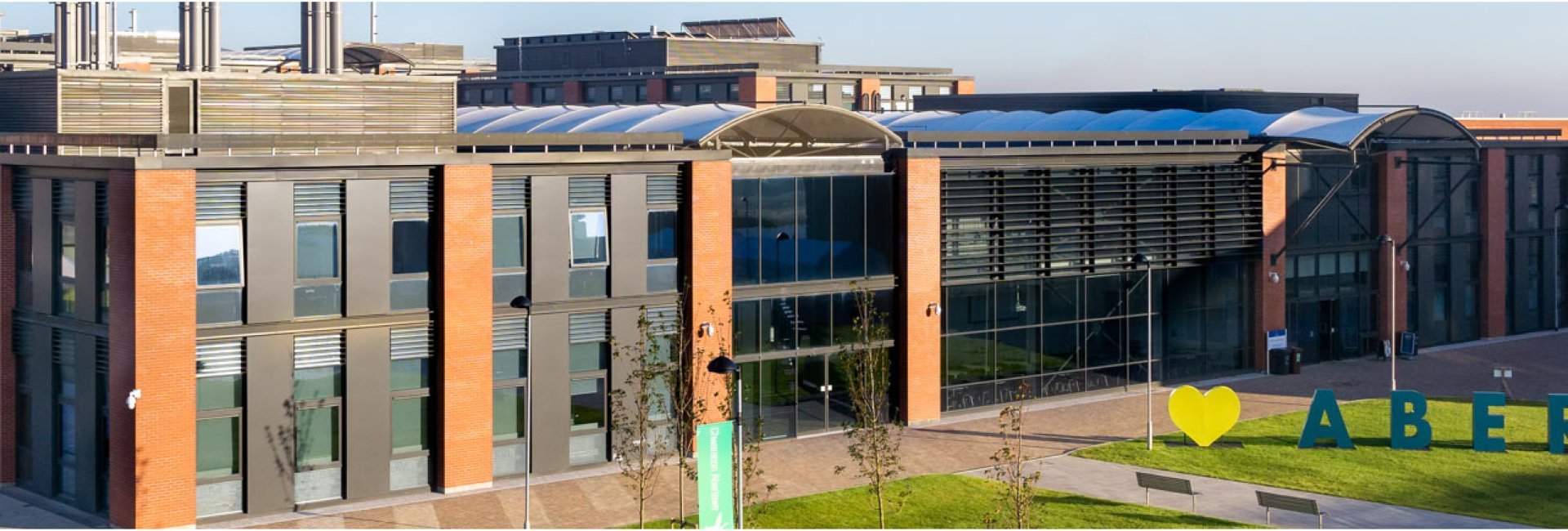
Undergraduate On-Campus Open Day at Swansea University - Singleton Park Campus and Bay Campus - 13 June 2026
13 Jun 2026, 07:30
Swansea

Studying a Philosophy, Politics and Economics degree allows you to explore global power and influence, bringing together the critical methods of understanding the social and human world we inhabit. You will develop a broad perspective encompassing moral and political philosophy, ethics, justice and society, British politics and public policy, political economy and globalisation, as well as econometrics and European economic migration.
Teaching is delivered by specialist academics and members of parliament, while the competitive option of an internship at the National Assembly for Wales in Cardiff may see you working closely with assembly ministers.
This intellectually demanding degree helps to provide graduates with a wealth of inspiring career opportunities thanks to numerous transferable skills which are highly valued by employers.
Based on Singleton Campus, you will benefit from being part of a lively and diverse teaching and research environment.
Economics at Swansea is ranked:
Top 20 for Student Satisfaction (Complete University Guide 2025)
Politics at Swansea is ranked:
4th in the UK for Student Satisfaction (Complete University Guide 2025)
8th in the UK for Academic Support (NSS 2024*)
Philosophy at Swansea is ranked:
1st in the UK for Teaching on my Course (NSS 2024)
1st in the UK for Student Voice (NSS 2024)
Our unique internship scheme with the National Assembly for Wales gives you the valuable opportunity to spend a semester working one day a week for an Assembly Member.
We are one of just a handful of universities to offer modules in British Parliamentary Studies, taught by our specialist academic staff supported with sessions delivered by members of parliament and the House of Lords, and staff from the House of Commons.
During your third year, you will have the opportunity to study abroad for a year at one of our many partner institutions across the world, enhancing your student experience and boosting your career prospects. Later studies are shaped by modules around your specific interests and a substantial dissertation project. A number of work placement programmes are available to help you prepare for graduate life.
Students typically develop oral and writing skills through presenting ideas in different formats, supported by strong research and rigorous analysis. Assessment is conducted through essays, coursework, examinations, presentations and a dissertation.
Teaching is informed by a vibrant and supportive research environment that unites academics, postgraduates and visiting scholars around shared subject matter and international impact.
"Studying PPE at Swansea has been an amazing experience. The subject matter is diverse and interesting and whilst the workload can be heavy at times, the different perspective each subject teaches is invaluable. The three subjects interact and combine to give a deeper and more complete understanding of issues. The National Assembly internship option is unique to Swansea and absolutely priceless for any student considering a career in politics.” – Joe Wilson.
Graduates have advanced to careers in sectors such as education, politics, media and humanitarian services. Employers have included the Labour Party, PricewaterhouseCoopers and Westminster Forum Projects.
*Based on the average positivity score across questions 15 to 16 in the NSS 2024, when ranked against universities featured in the Times Good University Guide
*Based on the average positivity score across questions 1 to 4 in the NSS 2024, when ranked against universities featured in the Times Good University Guide
*Based on the average positivity score across questions 22 to 25 in the NSS 2024, when ranked against universities featured in the Times Good University Guide
Your first year of study is made up of compulsory modules covering a range of themes. Compulsory modules are studied by all students on the programme, meaning you are automatically enrolled.
Examples of compulsory modules include:
• Living Well and Doing Good – An Introduction to Ethics
• Principles of Microeconomics
• Political Philosophy
In your second and third year you will study a mixture of compulsory and choose optional modules from a vast selection.
Examples of optional modules in recent years have included:
• Philosophy and Enlightenment
• The State and Political Institutions
• Economic Development
• Politics and International Development
• The Family and Children: Ethics and Policy
Your final year will include an optional independent study project.
We offer a variety of assessment methods within our programmes. In addition to traditional examinations and essays, examples of alternative assessment include:
• Presentations
• Group Work
• Original Writing
Throughout your undergraduate Politics, Philosophy and Economics degree, you will develop excellent research and analytical skills and learn to present your ideas effectively both verbally and in writing.
The following entry points are available for this course:
If you are an International Student, please visit our International pages for more information about entry requirements: http://www.swansea.ac.uk/international/students/requirements/
Discover what it's like to study Philosophy, Politics and Economics at Swansea University: insights on the course, making friends, personal statement tips, uni prep, and recommended books, podcasts, and videos.

Access to Humanities Course
International students will also require a score of 4 at Higher Level English Language or Literature, or 5 at Standard Level English Language or Literature.
Swansea University accepts the Advanced Skills Baccalaureate Wales as fully equivalent to x1 A-Level.
Swansea University will accept the Welsh Baccalaureate - Advanced Skills Challenge Certificate as fully equivalent to one A-Level.
We recognise the EPQ as an excellent indicator of success.
If you are predicted a grade B or above in the EPQ, you will receive an offer with a one
grade reduction, to include your EPQ with a grade B.
GCSEs: English/Welsh Language Grade C
English Language Requirements at Swansea Universityhttps://www.swansea.ac.uk/admissions/english-language-requirements/
UK applicants who meet course requirements are guaranteed a conditional offer. We assess applications on individual merit. We consider making reduced offers, eg. to Care Leavers or students with extenuating circumstances. We encourage you to disclose any relevant circumstances.
The Advanced Skills Baccalaureate Wales is considered as equivalent to one full A-Level and students can take x2 A-levels alongside this. EPQ students predicted Grade B or above will receive a one-grade offer reduction.
This section shows the range of grades that students who received offers were previously accepted on to this course with (learn more).
It is designed to support your research but does not guarantee whether you will or won't get a place.
Admissions teams consider various factors, including interviews, subject requirements, and entrance tests. Check all course entry requirements for eligibility.
We are unable to show previous accepted grades for this course. This could be because the course is new, it's a postgraduate course, there isn't enough historical data, or the provider has opted out of sharing their entry grades data for this course - learn more.
No fee information has been provided for this course
Tuition fee status depends on a number of criteria and varies according to where in the UK you will study. For further guidance on the criteria for home or overseas tuition fees, please refer to the UKCISA website.
For the latest fee information, please check the individual course page on our website. Our full range of programmes are listed here: https://www.swansea.ac.uk/undergraduate/courses/
Further information on tuition fees can be found here: https://www.swansea.ac.uk/undergraduate/fees-and-funding/tuition-fees/
You may be eligible for funding to help support your study.
To find out about scholarships, bursaries and other funding opportunities that are available please visit the University's scholarships and bursaries page https://www.swansea.ac.uk/undergraduate/scholarships/
Academi Hywel Teifi at Swansea University and the Coleg Cymraeg Cenedlaethol offer a number of generous scholarships and bursaries for students who wish to study through the medium of Welsh or bilingually. For further information about the opportunities available to you, visit the Academi Hywel Teifi Scholarships and Bursaries page https://www.swansea.ac.uk/academi-hywel-teifi/learn/scholarships/
Ask us a question - undergraduate enquiries.
Email:study@swansea.ac.uk
Phone:01792 295111
Email:study@swansea.ac.uk
Phone:01792 295111
Fax: 01792 295110
Singleton Park
Swansea
SA2 8PP
At Swansea University