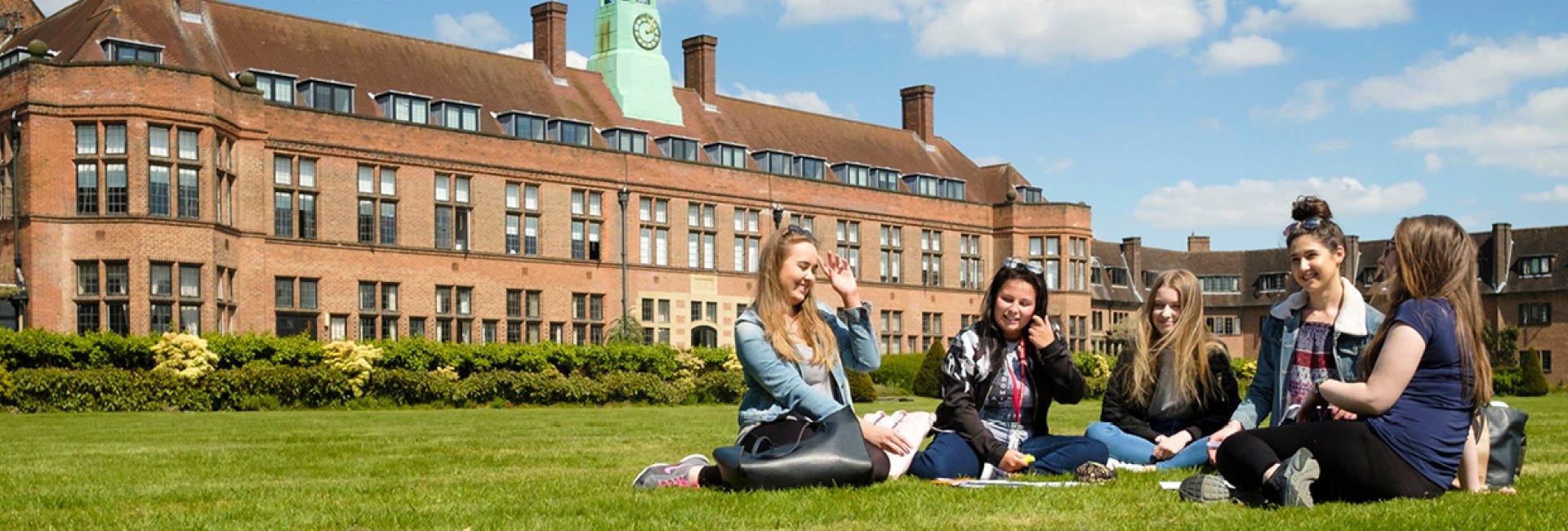
Open Day- Saturday 27th June 2026
27 Jun 2026, 08:00
Liverpool

This is a four year degree taught at our Hope Park campus. The Foundation Year aims to develop your skills so that after a year, you will be equipped with the necessary skills needed for studying the full BA Hons degree programme.
Media & Communication
If you want an exciting career in the media but also want to understand how and why the media reports and represents the world in the ways it does, studying at Hope is the next step for you. Media and Communication provides you with an opportunity to closely study and analyse the ways in which the media industry shapes and is shaped by our world. Our degrees are designed to help you become an industry leader who is equipped to take on the critical task of ensuring a more reliable, trustworthy media industry, and to work as a cross-platform media practitioner.
Our curriculum is taught by lecturers with a reputation for international research and by a practitioner who has made BAFTA and EMMY award winning programmes and animated films. Media and Communication at Liverpool Hope is underpinned by the notion of interrogating power. We believe that the media must always be held to account and has a responsibility to pursue social justice. Whether it be through journalism, digital and social media theory and applied skills, our aim is to produce graduates who will make a better world.
Food & Nutritional Sciences
Knowledge of food and nutritional science is becoming ever more vital, particularly given the increasing awareness of foods role in important issues such as health and disease and environmental sustainability. Consequently, individuals with expertise in these areas will play a key role in a diverse and wide range of professions, such as developing the safe, sustainable, and healthy foods of the future, creating public health nutrition strategies, and designing and implementing evidence-based nutritional guidelines. Our Food & Nutritional Sciences degree is focused on developing a set of practical, professional, and intellectual skills which are needed to develop a successful career in various roles across the commercial food sector and public health, as well as preparation for further study, working as a nutritionist, or pursuing a professional career in dietetics.
The course curriculum is broad yet deep and draws from the food, nutrition, and health sciences, as well as the social and behavioural sciences. There is also emphasis on elements including food product development and the food supply chain, health and wellbeing, sustainability, and the development of professional skills. You will be taught in our state-of-the-art Health Science building, which features specialist laboratories and equipment dedicated to the study of food, nutrition, and health. Those who decide to study for the Single Hons course will also be eligible for direct registration as a Registered Associate Nutritionist (ANutr) with the Association for Nutrition (AfN).
You will learn from a highly committed team of research-active UK Registered Nutritionists (supported with additional expertise in food science and technology, the biological sciences, and public health). Our staff have a wide range of practical experience and are incredibly enthusiastic about both the academic subject and the quality of your student experience.
Please visit our website for information regarding the curriculum content.
Students are assessed via a number of methods. Please go to the course link provided for further information.
To work as a teacher at a state school in England or Wales, you will need to achieve qualified teacher status (QTS). This is offered on this course for the following level:
This is the equal consideration deadline. You can still apply after this date, but your application may not receive guaranteed consideration.

Liverpool Hope University has participated in the Teaching Excellence Framework. These ratings were awarded in 2023, for four years.
See why these ratings were awarded
What does this TEF outcome mean?
The following entry points are available for this course:
International applicants should refer to the International section of our website: http://www.hope.ac.uk/international
Applicants must achieve a minimum of 72 UCAS points for entry on to this course. UCAS Tariff points can be made up from a range of qualifications.
There may be some flexibility for mature students offering non-tariff qualifications and students meeting particular widening participation criteria.
Please contact our Student Enrolment team directly for further information.
t: 0151 291 3899
e: admission@hope.ac.uk
This section shows the range of grades students (with UK A-Levels or Pearson BTEC Level 3 National Extended Diplomas) who received offers were previously accepted with (learn more). It is designed to support your research but does not guarantee whether you will or won't get a place. Admissions teams consider various factors, including interviews, subject requirements, and entrance tests. Check all course entry requirements for eligibility.
We are unable to show previous accepted grades for this course. This could be because the course is new, it's a postgraduate course, there isn't enough historical data, or the provider has opted out of sharing their entry grades data for this course - learn more.
Subject Spotlights give you the chance to try a higher education course before you apply. Delivered by the lecturers themselves you will gain insight into what it's like to study the course and give your personal statement a boost.

| Location | Fee | Year |
|---|---|---|
| England | £9790 | Year 1 |
| Northern Ireland | £9790 | Year 1 |
| Scotland | £9790 | Year 1 |
| Wales | £9790 | Year 1 |
| Channel Islands | £9790 | Year 1 |
| International | £15225 | Year 1 |
Tuition fee status depends on a number of criteria and varies according to where in the UK you will study. For further guidance on the criteria for home or overseas tuition fees, please refer to the UKCISA website.
For the Foundation Year element of your degree, fees for 2026/27 will be £9,535.
For the remaining 3 years of your degree, you will be charged the full Undergraduate fee each year.
Please note, some of our courses may have additional costs. Please visit the course webpage for further information.
Hope Park
Liverpool
L16 9JD
Email:courses@hope.ac.uk
Phone:0151 291 3111
At Liverpool Hope University