Course contact details
Admissions Service
Email:admissions@uea.ac.uk
Phone:01603 591515
University of East Anglia UEA
Norwich Research Park
Norwich
NR4 7TJ

Course Overview
Why MSci Environmental Sciences at UEA?
We're proud to be one of the largest and oldest schools of Environmental Sciences anywhere in Europe. Here, we’ll help you understand environmental challenges, think of sustainable solutions, and learn how people can influence big decisions that affect the planet.
Why choose UEA
World-leading experts: Learn from leading scientists who study and solve real environmental problems at a school ranked first in the UK for research
Exceptional fieldwork and placement Opportunities: Explore real-world environmental challenges in locations including the North Norfolk coast, the Lake District, Devon, and Greece
Flexible, interdisciplinary learning: With a wide variety of optional modules to choose from, you get to focus on the environmental challenges you’re most passionate about
What are Environmental Sciences?
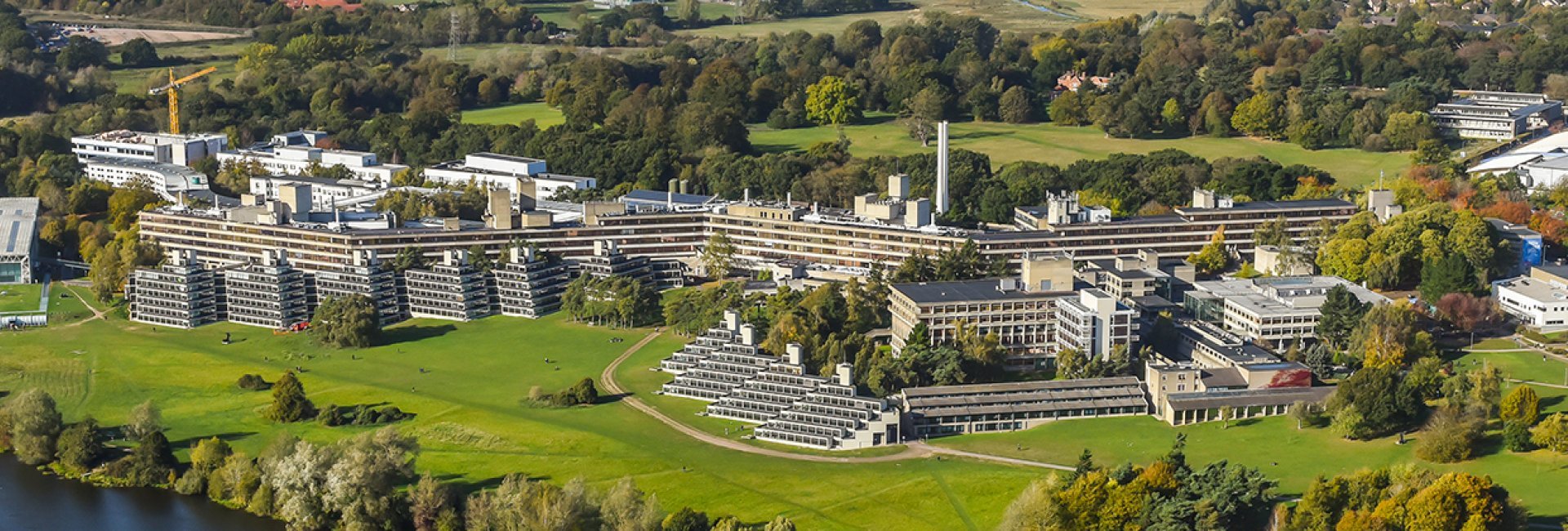
Immersed in the heart of our Green Flag awarded 130-acre verdant Norwich campus, this highly flexible degree programme explores how the physical, chemical and biological components of the natural environment function and how they're impacted by, and affect, our society, politics and culture.
You’ll explore the climate and biodiversity crises, consider solutions and strategies for reaching Net Zero, and examine changes in water sources and weather, alongside energy systems and sustainability in everyday life.
Whether you’re from a science or geography background or just have a natural curiosity about the world around you, this degree offers a profound knowledge about the planet Earth and equips you with skills and theories required to address environmental challenges.
Disclaimer
Course details are subject to change. You should always confirm the details on the provider's website: www.uea.ac.uk
Our Environmental Sciences degree covers a wide range of topics from atmospheres and oceans to climate change and policy making. In Year 1, you will be introduced to a range of compulsory topics which will provide the foundation to your studies. Examples of these modules include Understanding the Dynamic Planet, Global Environmental Challenges and Numerical skills for Scientists. As your studies progress, you can begin to tailor your degree to your own interests. In Years 2 and 3, you will be able to choose the vast majority of your modules which include, Meteorology, Low Carbon Energy and Fossil Fuels. In your final year, you will complete an independent research project which matches your interests. You will also get the chance to study your choice of advanced level modules, with examples such as Environmental Pollution and Stable Isotope Geochemistry.

University of East Anglia UEA has participated in the Teaching Excellence Framework. These ratings were awarded in 2023, for four years.
See why these ratings were awarded
What does this TEF outcome mean?
This course may be available at alternative locations, please check if other course options are available.
Course optionsDiscover what it's like to study Environmental Sciences at University of East Anglia UEA: insights on the course, making friends, personal statement tips, uni prep, and recommended books, podcasts, and videos.

GCSE Requirements: GCSE English Language grade 4 or C and GCSE Mathematics grade 4 or C.
We welcome a wide range of qualifications - for further information please visit our website www.uea.ac.uk https://www.uea.ac.uk/course/undergraduate/msci-environmental-sciences/2027-28/sep
| Test | Grade | Additional details |
|---|---|---|
| IELTS (Academic) | 6 | IELTS: 6.0 overall (minimum 5.5 in each component). |
We welcome applications from students from all academic backgrounds. We require evidence of proficiency in English (including speaking, listening, reading and writing). We will also accept a number of other English language qualifications. Please check our website for details: https://www.uea.ac.uk/apply/our-admissions-policy/english-language-equivalencieshttps://www.uea.ac.uk/apply/our-admissions-policy/english-language-equivalencies
This course may make contextual offers. This means that we use additional information to understand and recognise your potential to succeed at UEA. Using this insight, we could provide you with an offer with reduced entry requirements to study at UEA. You don’t need to do anything to be considered – if eligible we will process your contextual offer automatically, based on the data we hold in your application. We do not make contextual offers during clearing. Check our website for eligibility.
We accept many international qualifications for entry to this course. For specific details about your country, view our information for International Students. https://www.uea.ac.uk/study/international-students/country-map
This section shows the range of grades that students who received offers were previously accepted on to this course with (learn more).
It is designed to support your research but does not guarantee whether you will or won't get a place.
Admissions teams consider various factors, including interviews, subject requirements, and entrance tests. Check all course entry requirements for eligibility.
This course may have Historical entry grades data available, please select a course option to view.
Course options| Location | Fee | Year |
|---|---|---|
| England, Scotland, Wales & Northern Ireland | £10050 | |
| International | £29300 |
Tuition fee status depends on a number of criteria and varies according to where in the UK you will study. For further guidance on the criteria for home or overseas tuition fees, please refer to the UKCISA website.
Tuition fees are reviewed annually and subject to increase. Some fees are regulated by the UK government and will be changed in line with advice from them. Fees for continuing students (i.e. those on courses of greater than one year in length) will normally increase annually. This increase will not exceed 4% or the % increase of the UK Government regulated fee whichever is higher. The fee increase is based on the fee for the year that you register. For further information about additional costs for your course and information on fee status please see our website.
Email:admissions@uea.ac.uk
Phone:01603 591515
Norwich Research Park
Norwich
NR4 7TJ
At University of East Anglia UEA