Course contact details
Admissions Office
Email:admissions@worc.ac.uk
Phone:01905 855111
Fax: 01905 855377
University of Worcester
Henwick Grove
Worcester
WR2 6AJ

Whether you’re passionate about storytelling, campaigning, or creating content that makes a difference, this course prepares you to step into the ever-evolving world of journalism.
Studying Journalism at Worcester allows you to explore different aspects of the profession and prepares you for a career in the specialism you choose. From writing and editing to recording and producing, you’ll gain hands-on experience in the University’s radio, podcast, and TV studios, using industry-standard equipment.
Most of your learning will take place in small group seminars, giving you plenty of opportunities to connect with your peers through collaborative projects. You’ll be taught by experienced professionals who’ve worked across news, magazines, broadcasting, PR, and digital media. They offer 1-1 tutorials alongside classroom sessions and will teach you how to spot, write, and pitch a story.
From your very first week, you’ll start building your network and continue doing so throughout your degree.
Your modules will cover everything from media law and ethics to search engine optimisation, and social media. You’ll also have the chance to specialise in areas that matter to you - whether that’s sport, music, fashion, investigative journalism, or campaigning journalism, where you might cover environmental issues or explore gender, identity, and inclusivity.
Work experience
During your time at Worcester, you’ll have the opportunity to gain valuable, subject-related work experience that enhances your learning and boosts your employability. In your third year, you will have dedicated work experience module, giving you the chance to apply your skills in a real-world setting.
You’ll also benefit from strong links with media organisations, including the BBC and regional PR agencies, where placements offer a first-hand look at life in the industry. These experiences are designed to help you build confidence, develop professional networks, and understand the fast-paced world of journalism.
Volunteering opportunities are regularly shared with students, allowing you to get involved with local media, community projects, and digital content creation, which will help you build a standout portfolio.
Why the University of Worcester?
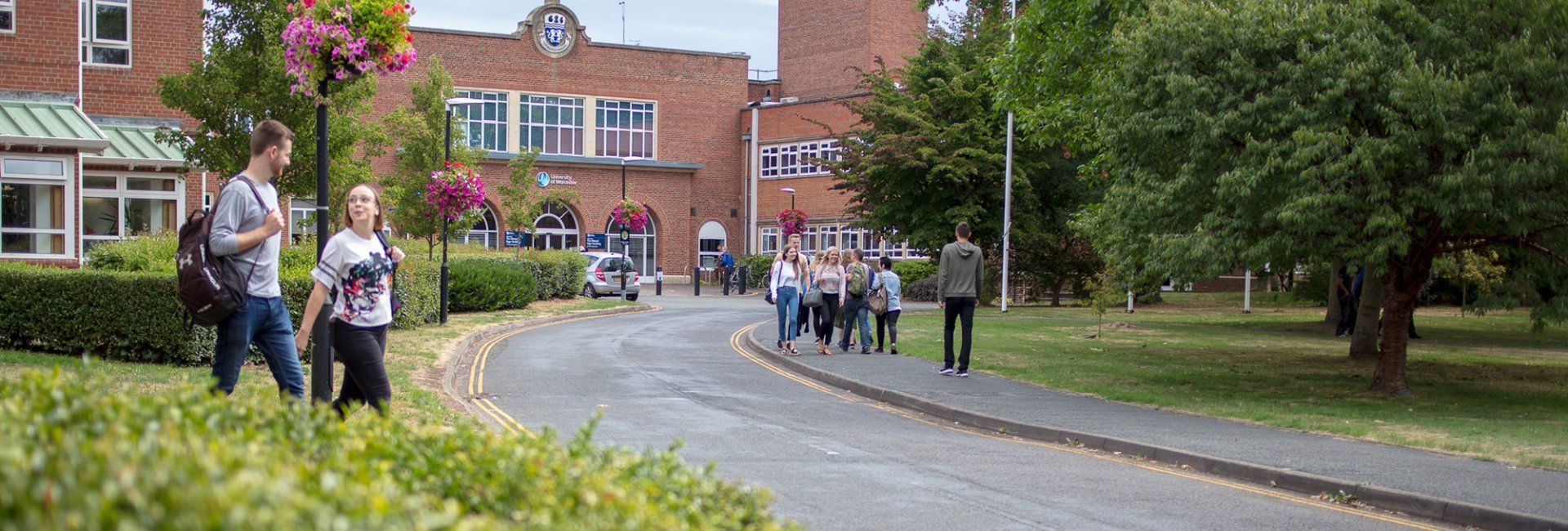
The University of Worcester is a campus university, meaning everything you need is on site. We’re based in a vibrant cathedral city just 40 mins south of Birmingham and an hour north of Bristol, and our beautiful green campuses have plenty of parking and quality on-site accommodation.
At Worcester, small class sizes, supportive tutors, and professionally focused courses mean you’ll be prepared for your dream career. These are just some of the reasons why we’re first in the UK for both graduate employment and quality education.
University of the Year finalist in the Times Higher Education Awards 2025.
First in the UK for sustained employment, further study or both, from any multidisciplinary university – Longitudinal Education Outcomes (LEO) 2017 to 2025.
First in the UK for quality education – Joint 1st in the Times Higher Education’s University Impact Rankings 2025.
Join us at one of our regular Open Days to see if the University is a good fit for you: www.worcester.ac.uk/opendays
For a breakdown of the modules you'll study each year visit our course page. You can do this by scrolling to the bottom of this page and selecting 'Visit our course page'.
For detailed information about assessment, feedback, teaching and contact time visit our course page. You can do this by scrolling to the bottom of this page and selecting 'Visit our course page'.
This is the equal consideration deadline. You can still apply after this date, but your application may not receive guaranteed consideration.

University of Worcester has participated in the Teaching Excellence Framework. These ratings were awarded in 2023, for four years.
See why these ratings were awarded
What does this TEF outcome mean?
The following entry points are available for this course:
The University of Worcester accepts all qualifications within the Tariff, and normally looks for the equivalent of 3 A levels. More information can be found at http://www.worcester.ac.uk/journey/entry-requirements.html
This section shows the range of grades that students who received offers were previously accepted on to this course with (learn more).
It is designed to support your research but does not guarantee whether you will or won't get a place.
Admissions teams consider various factors, including interviews, subject requirements, and entrance tests. Check all course entry requirements for eligibility.
We are unable to show previous accepted grades for this course. This could be because the course is new, it's a postgraduate course, there isn't enough historical data, or the provider has opted out of sharing their entry grades data for this course - learn more.
No fee information has been provided for this course
Tuition fee status depends on a number of criteria and varies according to where in the UK you will study. For further guidance on the criteria for home or overseas tuition fees, please refer to the UKCISA website.
Please visit the fees and finance pages of the University of Worcester website for tuition fee information: https://www.worcester.ac.uk/study/fees-and-finance/
Email:admissions@worc.ac.uk
Phone:01905 855111
Fax: 01905 855377
Henwick Grove
Worcester
WR2 6AJ
At University of Worcester