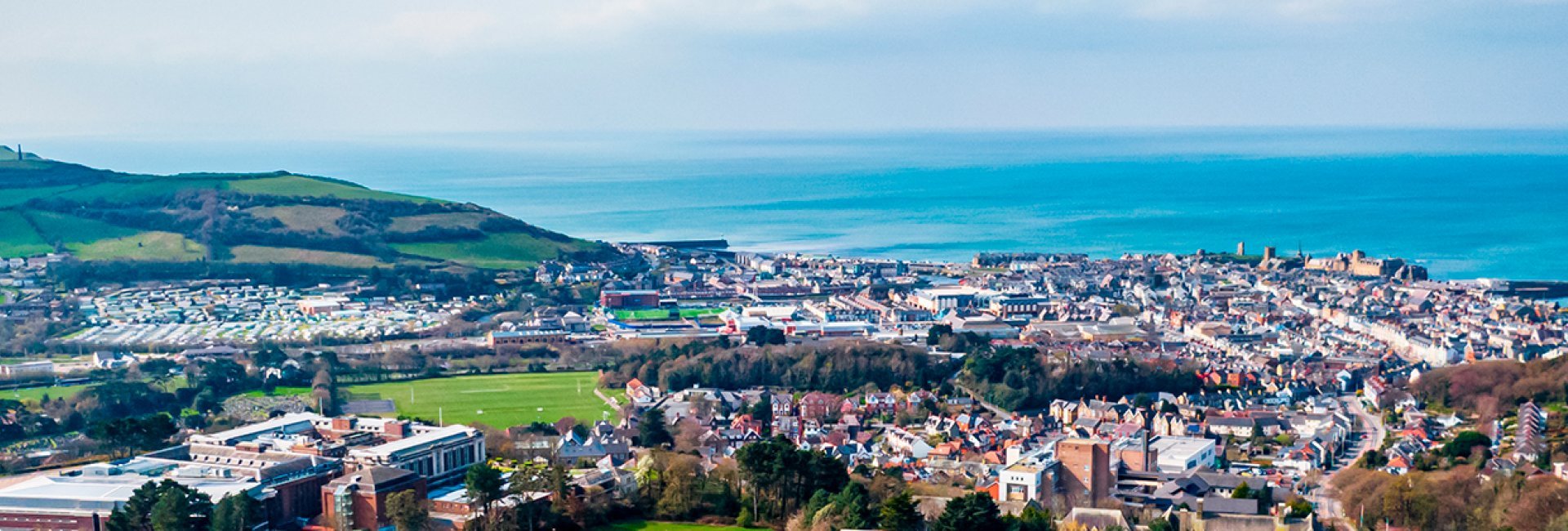
The BSc in Environmental Earth Science with integrated year studying abroad at Aberystwyth University offers you the unique opportunity to study Environmental Earth Science in one of the most picturesque locations in Europe and undertake a year studying with one of our International or European partners. Aberystwyth University’s Department of Geography and Earth Sciences is the most established and experienced department of its kind. You will study the core skills in geology and apply these to a wide range of environmental problems. You will be taught field skills which can be applied to solving some of the big issues facing our society such as pollution from human activities like mining and power production or understanding volcanic eruptions and how hazard maps are created. The degree will train you to solve problems and contribute to society. Our facilities are recognised by Natural Environment Research Council (NERC).
Why study Environmental Science with integrated year in industry at Aberystwyth University?
Become a student in a University where the student experience is exceptional and memorable. Immerse yourself in a department that informs all students of the innovating research that has impact locally, nationally and internationally. Gain a detailed insight into key themes in geography, biology and environmental studies
Develop a deeper understanding of the most significant environmental challenges of our time, including climate change and biodiversity loss
Gain insight into mass extinctions and what they can tell us about human environment relations today. Explore a diverse range of modules which include sustainable development policy, geohazards, wildlife management, and marine biology course offers flexibility in the modules you choose and the themes that you specialise in. Benefit from facilities that are recognised by NERC (Natural Environment Research Council). Gain valuable work skills and experience with the integrated year in industry
What will I learn?
In the first year you will be introduced to primary (solid earth) and secondary (surface processes) environments, past and present environmental changes
potential for predicting future changes in our climate and environment, field and laboratory skills spanning geology and physical geography.
In your second year you will discover, geochemistry, the methods of chemical analysis of natural materials, how to apply geophysical and geographical techniques used in site investigations, quantitative and qualitative data sets.
During your third year, you will undertake your year studying abroad in one of our European or International partnered universities.
In your final year you will undertake, independent research project or dissertation and optional modules including: engineering geology, process glaciology, volcanic activity among many others.
How will I be taught?
Our courses are taught through lectures, seminars, laboratory and computer practical classes, small group tutorials, field courses and individual supervision of project work.
How will I be assessed?
We assess our students through a different range of methods. Some modules are assessed in part through traditional exams, but some have elements of coursework. We also have some modules that may require the student to produce practical reports, oral presentations, the design of web pages, production of short films, or contribution to online discussion forums. Some modules, notably the tutorials and field courses are assessed entirely through coursework.
Our graduates have found employment as environmental consultants, planners, civil servants, surveyors, and in education, amongst many other things. Our degrees provide a solid foundation for a vast array of careers across a range of sectors. In a rapidly shifting global economy, our graduates are adaptable and able to draw on a range of transferable skills, ensuring that they are always in demand.