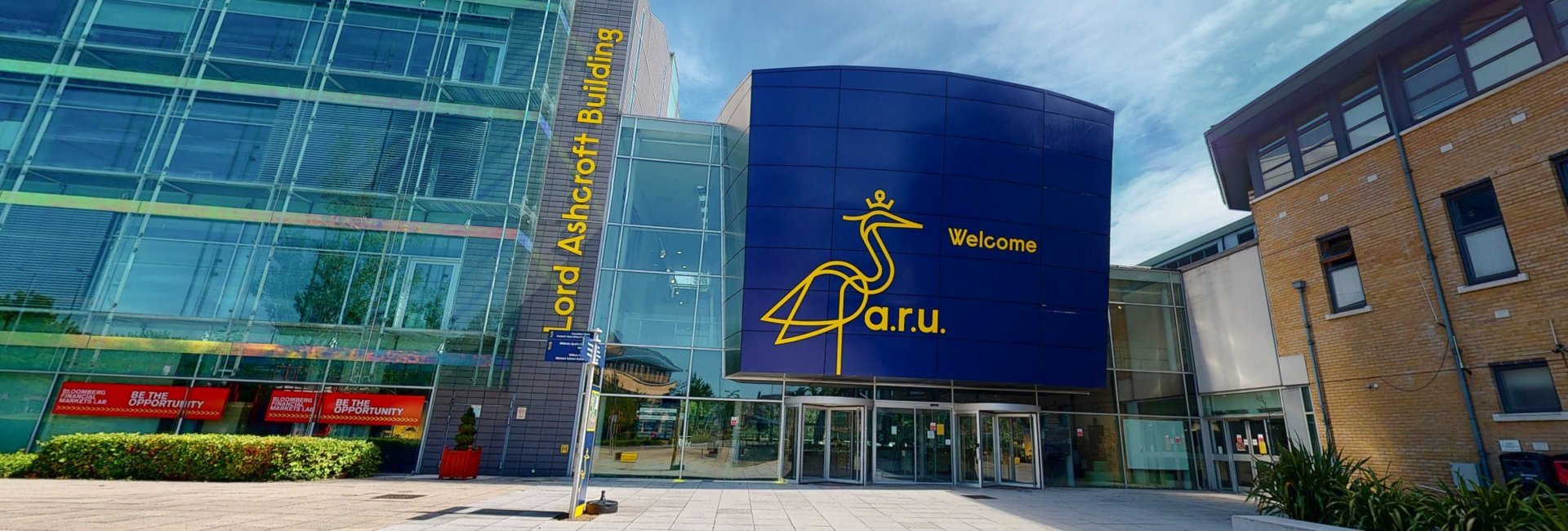
Anglia Ruskin University - Undergraduate Open Day - Cambridge
6 Jun 2026, 09:00
Cambridge

Study an industry-standard, hands-on digital forensics, incident response and cyber security course in the heart of Cambridge.
Why study Cyber Security and Digital Forensics at ARU?
Study in the Silicon Fen, home to Apple, Microsoft, Samsung AI and many more – the perfect opportunity to connect with top employers.
Bring the world of work to life through Live Briefs; designed and developed with regional employers, such as PA Consulting and Kear Technology Solutions to give you exposure to ‘real world’ problem-solving.
Gain expert witness experience by defending digital forensics scenarios against Law students, performing mobile forensics on Android OS, revealing suspect actions and analysing malware activity.
Gain access to the Cisco CCNA, CompTIA Security+ and EC-Council Certified Ethical Hacker (CEH) curriculums.
Explore our on-site specialist labs and our online virtual lab (NETLAB), equipped with cutting-edge cyber security and forensics tools and operating systems.
The computer you’re viewing this on knows your location, browser history, passwords and habits. Imagine using this knowledge to legally track a suspect's activities, evidence this in a scientific manner, and help convict or prove innocence in civil or criminal proceedings. Our course centres on practical, hands-on skills development in areas from malware science to ethical hacking.
You’ll start by learning how operating systems work and how scripting languages can be used to address security issues. You'll develop your understanding of cybercrime and how security threats and vulnerabilities can be dealt with. In our labs you’ll develop specialist skills, learning how to isolate and analyse malware, and undertake penetration testing or ‘ethical hacking’. You’ll also explore how threats originate and how to undertake threat intelligence. You’ll learn in lectures and the lab, working both independently and as part of a team.
Digital forensics and incident response is one of the most prominent labour shortages in the UK cyber security sector, and our specialist labs are the perfect place to develop knowledge and skills for your future career. We're set up to support the next generation of industry professionals. Will you be one of them?
Year 1:
Foundation in Engineering, Computing and Technology
Year 2:
Introduction to System Architecture and Automation (30 credits)
Software Principles (30 credits)
Cyber Crime Fundamentals (15 credits)
Core Mathematics for Computing (15 credits)
Introduction to Networks (30 credits)
Year 3:
Network Routing and Switching Essentials (30 credits)
Advanced Digital Forensics (30 credits)
Principles of Digital Forensics (15 credits)
Digital Security (15 credits)
Cloud and IoT (15 credits)
Ruskin Module (15 credits)
Year 4:
Ethical Hacking and Countermeasures (15 credits)
Digital Forensics and Malware Science (15 credits)
Software Security (15 credits)
Mobile Forensics (15 credits)
Security Management, Operations and Analytics (30 credits)
Final Project (30 credits)
Throughout the course, you'll be assessed through case study projects applying your understanding through practical application of the knowledge acquired during the lectures. During practical sessions, you'll be asked to keep a logbook of activities completed and reflect on what you have learnt from the activities undertaken.
Your knowledge and understanding of essential skills and critical security issues will be assessed through multiple-choice examinations and formal written reports. These elements are where you discuss your knowledge and the application of that knowledge in a fictional context.
You'll be expected to conduct and apply research in cyber security. In some modules, you'll be assessed through a research report related to a specific area of cyber security. Also, you will have to complete your undergraduate major project to be eligible for the degree.
This is the equal consideration deadline. You can still apply after this date, but your application may not receive guaranteed consideration.

Anglia Ruskin University has participated in the Teaching Excellence Framework. These ratings were awarded in 2023, for four years.
See why these ratings were awarded
What does this TEF outcome mean?
The following entry points are available for this course:
Find out more about qualification requirements for this course.
| Test | Grade | Additional details |
|---|---|---|
| IELTS (Academic) | 5.5 | With minimum 5.5 in each component |
This section shows the range of grades students (with UK A-Levels or Pearson BTEC Level 3 National Extended Diplomas) who received offers were previously accepted with (learn more). It is designed to support your research but does not guarantee whether you will or won't get a place. Admissions teams consider various factors, including interviews, subject requirements, and entrance tests. Check all course entry requirements for eligibility.
We are unable to show previous accepted grades for this course. This could be because the course is new, it's a postgraduate course, there isn't enough historical data, or the provider has opted out of sharing their entry grades data for this course - learn more.
Operated by the Office for Students
Employment after 15 months (Most common jobs)
Go onto work and study
The number of student respondents and response rates can be important in interpreting the data – it is important to note your experience may be different from theirs. This data will be based on the subject area rather than the specific course. Read more about this data on the Discover Uni website.
| Location | Fee | Year |
|---|---|---|
| England | £9790 | Year 1 |
| Northern Ireland | £9790 | Year 1 |
| Scotland | £9790 | Year 1 |
| Wales | £9790 | Year 1 |
| Channel Islands | £9790 | Year 1 |
| Republic of Ireland | £9790 | Year 1 |
Tuition fee status depends on a number of criteria and varies according to where in the UK you will study. For further guidance on the criteria for home or overseas tuition fees, please refer to the UKCISA website.
https://aru.ac.uk/student-life/preparing-for-university/help-with-finances/undergraduate
https://www.aru.ac.uk/study/tuition-fees
East Road
Cambridge
CB1 1PT
Visit our website Visit our course page
Email:answers@aru.ac.uk
Phone:01245 68 68 68