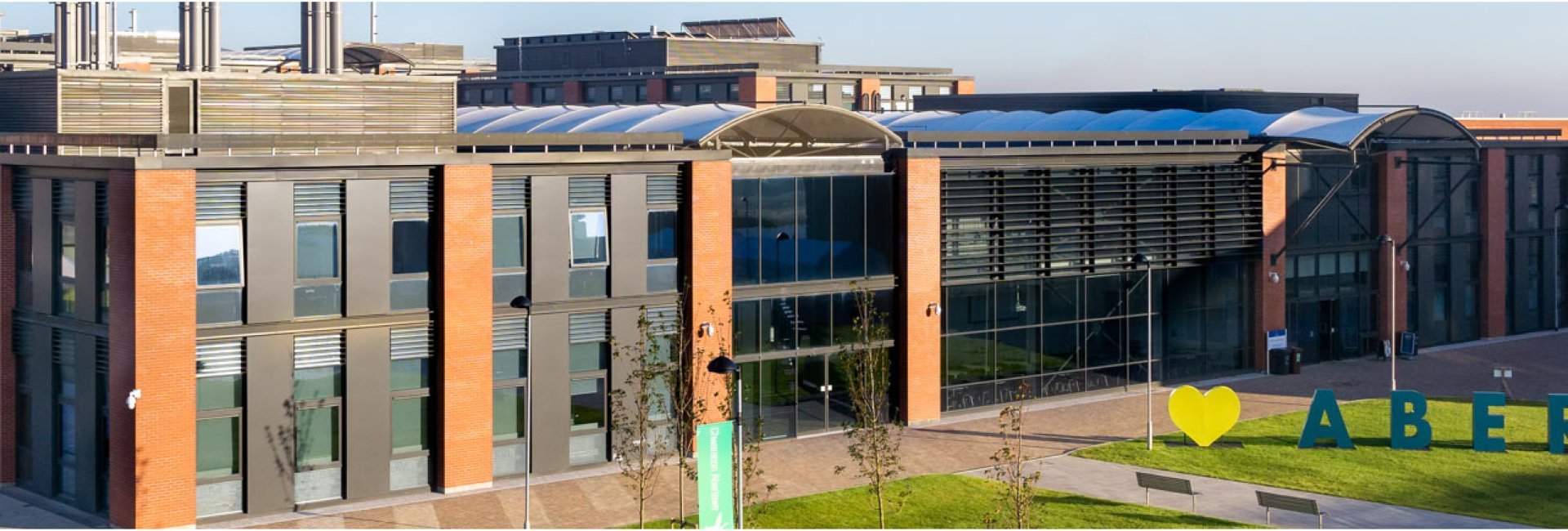
Undergraduate On-Campus Open Day at Swansea University - Singleton Park Campus and Bay Campus - 13 June 2026
13 Jun 2026, 07:30
Swansea

From the World Wide Web and global mobile phone networks to laptop computers, electric vehicles, and renewable energy sources, Electronic and Electrical Engineering shapes the everyday world around us.
Highly skilled Electronic and Electrical Engineering graduates are in high demand and have opportunities to work all over the world. This degree will train you for a career in electrical, electronic and nanoengineering positions across a wide range of sectors.
You will develop analytical abilities whilst gaining hands-on experience with advanced specialist equipment, establishing skills which are vital for employment in the industry.
This course offers you the opportunity to spend a Year in Industry, in the UK or overseas, giving valuable workplace experience as well as a salary that is currently £22k on average for our students. Support and guidance are provided to help secure your placement. We also offer you the option to spend a Year Abroad at a partner university, giving you a valuable cultural experience which can broaden your horizons when seeking employment.
The optional Foundation Year for this programme can give you an exciting introduction to higher education, setting you up with the skills, confidence, and knowledge that you will need to be successful in your undergraduate degree. It’s ideal if you need a little more support after further education, or are returning to education after a gap. Following successful completion of the Foundation Year, you will progress onto Year 1 of your BEng.
This programme is also available as a 4-year MEng, which is an advanced undergraduate degree, adding a further research-focused year to your degree. Our MEng leads to a master’s level qualification, in addition to your undergraduate degree, giving you expert scientific training and a springboard towards a range of specialist careers.
TRAINING ENGINEERS OF THE FUTURE
At Swansea, we pride ourselves on offering teaching and academic research that are vital to the electronic and electrical engineering industry, and keep up with this fast-paced and evolving field, including:
Semiconductors and Nanotechnology (e.g., Atomistic and Device Modelling, Semiconductor Materials and Devices, Microelectromechanical and Nanoelectromechanical Systems, and Nanoelectronics)
Energy and Power Engineering (e.g., Advanced Power Electronics, Renewable Energy and Microgrid, Power Systems, Control Systems and Robotics)
Communications, Systems and Software (e.g., Artificial Intelligence, Mobile Networks, Antennas, Internet of Things, Micro-satellites, Analogue & Digital Circuit Design, and Advanced Web Technologies)
In Year 1, you will typically study areas including: Analogue Circuits and Systems Engineering; Principles of Electronics and Electrical Engineering; Software Engineering and Professional Skills; Placement Preparation: Science and Engineering Year in Industry; Engineering Mathematics; Engineering Tutorials: Year 1; Digital Design and Microcontrollers; Fundamentals of Electromagnetics and Applications.
In Year 2, you will typically study areas including: AI, Machine Learning and Data Analysis; Electrical Machines and Control Engineering; Electronic Materials and Devices; Embedded System Design; Placement Preparation: Engineering Industrial Year; Research Project Preparation; Engineering Tutorials: Year 2; Electronic Communications, Microwave Circuits and Antennas; Electronic Circuits with Labs.
In Year 3: Year spent in Industry
In Year 4, you will typically study areas including: Electric Power Conversion Systems; Modern Control Systems and Industrial Automation; Individual Engineering Project; Quantum Semiconductor Technologies; Electronic Communications, Microwave Circuits and Antennas.
Professionally accredited courses provide industry-wide recognition of the quality of your qualification.
The following entry points are available for this course:
If you are an International Student, please visit our International pages for more information about entry requirements:- http://www.swansea.ac.uk/international/students/requirements
Discover what it's like to study Electronic and Electrical Engineering with a Year in Industry at Swansea University: insights on the course, making friends, personal statement tips, uni prep, and recommended books, podcasts, and videos.

Including grade B in Mathematics.
To include B at A Level Mathematics. Must be in relevant subject. If student is not taking A Level Mathematics, they must achieve a minimum D in ‘Mathematics for Technicians’ and D in ‘Further Mathematics for Technicians’ modules of the BTEC. Students are also required to have minimum two A grades at GCSE, to include a minimum grade B in Mathematics and two other Science subjects.
Considered on an individual basis.
To include 5 at Higher Level or 6 at Standard Level Mathematics or, if following the new Maths Curriculum, 5 at HL (or 6 at SL) “Mathematics: analysis and approaches”, or 5 at HL (or 7 at SL) “Mathematics: applications and interpretation”.
Plus 4 at Higher Level or 5 at Standard Level English Language.
Swansea University accepts the Advanced Skills Baccalaureate Wales as fully equivalent to x1 A-Level.
Accepted in lieu of one non-subject specific grade at A Level.
We recognise the EPQ as an excellent indicator of success.
If you are predicted a Grade B or above in the EPQ, you will receive an offer with a one
grade reduction, to include your EPQ with a grade B.
GCSEs: Mathematics C, English Language C.
English Language Requirements at Swansea Universityhttps://www.swansea.ac.uk/admissions/english-language-requirements/
UK applicants who meet course requirements are guaranteed a conditional offer. We assess applications on individual merit. We consider making reduced offers, eg. to Care Leavers or students with extenuating circumstances. We encourage you to disclose any relevant circumstances.
The Advanced Skills Baccalaureate Wales is considered as equivalent to one full A-Level and students can take x2 A-levels alongside this. EPQ students predicted Grade B or above will receive a one-grade offer reduction.
This section shows the range of grades that students who received offers were previously accepted on to this course with (learn more).
It is designed to support your research but does not guarantee whether you will or won't get a place.
Admissions teams consider various factors, including interviews, subject requirements, and entrance tests. Check all course entry requirements for eligibility.
We are unable to show previous accepted grades for this course. This could be because the course is new, it's a postgraduate course, there isn't enough historical data, or the provider has opted out of sharing their entry grades data for this course - learn more.
No fee information has been provided for this course
Tuition fee status depends on a number of criteria and varies according to where in the UK you will study. For further guidance on the criteria for home or overseas tuition fees, please refer to the UKCISA website.
For the latest fee information, please check the individual course page on our website. Our full range of programmes are listed here: https://www.swansea.ac.uk/undergraduate/courses/
Further information on tuition fees can be found here: https://www.swansea.ac.uk/undergraduate/fees-and-funding/tuition-fees/
You may be eligible for funding to help support your study.
To find out about scholarships, bursaries and other funding opportunities that are available please visit the University's scholarships and bursaries page https://www.swansea.ac.uk/undergraduate/scholarships/
Academi Hywel Teifi at Swansea University and the Coleg Cymraeg Cenedlaethol offer a number of generous scholarships and bursaries for students who wish to study through the medium of Welsh or bilingually. For further information about the opportunities available to you, visit the Academi Hywel Teifi Scholarships and Bursaries page https://www.swansea.ac.uk/academi-hywel-teifi/learn/scholarships/
Ask us a question - undergraduate enquiries.
Email:study@swansea.ac.uk
Phone:01792 295111
Singleton Park
Swansea
SA2 8PP
At Swansea University