What to Expect on Results Day & Clearing
11 Jun 2026, 16:30
London

About the course
BSc Sport and Exercise Sciences equips you to understand and apply the science of the human body to improve health, wellbeing and performance. Ranked 1st for Learning Opportunities and Resources and Academic Support (National Student Survey 2024) and Top 5 in London for Sports Science (Guardian University Guide 2024), the programme combines scientific knowledge with practical, career-focused experience.
You will explore how exercise, movement and psychological principles enhance elite sport performance, support injury prevention and rehabilitation, and promote lifelong health and fitness.
The programme is accredited by CIMSPA and endorsed by the Chartered Association of Sport and Exercise Sciences (CASES), ensuring evidence-based training aligned with national industry standards. You will qualify as a Level 2 Gym Instructor and Level 3 Personal Trainer, strengthening your employability before you graduate.
What you’ll study
You will build expertise in physiology, biomechanics and sport psychology, alongside research methods, data analysis and critical evaluation.
Modules may include:
• Professional Skills for Success
• Biomechanics of Human Movement
• Fundamentals of Life Sciences
• Sport and Exercise Psychology: Core Concepts
Across the degree, you will apply scientific principles to real-world contexts in health, fitness and sport.
How you’ll learn
You will follow a practical, hands-on programme that blends lectures, laboratory sessions, problem-based learning and case studies.
You will design, evaluate and monitor exercise programmes, working independently and collaboratively to solve applied performance and health challenges.
Learning mirrors professional environments, helping you develop confidence as a practitioner working with athletes, clients and multidisciplinary teams.
How you’ll be assessed
Assessment methods include online tests, exams, laboratory reports, presentations, essays and research projects.
In your final year, you will complete an independent research dissertation, allowing you to generate new knowledge in sport and exercise science.
Future opportunities
Graduates progress into careers in:
• Health and fitness
• Performance analysis
• Rehabilitation and strength and conditioning
• Teaching and coaching
• Sport and exercise consultancy
You may also continue into postgraduate study, including MSc, MRes, PGCE or PhD programmes.
Facilities
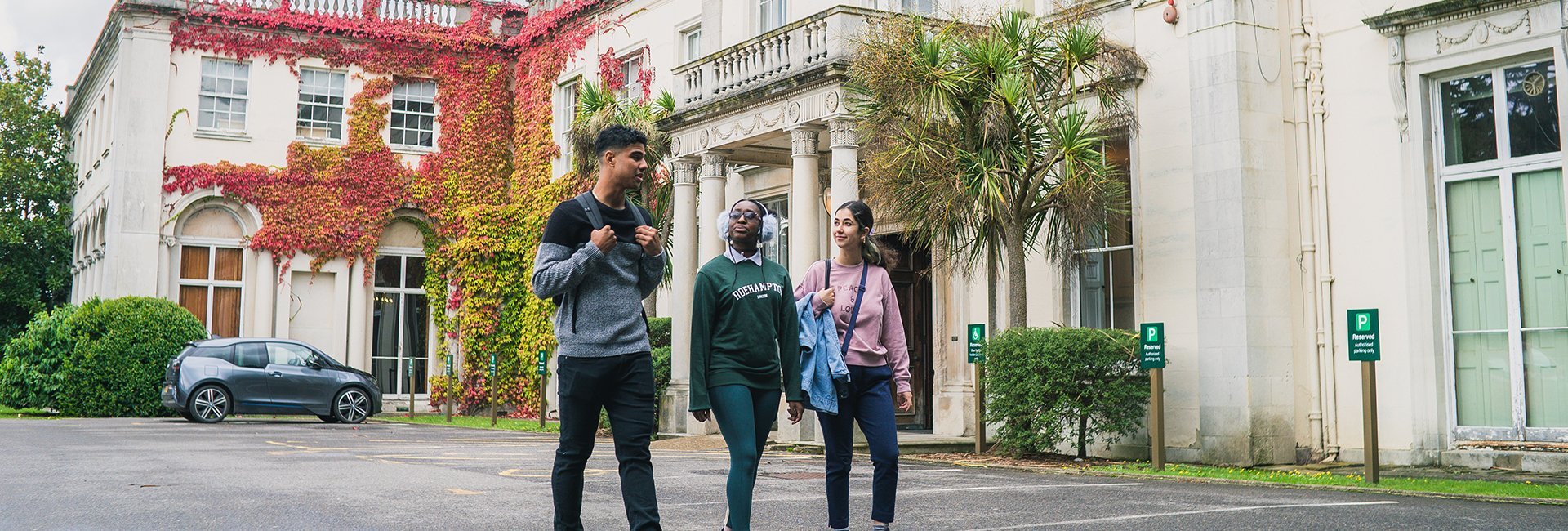
Based at Whitelands College next to Richmond Park, you will access specialist sport science facilities including:
• Walk-in Environmental Chamber
• Human Physiology Laboratories
• Advanced Optical Motion Analysis Systems (Vicon and Peak Motus)
• Kistler Force Plates
• Motion Tracking Sensors
These facilities support hands-on learning and advanced research used by professional athletes and practitioners.
To work as a teacher at a state school in England or Wales, you will need to achieve qualified teacher status (QTS). This is offered on this course for the following level:
This is the equal consideration deadline. You can still apply after this date, but your application may not receive guaranteed consideration.

University of Roehampton has participated in the Teaching Excellence Framework. These ratings were awarded in 2023, for four years.
See why these ratings were awarded
What does this TEF outcome mean?
The following entry points are available for this course:
2017
A level requirement including one Science subject, PE, or Psychology.
GCSE requirement: English Language and Maths, Grade C
Please see https://www.roehampton.ac.uk/applying/undergraduate-entry-requirements/
| Test | Grade | Additional details |
|---|---|---|
| IELTS (Academic) | 6 | with a minimum of 5.5 in each band |
| TOEFL (iBT) | 80 | with the following minimum scores: Reading: 18 Writing: 17 Listening: 17 Speaking: 20 |
| PTE Academic | 59 | with no less than 59 in any band |
| Cambridge English Advanced | C | grade C in tests prior to 2015 with no less than 'weak' in any band |
English Language requirementshttps://www.roehampton.ac.uk/international/entry-requirements/
This section shows the range of grades that students who received offers were previously accepted on to this course with (learn more).
It is designed to support your research but does not guarantee whether you will or won't get a place.
Admissions teams consider various factors, including interviews, subject requirements, and entrance tests. Check all course entry requirements for eligibility.
We are unable to show previous accepted grades for this course. This could be because the course is new, it's a postgraduate course, there isn't enough historical data, or the provider has opted out of sharing their entry grades data for this course - learn more.
| Location | Fee | Year |
|---|
Tuition fee status depends on a number of criteria and varies according to where in the UK you will study. For further guidance on the criteria for home or overseas tuition fees, please refer to the UKCISA website.
We also provide other ways to support the cost of living, including free buses and on-campus car parking, hardship support and some of the most affordable student accommodation and catering in London. Find out more about how we can support you: https://www.roehampton.ac.uk/student-support/non-academic-and-academic-support/financial-support-and-guidance
If you are on a multi-year course, e.g. an undergraduate degree, then you should budget for a likely increase of between three and five percent for each year of study with us on the same degree.
Email:admissions@roehampton.ac.uk
Phone:0208 392 3314
Erasmus House
Roehampton Lane
London
SW15 5PU
At University of Roehampton