Join us on a journey to unlock the mysteries of the Universe.
Our Astrophysics BSc (Hons) combines analytical reasoning, mathematical problem‑solving, and scientific curiosity to explore how the universe works, from the subatomic quantum world to the largest cosmic structures.
We are proud of our cutting‑edge research environment, where world‑leading experts work across a broad spectrum of physics, including semiconductors, nanophysics, lasers, antimatter, quantum fields, and the early universe. This research directly informs our teaching and provides an inspiring environment for your studies.
You will go well beyond lectures, gaining hands‑on experience using telescopes and detectors, and working with real astronomical data. Our programmes develop a strong foundation in physics while equipping you with analytical, computational, and observational skills valued across many scientific and technical sectors.
A highlight of our degree is the opportunity to undertake advanced research projects, often at the forefront of physics, supervised by internationally recognised academics. Our extensive collaborations with major facilities, including CERN, provide exciting opportunities for student projects, internships, and research experience.
Our programme aims to develop well‑rounded astrophysicists with the scientific expertise, critical thinking, communication skills, and adaptability needed to thrive in an ever‑evolving world of scientific discovery.
Studying Astrophysics at Swansea offers a distinctive experience, including:
-
The option to join an international field trip to a major astronomical research facility, where you can collect and analyse your own data.
-
Access to world class robotic telescopes across the globe, allowing you to carry out real-time astronomical observations.
-
A dedicated student and staff space, the Event Horizon, overlooking Swansea Bay. An ideal environment for study, collaboration, and community.
-
A vibrant academic and social community supported by the Physics Department and the Swansea University Physics Society (PhySoc), with regular debates, distinguished lectures, and social events.
-
Elected student representatives for each year group and for PhySoc to ensure every student voice is heard through regular meetings with academic leads.
-
Teaching informed by world leading research groups in Particle Physics and Cosmology Theory, Applied Materials, and the ALPHA antimatter collaboration, with close links to CERN. Students have the opportunity to apply for summer internships at CERN and carry out final year projects with any of our major research groups.
-
Opportunities to collaborate with our £50m Centre for Integrated Semiconductor Materials (CISM) in your final year project, offering engagement with local semiconductor industries.
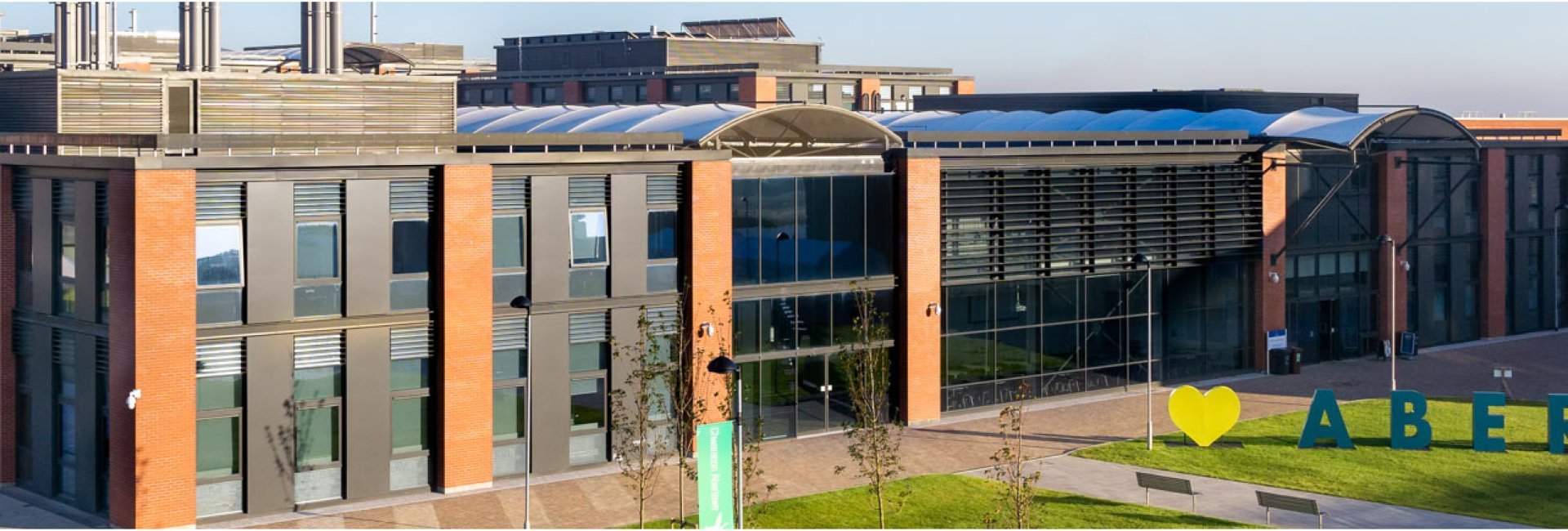
From September 2027, the Physics Department will be based at the Bay Campus, where all Physics programmes will be taught, benefitting from our advanced research laboratories and state-of-the-art facilities.