Skip navigation

Architecture with Integrated Foundation Year

Course details
  • BA (Hons)
  • 4 Years
  • Full-time
  • 14 September 2026
  • Undergraduate
Course location
Main Site
Awarded by:
Ravensbourne

Course summary

Architecture is about more than buildings - it’s about shaping communities, responding to environmental challenges, and creating spaces that improve people’s lives. On this architecture degree, you’ll develop a broad, multidisciplinary skillset grounded in design, critical thinking, technology, and culture, giving you the knowledge and confidence to make a meaningful impact on the built environment.

Why study this degree?

  1. Study on a Royal Institute of British Architects (RIBA) Part 1 validated course, gaining the skills needed to advance towards becoming an architect
  2. Work alongside industry professionals through studio design projects, collaborative workshops and external networks
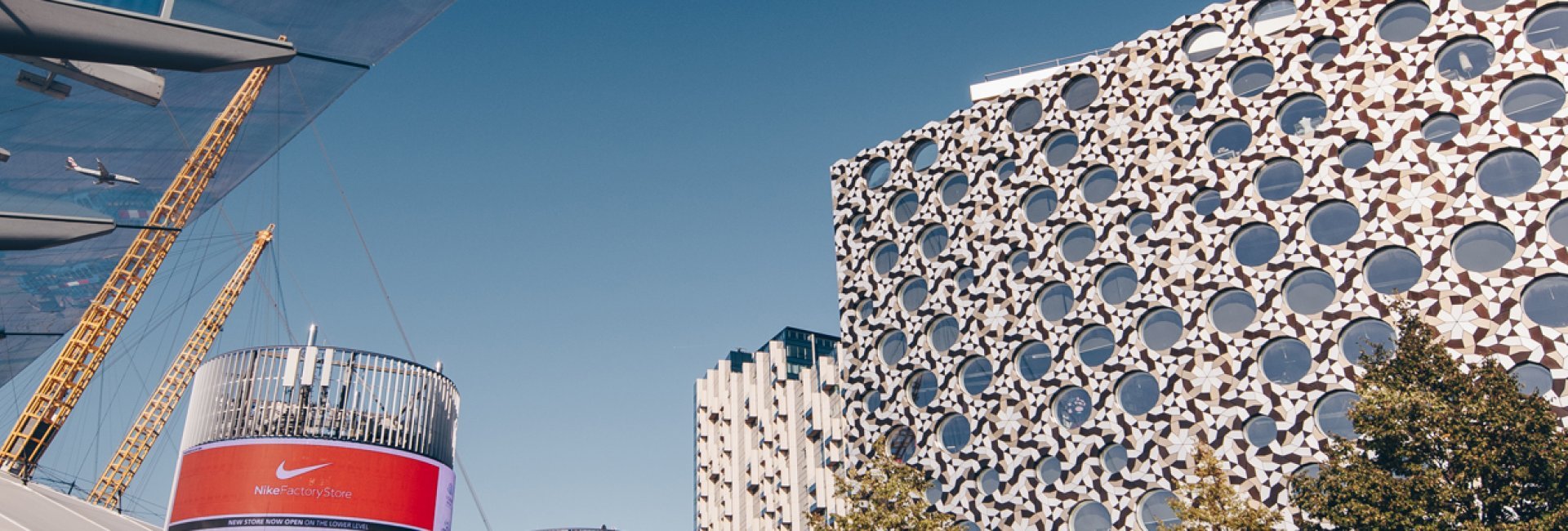
  3. Study in our dynamic campus on the Greenwich Peninsula, with access to cutting-edge digital and physical facilities
  4. Collaborate with local stakeholders and communities, using design as a tool for real-world problem-solving
  5. Channel your creative interests through a range of practical design projects that develop your individual voice

Architecture courses at Ravensbourne University London are built around shared studios, where you learn alongside students across architecture, landscape, design engineering and interiors - while also going deep within your own specialism. This reflects how the industry actually works: collaboratively, across disciplines, with a focus on real-world outcomes.

Integrated Foundation Year
The Integrated Foundation Year is a chance to ask big questions, explore remarkable architectural projects, and develop the skills you need to thrive on one of our spatial design courses. You’ll be part of a dynamic cluster, learning and collaborating with peers across our built environment courses in a creative studio environment.

Modules include:

  • Design, Media and Representation I

  • Introduction to Professional Context: Spatial Practices

  • Exploring: Culture and Context

  • Design, Media and Representation II

  • Introduction to Professional Context: Cross-Disciplinary Practices

  • Influencing: Culture and Context

After you have completed your Integrated Foundation Year, you will study the following:

Year 1
Your first year grounds you in the fundamentals of architectural representation - through drawing, making, and working with your hands. Studio life is at the centre of everything, as you learn to collect ideas, create with intention, and collaborate with others. Underpinning it all: history, theory, technology, and the professional skills that shape a life in architecture.

Modules may include:

  • Rave Beginnings

  • Design Studio I: Thinking and Making Structures

  • Professional Practice: Role, Identity and Responsibility

  • Research Studio I: Place, Memory and Making

  • Design Studio II: Form and Structure

Year 2
The second year extends the programme into urban contexts, with a focus on the spaces between buildings. Students explore how historical and theoretical forces shape cities, engage with branded environments and community participation, and develop sustainable approaches within their design practice.

Modules may include:

  • Research Studio II: Mapping the City

  • Design Studio III: Urban Intervention

  • Critical Reconstruction

  • Design Studio IV: Urban Proposition

  • Professional Practice: Live Practice

Year 3
Your final year is where your personal and professional voice fully emerges. You'll undertake an industry-led competition brief, pursue independent research, and build professional and entrepreneurial skills - culminating in a portfolio that prepares you for practice.

Modules may include:

  • Integrated Collaborative Practice

  • Research Studio III: Research by Practice

  • Final Major Project I: Project Proposition

  • Professional Practice: Situating your Practice

  • Final Major Project II: Project Delivery

All modules are subject to revalidation.

Modules

You'll explore architectural form-making, sustainability principles in the built environment, parametric and computer generated design, techniques for designing structures and rapid prototyping, architectural history, theory and context, business enterprise for design and regulatory frameworks, new developments in urban design and new developments
in architecture/design projects around the world. For more information, please visit the course page on our website.

Assessment method

You will be continually assessed on your values and attitudes, cognitive, intellectual, practical, and professional skills. Knowledge and understanding are evaluated through individual and group presentations, written and reflective work, and design projects in a manner appropriate for each unit. Visit our website for additional details.

Professional bodies

Professionally accredited courses provide industry-wide recognition of the quality of your qualification.

  • Architects Registration Board

How to apply

Apply by
14 January

This is the deadline for applications to be completed and sent for this course. If the university or college still has places available you can apply after this date, but your application is not guaranteed to be considered.

Application codes

Course code:
K101
Institution code:
R06
Campus name:
Main Site
Campus Code:
-

Points of entry

The following entry points are available for this course:

  • Foundation

Entry requirements

UCAS Tariff
64 points

A level
CC

Pearson BTEC Level 3 National Extended Diploma (first teaching from September 2016)
MPP

Access to HE Diploma
P: 45 credits

International Baccalaureate Diploma Programme
24 points

OCR Cambridge Technical Extended Diploma
MPP

T Level
Pass (D or E)

At Ravensbourne we take a transparent approach to admissions, as we want you to know exactly what you need to achieve in your exams to guarantee a place on the course. This doesn't mean our standards are lower, in fact the average UCAS tariff of our students is higher than some other universities in London, so you'll be joining a diverse community of creatives.

We still think exams are important and look forward to hearing about your successes in the summer, but we place more importance on the work you will share with us as part of our interview and/or portfolio process.

Additional entry requirements

Portfolio
Please see our website for advice on how to prepare your portfolio and sketchbook or showreel : - https://www.ravensbourne.ac.uk/study-here/undergraduate/your-interview-and-portfolio/
Interview
You will be invited to a friendly online interview which you must pass in order to successfully gain entry to this programme.

English language requirements

TestGradeAdditional details
IELTS (Academic)5.5IELTS: 5.5 overall with 5.5 in each component of the test.
TOEFL (iBT)72TOEFL iBT: 72 points overall including minimum Reading 18, Listening 17, Speaking 20, Writing 17. We cannot accept TOEFL iBT Home Edition test. All tests must be taken in person at a test centre.
PTE Academic59PTE Academic or SELT: 59 overall with minimum 59 in each component of the test.
Trinity ISEPassTrinity College London B2 SELT ISE II: Pass overall with Pass in each component of the test.
Other tests may be accepted. Please view our website for full English language requirements and options. If you have any questions please email international@rave.ac.uk

Ravensbourne English Language Requirementshttps://www.ravensbourne.ac.uk/international-students/entry-requirements-and-visas/english-language-requirements

Historical entry grades data

This section shows the range of grades that students who received offers were previously accepted on to this course with (learn more).

It is designed to support your research but does not guarantee whether you will or won't get a place.

Admissions teams consider various factors, including interviews, subject requirements, and entrance tests. Check all course entry requirements for eligibility.

Not enough data available

We are unable to show previous accepted grades for this course. This could be because the course is new, it's a postgraduate course, there isn't enough historical data, or the provider has opted out of sharing their entry grades data for this course - learn more.

Fees and funding

Tuition fees

Per year tuition fees

LocationFeeYear

Tuition fee status depends on a number of criteria and varies according to where in the UK you will study. For further guidance on the criteria for home or overseas tuition fees, please refer to the UKCISA website.

Additional fee information

Fees for UK, Republic of Ireland, and Channel Islands students are subject to increase for subsequent years of enrolment to the maximum capped level set by the UK Government (currently £9,790).

Fees for EU and International students will be subject to an inflationary-linked rise for subsequent years of enrolment.

Like this page