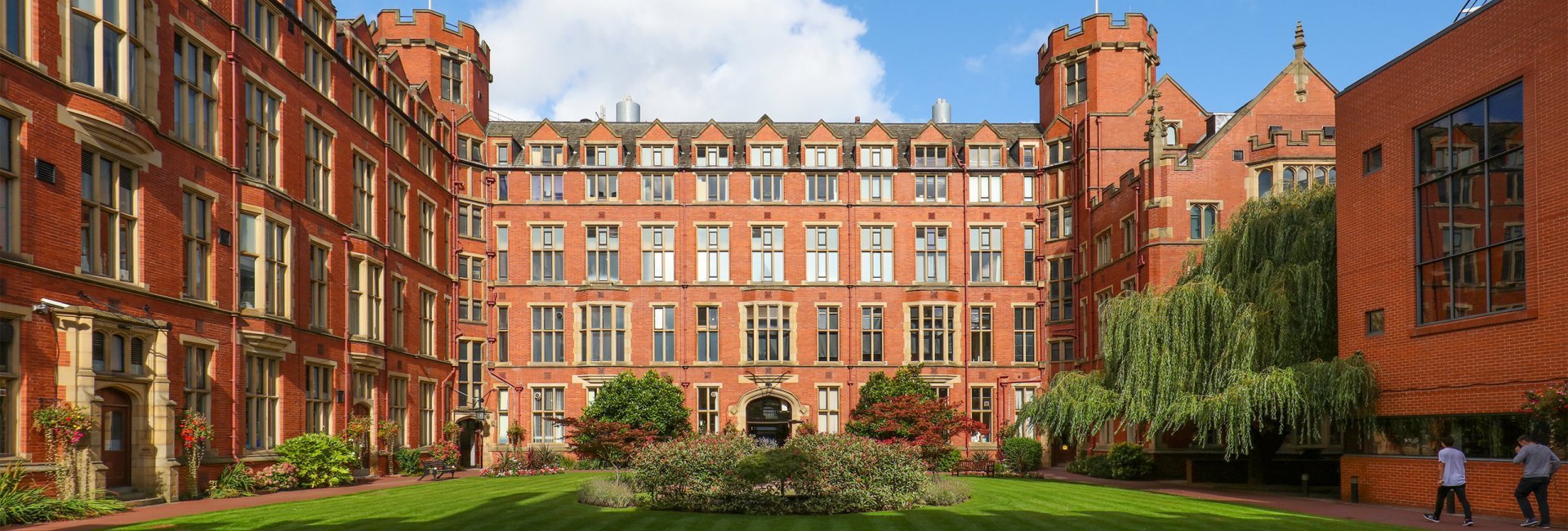
University of Sheffield - undergraduate open day
20 Jun 2026, 09:00
Sheffield

If you don't have the usual scientific or mathematical background for an engineering degree, a foundation year is for you. After successfully completing the foundation year, you can start a BEng or MEng degree.
If you don't have the usual scientific or mathematical background for an engineering degree, a foundation year is for you. After successfully completing the foundation year, you can start your main degree.
Ignite your interest by learning the art of engineering complex software systems, and how to apply that knowledge to this ever-expanding industry.
Our Computer Science (Software Engineering) programmes are a great choice for students who are passionate about software engineering and want to develop the skills to design, build, and test software systems.
You will gain a solid foundation in the fundamentals of software engineering, as well the opportunity to explore different areas of computer science. These include artificial intelligence, cybersecurity, and robotics.
Our course has a strong focus on professional skills to ensure you are well equipped for a career after graduating. You will develop your communication skills and be able to think critically, whilst analysing the impact of your work in a real-world context. These are essential for a career in industry or research, and demonstrate the well-rounded education our programme will provide you.
Core modules in years one and two will provide you with the foundations of computer science, while in the final year a range of optional modules will allow you to tailor your studies to your own interests.
On top of these specialised modules, the focus of your final year is a dissertation project, where you will have scope for creative and intellectual exploration through a year long individual project guided by one of lecturers.
The MEng course is accredited by the British Computer Society (BCS). It fully meets the requirements for Chartered Information Technology Professional (CITP) and Chartered Engineer (CEng).
This course is not accepting applications at this time. Please contact the provider to find out more.
This is the equal consideration deadline. You can still apply after this date, but your application may not receive guaranteed consideration.

University of Sheffield has participated in the Teaching Excellence Framework. These ratings were awarded in 2023, for four years.
See why these ratings were awarded
What does this TEF outcome mean?
This course is not accepting applications at this time. Please contact the provider to find out more.
The following entry points are available for this course:
BBB (any A Level); BBC including Maths and at least one of Physics, Chemistry or Biology
in Engineering or IT + GCSE Science grade 6/B and Maths grade 7/A
AABBB (any subjects); ABBBB including Maths and at least one of Physics, Chemistry or Biology
DD in Engineering, Computing or IT + A at A Level (no STEM at A Level) + GCSE Science grade 6/B and Maths grade 7/A; DD in Engineering or IT + B in an A Level science subject (Physics, Chemistry, or Biology) + GCSE Maths grade 7/A; DD in Engineering or IT + C in A Level Maths + GCSE Science grade 6/B
32; 31, with Maths and at least one of Physics, Chemistry or Biology at HL 5 or SL 7
H2 H2 H2 H3 H3 H3 (any subjects); H2 H2 H3 H3 H3 H3 including Maths and at least one of Physics, Chemistry or Biology
If studying both Maths and at least one of Physics, Chemistry or Biology at A Level (or equivalent) - no additional GCSE requirements. If studying any other subject combination - require GCSE Science grade 6/B (or 65 in GCSE Double Award Science) and Maths grade 7/A
Distinction in the Digital Production, Design and Development T Level, including grade B in the core component + GCSE Science grade 6/B and Maths grade 7/A
To find out if you're eligible for additional consideration or an alternative offer, visit: ww.sheffield.ac.uk/undergraduate/apply/access-sheffield
Find out more about qualification requirements for this course.
English language requirements for undergraduateshttps://www.sheffield.ac.uk/undergraduate/apply/english-language
The entry grades data only represents a proportion of our cohort. We accept a broad range of qualifications on our degrees and we're committed to ensuring all students with the potential to succeed at Sheffield are informed and feel encouraged to apply. If you meet one or more of our Access Sheffield criteria, we may be able to give your application additional consideration when we receive it and when exam results are released.
This section shows the range of grades that students who received offers were previously accepted on to this course with (learn more).
It is designed to support your research but does not guarantee whether you will or won't get a place.
Admissions teams consider various factors, including interviews, subject requirements, and entrance tests. Check all course entry requirements for eligibility.
We are unable to show previous accepted grades for this course. This could be because the course is new, it's a postgraduate course, there isn't enough historical data, or the provider has opted out of sharing their entry grades data for this course - learn more.
No fee information has been provided for this course
Tuition fee status depends on a number of criteria and varies according to where in the UK you will study. For further guidance on the criteria for home or overseas tuition fees, please refer to the UKCISA website.
Tuition fees for 2026 entry have not been confirmed. Please use 2025-26 information as a guide.
Phone:0114 222 8030
Western Bank
Sheffield
S10 2TN
At University of Sheffield