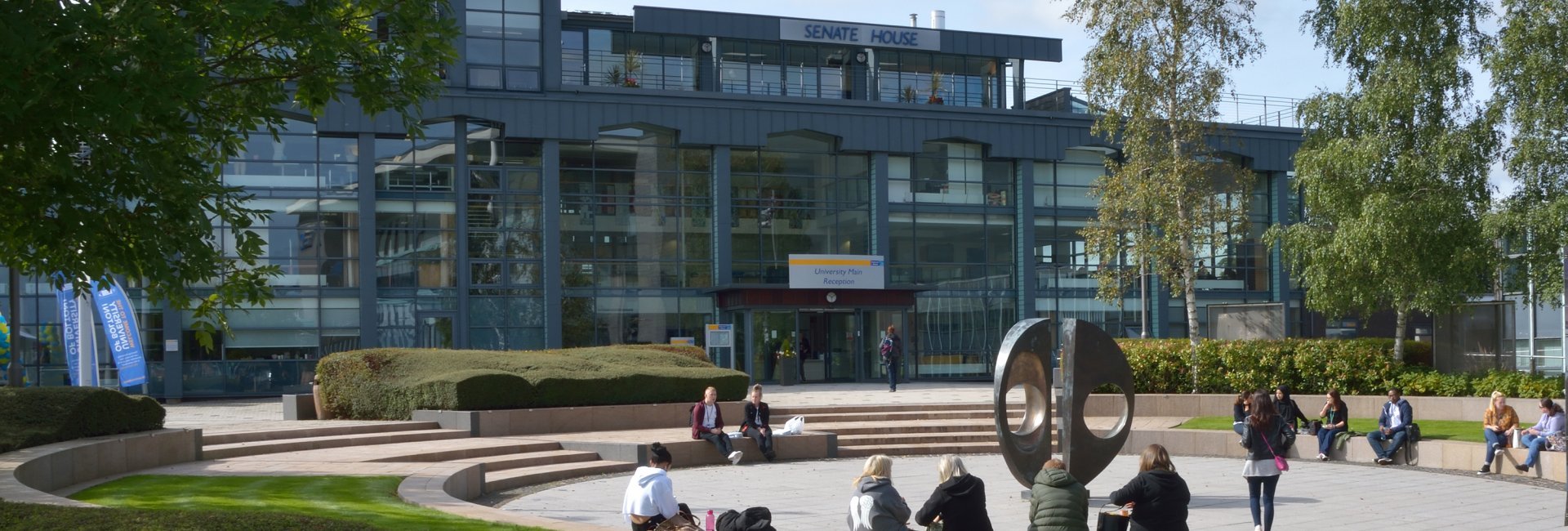
University of Greater Manchester - Open Day
13 Jun 2026, 09:00
Bolton

In December 2024, the University of Bolton was granted permission by the Office for Students (OfS) to change its name to the University of Greater Manchester with immediate effect. While we work to update our systems, you may see both names used in the information we provide.
The University of Greater Manchester's BSc (Hons) Cyber Security (top-up) course is an ideal next step from a foundation degree, HND or equivalent diploma in Computing or Computer Science. If you've already studied some security modules, enjoy problem-solving and want a fast-paced, challenging job, our expert team offer you the knowledge and skills needed to anticipate and combat computer software and data threats, including hacking, theft, viruses, and other forms of cyber attack.
A recent report estimates that the cyber security industry requires approximately 4 million additional professionals worldwide (1). Qualified cyber security professionals have access to excellent career opportunities and competitive salaries. The University of Greater Manchester's BSc (Hons) Cyber Security (top-up) course is an ideal route into this dynamic and evolving industry. By studying with us, you can build on your previous studies and enhance your knowledge and understanding of how to protect data and information systems from cyber breaches while experiencing life at our supportive, student-focused, multicultural campus.
Covering how to design secure computer systems, this forward-thinking degree emphasises secure management of computer systems and promotes a deep understanding of the structure of computing systems. Throughout the course, you'll develop technical knowledge and applied skills in security defence techniques and counter-measures, ready to protect computer systems and electronic infrastructures from attack. In particular, we'll focus on helping you learn to design and develop your own security tools for probing, analysing and defending computer systems against attack.
Our expert and dedicated team will cover how to analyse and evaluate security threats and vulnerabilities to information systems, perform security risk assessments and develop security controls, processes and software. We'll support you as you learn how to respond to security incidents and implement resolution activities. The department's strong links with business mean you'll have the chance to work on ‘live briefs’ in your coursework assignments, so you'll have the opportunity to enjoy real-world context and application for the skills and knowledge we'll help you develop.
With class sizes no greater than 30, we can offer you meaningful, personalised learning plans. Our dedicated and enthusiastic lecturers, many of whom are active researchers with extensive industry insights and experience, will help you develop both the theoretical knowledge and the practical, hands-on skills required by the security sector that will put you one step ahead of attackers from day one. Meanwhile, guest speakers and lecturers give you access to highly relevant and up-to-date input from industry settings.
All of this is backed by our well-equipped IT suites, where you'll get to apply and develop your learning individually and in groups with expert guidance and support.
(1) https://www.isc2.org/Research/Workforce-Study accessed on 18 July 2024
Information about the modules offered as part of this course is available on the University of Greater Manchester's website.
Details of the learning activities and assessment methods for this course are available on the University of Greater Manchester's website.
This is the equal consideration deadline. You can still apply after this date, but your application may not receive guaranteed consideration.

University of Greater Manchester has participated in the Teaching Excellence Framework. These ratings were awarded in 2023, for four years.
See why these ratings were awarded
What does this TEF outcome mean?
The following entry points are available for this course:
You'll have successfully completed a foundation degree (FdSc) or higher national diploma (HND) in computing or software engineering (or another relevant qualification comprising at least 120 credits at HE4 and 120 credits at HE5). Alternatively, you may hold a professional qualification in computer science at an equivalent level, for instance, an APTECH Certified Network Specialist with an overall credit or distinction profile.
We'll be happy to consider your application if you have non-standard qualifications and/or proven relevant experience in the computing industry.
You’ll be required to attend an interview and/or provide a portfolio of work.
Find out more about qualification requirements for this course.
| Test | Grade | Additional details |
|---|---|---|
| IELTS (Academic) | 6 | If English isn’t your first language you’ll also need IELTS 6.0 with no less than 5.5 in any band (or equivalent). |
We also accept a range of other English language qualifications – please visit our English Language Requirements web page for more details.https://www.bolton.ac.uk/international/international-general-entry-requirements/
This section shows the range of grades that students who received offers were previously accepted on to this course with (learn more).
It is designed to support your research but does not guarantee whether you will or won't get a place.
Admissions teams consider various factors, including interviews, subject requirements, and entrance tests. Check all course entry requirements for eligibility.
We are unable to show previous accepted grades for this course. This could be because the course is new, it's a postgraduate course, there isn't enough historical data, or the provider has opted out of sharing their entry grades data for this course - learn more.
| Location | Fee | Year |
|---|
* This is a provisional fee and subject to change.
Tuition fee status depends on a number of criteria and varies according to where in the UK you will study. For further guidance on the criteria for home or overseas tuition fees, please refer to the UKCISA website.
No additional fees or cost information has been supplied for this course, please contact the provider directly.
Email:enquiries@greatermanchester.ac.uk
Phone:+44 (0)1204 903903
Deane Road
Bolton
BL3 5AB
At University of Greater Manchester