Undergraduate On-Campus Open Day at Swansea University - Singleton Park Campus and Bay Campus - 28 March 2026
28 Mar 2026, 08:30
Swansea

If you don’t attain the grades needed to enrol on to the LLB Law in Practice undergraduate programme, then this 5-year programme, including a Foundation Year, could be for you.
The Foundation Year is an excellent way to gain the knowledge and skills needed to begin the LLB Law in Practice degree; you will be introduced to key themes in law, as well as being provided with opportunities to pick up new skills that will be of use throughout your undergraduate degree.
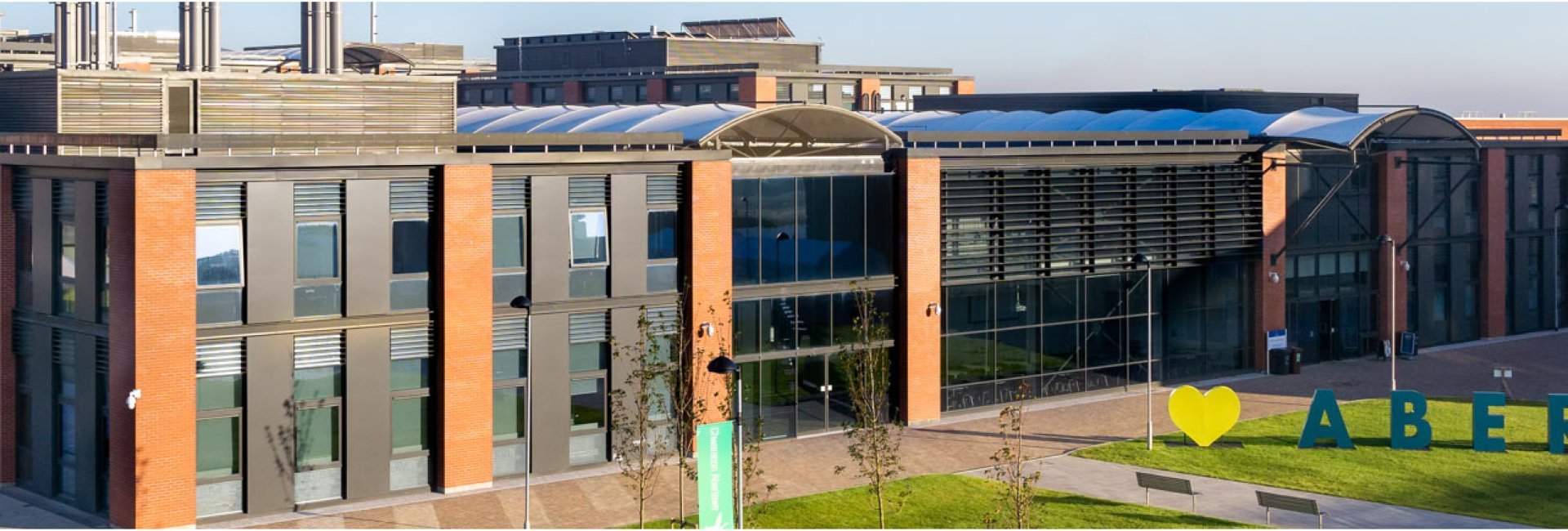
As a student on a Foundation programme, you will benefit from being part of a diverse teaching environment, based in state-of-the-art facilities on our £450m Bay Campus. After you complete this year, you will move to Singleton Campus for the remainder of your studies.
Following your Foundation Year, the next 4 years of your LLB programme provide you with a comprehensive grounding in the core areas covered by a law degree, with a year spent at a paid internship in a legal setting. This will allow you to experience legal practice firsthand, and pick up key skills that will be infinitely useful in your future career.
Throughout your undergraduate law degree, you will develop excellent research and analytical skills and learn to present your ideas effectively both verbally and in writing. As your studies progress, you can choose from a wide range of specialised areas of law including medicine, human rights, family, the environment, trade, employment, and media; enabling you to shape your own learning.
You will be supported by our established Employability Team to help you secure a placement in a legal service environment for your third year, which will have tangible benefits for your future career path and employment.
Swansea has an established and growing reputation for law teaching and research. The School of Law is recognised as a source of expertise, and as having an impact on policy and practice in a diverse range of fields of practice. The School is wholly committed to continuous improvement in teaching and learning, and to putting students at the centre of its activities.
As a result, Law at Swansea is ranked:
• 12th in the UK for Teaching Quality (Times Good University Guide 2024)
• 13th in the UK for Student Experience (Times Good University Guide 2024)
• Top 15 in the UK for Teaching Satisfaction (Guardian University Guide 2024)
• Top 150 in the World (QS World University Rankings by Subject 2025)
All of our undergraduate Law programmes contain the foundations of legal knowledge needed to enter the legal profession. Our programmes provide a strong foundation for students who may wish to take the Solicitors Qualifying Examinations (SQE) in the future, and satisfy the academic stage of training required by the Bar Standards Board for those wishing to become barristers.
Your first year of study will be your Foundation Year at The College. This covers a mix of key themes in law, combined with the knowledge and skills needed to be successful in your degree. Themes of study include:
Legal Skills, Criminal Law, Critical Thinking, Composition and Style
On successful completion of your Foundation Year, you will move to Singleton Campus to complete your LLB degree.
Years 2 and 3 consist of the core areas of a law degree, with the option to select some of your own modules in both years. Across Years 1 and 2, you will typically study areas including:
Criminal Law, Equity and Trusts, Law of Contract, Law of Tort, Legal System, Property Law, Public Law and Skills for the Study of Law
Year 4 (Level S) will be spent at a paid internship in a legal setting. You will take the internship module (LA-S000) and be assessed throughout the year and receive an overall module mark with feeback for each element. If the mark attained for your placement year (Level S) is not to your advantage (i.e. does not improve your overall weighted average) then it will not be counted towards your overall degree classification.
Your final year consists entirely of optional modules allowing you to shape your own learning. We have a wide range of optional modules, you will typically study areas including:
Cybercrime, Family Law, Intellectual Property Law, Science and Technology, Media Law, Medical Law, Company Law, Trade, Advocacy and Human Rights
We offer a variety of assessment methods within our programmes. In addition to traditional examinations and essays, examples of alternative assessment can include:
• Writing a letter of advice to a client
• Blog and poster writing
• Group-based tasks
• Reflective Exercises
• Presentations
The following entry points are available for this course:
If you are an International Student, please visit our International pages for more information about entry requirements: http://www.swansea.ac.uk/international/students/requirements/
Discover what it's like to study Law in Practice with a Foundation Year at Swansea University: insights on the course, making friends, personal statement tips, uni prep, and recommended books, podcasts, and videos.

English Language Requirements at Swansea University https://www.swansea.ac.uk/admissions/english-language-requirements/
UK applicants who meet course requirements are guaranteed a conditional offer. We assess applications on individual merit. We consider making reduced offers, eg. to Care Leavers or students with extenuating circumstances. We encourage you to disclose any relevant circumstances.
The Advanced Skills Baccalaureate Wales is considered as equivalent to one full A-Level and students can take x2 A-levels alongside this. EPQ students predicted Grade B or above will receive a one-grade offer reduction.
This section shows the range of grades students (with UK A-Levels or Pearson BTEC Level 3 National Extended Diplomas) who received offers were previously accepted with (learn more). It is designed to support your research but does not guarantee whether you will or won't get a place. Admissions teams consider various factors, including interviews, subject requirements, and entrance tests. Check all course entry requirements for eligibility.
We are unable to show previous accepted grades for this course. This could be because the course is new, it's a postgraduate course, there isn't enough historical data, or the provider has opted out of sharing their entry grades data for this course - learn more.
Operated by the Office for Students
Employment after 15 months (Most common jobs)
Go onto work and study
The number of student respondents and response rates can be important in interpreting the data – it is important to note your experience may be different from theirs. This data will be based on the subject area rather than the specific course. Read more about this data on the Discover Uni website.
No fee information has been provided for this course
Tuition fee status depends on a number of criteria and varies according to where in the UK you will study. For further guidance on the criteria for home or overseas tuition fees, please refer to the UKCISA website.
For the latest fee information, please check the individual course page on our website. Our full range of programmes are listed here: https://www.swansea.ac.uk/undergraduate/courses/
Further information on tuition fees can be found here: https://www.swansea.ac.uk/undergraduate/fees-and-funding/tuition-fees/