
Queen's University Belfast
University Road
Belfast
BT7 1NN
Visit our website Visit our course page
Course contact details
Admissions and Access Service
Email:admissions@qub.ac.uk
Phone:028 9097 3838
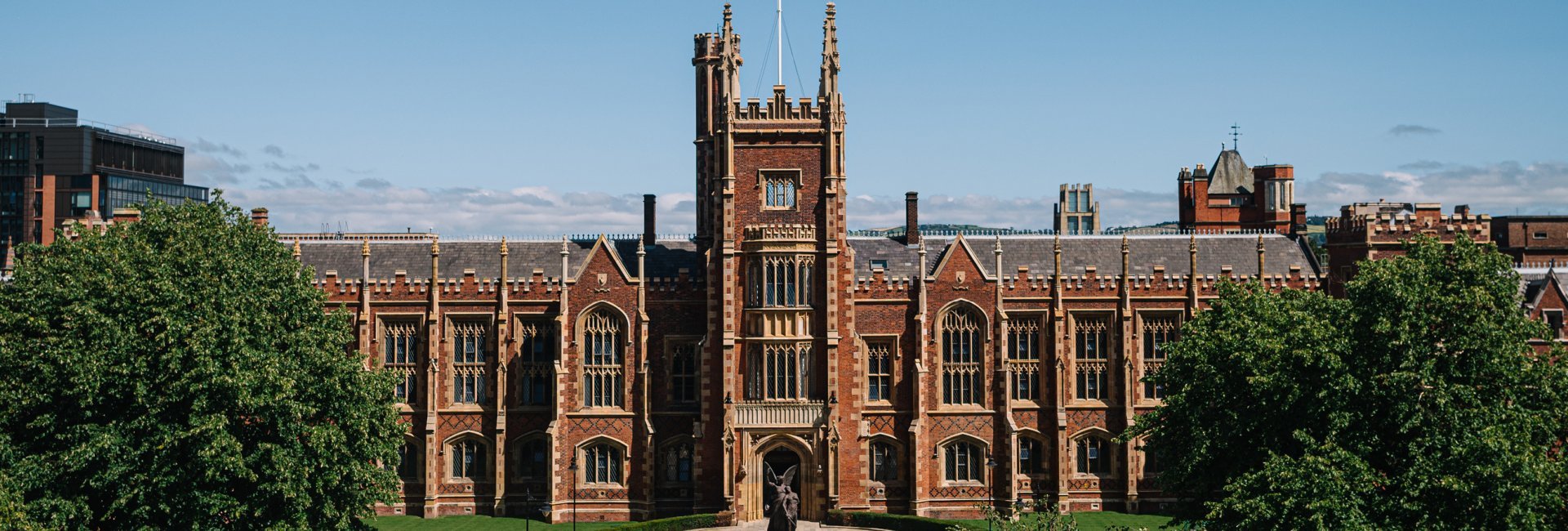
We are #1 in the UK for Food Science teaching (Times and Sunday Times Good University Guide 2025) and #2 in the Complete University Guide 2026.
This degree programme is about gaining the knowledge and understanding of key areas in relation to food production and consumption.
Food Science concerns the ‘fitness for purpose’ of our food in terms of appearance (e.g. colour and surface qualities, texture, flavour and odour) and how these can be improved, alongside the physical, microbiological and chemical aspects of our food, which may be harmful to human health and how these can be minimised.
Nutrition concerns the nutrient supply from foods necessary to support the human body in health and during ill health throughout all life stages.
These degrees emphasise the inter-relationship between these areas and their equal importance in food production.
Professional Accreditations
The programme has undergone a professional accreditation process overseen by the Institute for Food Science and Technology (IFST). This provides quality assurance that the programme offers students ‘the best possible food-related education’.
We are very proud that our students have had notable successes in UK wide IFST competitions, including our student team who were Silver winners at Ecotrophelia UK 2024 , creating a cookie dough product made from brewers spent grain. Watch this video to hear Team NoDoh share their exciting competition experience at Nestle in England where they secured second place in the UK final by impressing the "Dragons" judging panel and received £1000 and a year's free IFST membership. https://www.youtube.com/watch?v=kcIbK7J5iL4
https://www.ifst.org/organisations/accreditation-schemes/accreditation-degree-courses/accredited-degree-programmes
Career Development
Work placements on these programmes provide students with the opportunity to utilise the practical skills gained during the teaching of their degree and apply these in a work environment.
For many students this is the most important aspect of the degree, enabling them to experience the types of jobs which are available on graduation and through the preparation of CVs, interviews, etc. ensuring they are well prepared for the job market.
Our past students have gained work placement with organisations such as: Pepsico, Sainsbury’s, Marks & Spencer, The Food Standards Agency, Finnebrogue, Suki Tea, Dale Farm, Nestlé, Kerry group, Kraft Foods, Moy Park, Tayto, Hovis, Ulster Cancer Foundation, NI Chest, Heart & Stroke, hospital trusts and many more.
Further Study Opportunities
The opportunity to combine Masters level study with your undergraduate degree qualifies students to gain experience in Masters level research in their final year of study.
The following entry points are available for this course:
This section shows the range of grades students (with UK A-Levels or Pearson BTEC Level 3 National Extended Diplomas) who received offers were previously accepted with (learn more). It is designed to support your research but does not guarantee whether you will or won't get a place. Admissions teams consider various factors, including interviews, subject requirements, and entrance tests. Check all course entry requirements for eligibility.
Students aged 17/18 who applied to this course were offered a place.
See how students with your grades have been accepted onto this course in the past.
Operated by the Office for Students
Employment after 15 months (Most common jobs)
Go onto work and study
The number of student respondents and response rates can be important in interpreting the data – it is important to note your experience may be different from theirs. This data will be based on the subject area rather than the specific course. Read more about this data on the Discover Uni website.
| Location | Fee | Year |
|---|---|---|
| England | £9250 | Year 1 |
| Scotland | £9250 | Year 1 |
| Wales | £9250 | Year 1 |
| Channel Islands | £9250 | Year 1 |
| Northern Ireland | £4750* | Year 1 |
| Republic of Ireland | £4750* | Year 1 |
| EU | £25300 | Year 1 |
| International | £25300 | Year 1 |
* This is a provisional fee and subject to change.
Tuition fee status depends on a number of criteria and varies according to where in the UK you will study. For further guidance on the criteria for home or overseas tuition fees, please refer to the UKCISA website.
The tuition fees quoted above for NI and ROI are the 2024/25 fees and will be updated when the new fees are known. In addition, all tuition fees will be subject to an annual inflationary increase in each year of the course. Fees quoted relate to a single year of study unless explicitly stated otherwise.
Further information on Fees and Funding can be found at: https://www.qub.ac.uk/Study/Feesandfinance/.
University Road
Belfast
BT7 1NN
Visit our website Visit our course page
Email:admissions@qub.ac.uk
Phone:028 9097 3838