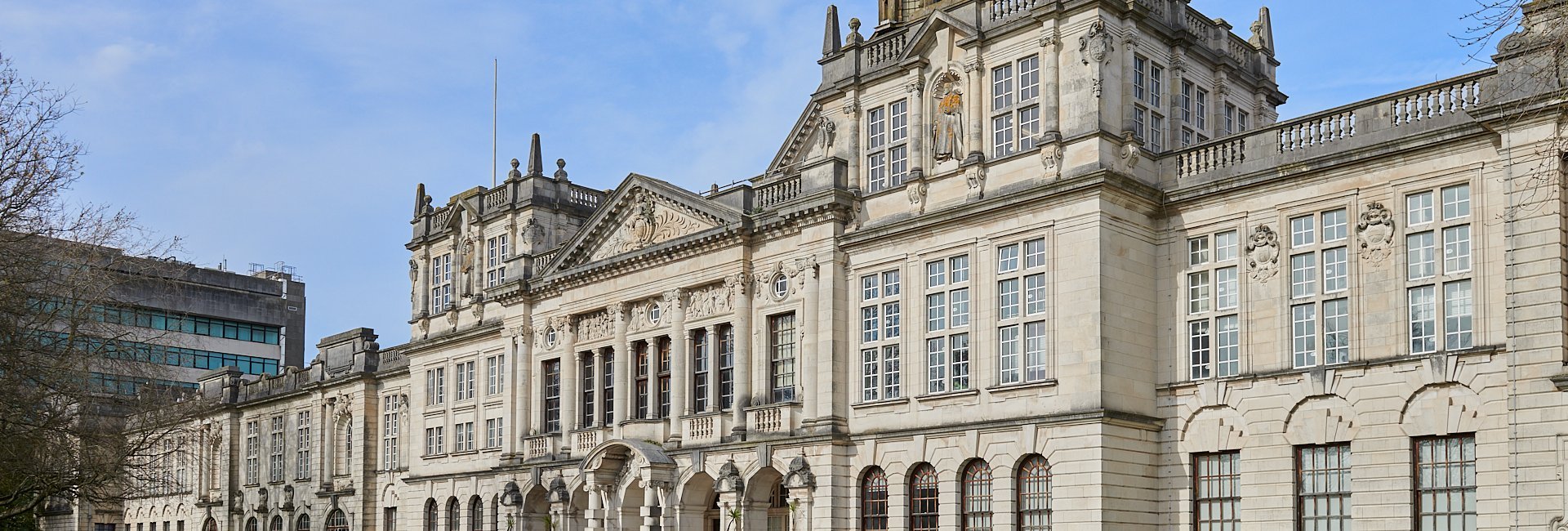
Cardiff University - open day event
26 Jun 2026, 08:00
Cardiff

At the Welsh School of Architecture you’ll develop a thorough grounding in architecture as a discipline and a strong emerging sense of your own approach to design.
Through a combination of design project work and taught modules, you’ll study the varied historical, theoretical, cultural, political, and geographical dimensions of architecture. You will consider how architecture is made, how it performs and how technological choices can support the wellbeing of present and future generations and care for the planet. You’ll explore issues around professional and ethical responsibility to reflect on the role of the architect in society and in response to the UN Sustainable Development Goals. Your design studies will continually involve imaginative engagement with real-world issues and global challenges such as climate change within localised contexts. The design studio is at the centre of our community, a place where you’ll mix with students, staff, and industry practitioners to address ethical, global, climatic and professional issues.
The BSc facilitates progression onto the MArch (Part 2), as well as our suite of postgraduate programmes. Students intending to become registered architects in the United Kingdom will need to complete a Part 3 programme such as our Postgraduate Diploma in Architecture: Professional Practice.
At the heart of your experience at the Welsh School of Architecture will be the design project work that is core to the practice of architecture. Design project work is carried out in our purpose-built physical design studios; here you can work with your fellow students, share ideas and provide mutual support. Your studies will be shaped by exposure to world-leading teacher-practitioners and researchers who, through weekly tutorials, will encourage you to develop new creative approaches to design. You’ll be encouraged to experiment with design, take creative risks and expand your thinking.
As well as independent study, lectures will explore the contextual issues that inform design project work. Individual and small group tutorials and consultancies will provide feedback and feedforward on your work. Field trips and site visits provide an opportunity to experience architecture, places, and spaces first-hand, and to analyse contexts, cultures and communities to inform your design studies.
Distinctive Features
Accredited by professional bodies
The programme is accredited by the Royal Institute of British Architects (RIBA), the Architects Registration Board (ARB) and the Board of Architects in Malaysia (LAM). Graduates gain exemption from the RIBA Part 1 exam.
A top school of architecture
Study in one of the top 5 schools of architecture in the UK, joining our global community of staff and students.
A focus on real world issues and global challenges
Our BSc promotes ‘grounded creativity’ through exposure to global challenges and engagement with local communities, producing sought-after graduates ready to shape the future of design practice.
Dedicated studio environments
Our bespoke facilities, located in an historical building, include hybrid studios, workshops, digital fabrication and a Living Lab.
Professionally accredited courses provide industry-wide recognition of the quality of your qualification.
The following entry points are available for this course:
D in T Level Design, surveying and planning for construction.
You must have or be working towards English language or Welsh language at GCSE grade C/4 or an equivalent (if you require a Student visa, you must ensure your language qualification complies with UKVI requirements) and GCSE Maths grade C/4 or equivalent qualification (subject and grade). If you are taking A-level Maths (or equivalent), GCSE Maths is not required. Core Maths may also be accepted in place of GCSE Maths.
For applicants taking the EPQ qualification, an A in the EPQ can be recognised to lower the entry requirements by a single grade. For example an AAB offer would be “AAB from 3 A levels or ABB from 3 A levels and a grade A in the EPQ”. Please note that any subject specific requirements must be met.
36-34 overall including 6 in one HL subject or 666 in 3 HL subjects.
The Advanced Skills Baccalaureate Wales will be accepted in lieu of one A level at the A level grades specified, excluding any subject specific requirements.
in a BTEC Extended Diploma in any subject.
The Advanced Welsh Baccalaureate Skills Challenge Certificate will be accepted in lieu of one A Level at the A Level grades specified, excluding any subject specific requirements.
We do not accept Critical Thinking, General Studies, Citizenship Studies, or other similar equivalent subjects.
We will accept a combination of BTEC subjects, A-levels, and other qualifications, subject to the course specific grade and subject requirements.
As part of your application to the Welsh School of Architecture, we ask you to send us a small portfolio of creative work. This is especially important if you haven’t studied art or design, or don’t have a creative background. It helps us see your potential and how ready you are for studying architecture.
Your portfolio should show your creativity. This could be through drawing, photography, pottery, dance, choreography, set design, or anything else that expresses who you are. It doesn’t have to be related to architecture. There’s no set format – we want to see your originality! We’re looking for passion, creativity, and thoughtful ideas about the world around you. Use your work to show us what you're interested in.
Here are the guidelines for submitting your portfolio:
• It must be in a digital format (PDF)
• The file size should be no more than 10MB
• It should have no more than 9 pages, including the cover
• Use A3 paper size in landscape orientation (since we’ll view it on screen)
• Don’t send us links – we can’t accept them
• You can include as many images as you want, but make sure they are clear and well chosen
• You will have a total of 6 weeks to send the requested portfolio to us from the date of the first request.
All applicants are expected to have demonstrable English language skills. Most courses ask for GCSE English grade C/4 or equivalent, but some courses ask for GCSE English grade B/6 or equivalent. https://www.cardiff.ac.uk/study/international/english-language-requirements/undergraduate
At Cardiff we welcome applications from people of all backgrounds, as part of this our contextual admissions policy aims to widen participation and improve access to Higher Education (HE).
For more information on Cardiff University contextual admissions, including how applications are scored and how we use that score, please see our website.
This section shows the range of grades that students who received offers were previously accepted on to this course with (learn more).
It is designed to support your research but does not guarantee whether you will or won't get a place.
Admissions teams consider various factors, including interviews, subject requirements, and entrance tests. Check all course entry requirements for eligibility.
We are unable to show previous accepted grades for this course. This could be because the course is new, it's a postgraduate course, there isn't enough historical data, or the provider has opted out of sharing their entry grades data for this course - learn more.
| Location | Fee | Year |
|---|---|---|
| England, Scotland, Wales, Northern Ireland, Channel Islands & Republic of Ireland | £9790 | |
| EU & International | £30700 |
Tuition fee status depends on a number of criteria and varies according to where in the UK you will study. For further guidance on the criteria for home or overseas tuition fees, please refer to the UKCISA website.
Fees stated are for the 2026/7 academic year.
Tuition fees cover all reasonable costs required to complete the stated programme. Optional study trips, placements, or equipment are at your own cost. Tuition fees exclude living costs such as accommodation, subsistence and travel.
UK and Islands:
The University may increase fees as permitted by law or Welsh Government policy. We will notify you of changes by the end of June in the preceding academic year.
EU, EEA, and Switzerland:
Unless eligible for UK fee status, fees will align with international fees. Check eligibility at: https://www.ukcisa.org.uk/student-advice/fees/full-list-of-categories-for-he-in-wales/
International:
Fees are fixed for the programme duration, excluding Medicine and Dentistry programmes. During the pre-clinical element of Medicine and Dentistry programmes the fee rate will be fixed, after which the clinical fee rate is charged. Further details: http://www.cardiff.ac.uk/study/international/funding-and-fees
Cardiff University has many scholarships on offer to our prospective students. Please see our website at http://www.cardiff.ac.uk/study/undergraduate/funding/scholarships for further information.
Email:admissions@cardiff.ac.uk
Phone:029 2087 9999
PO Box 921
Cardiff
CF10 3XQ
At Cardiff University