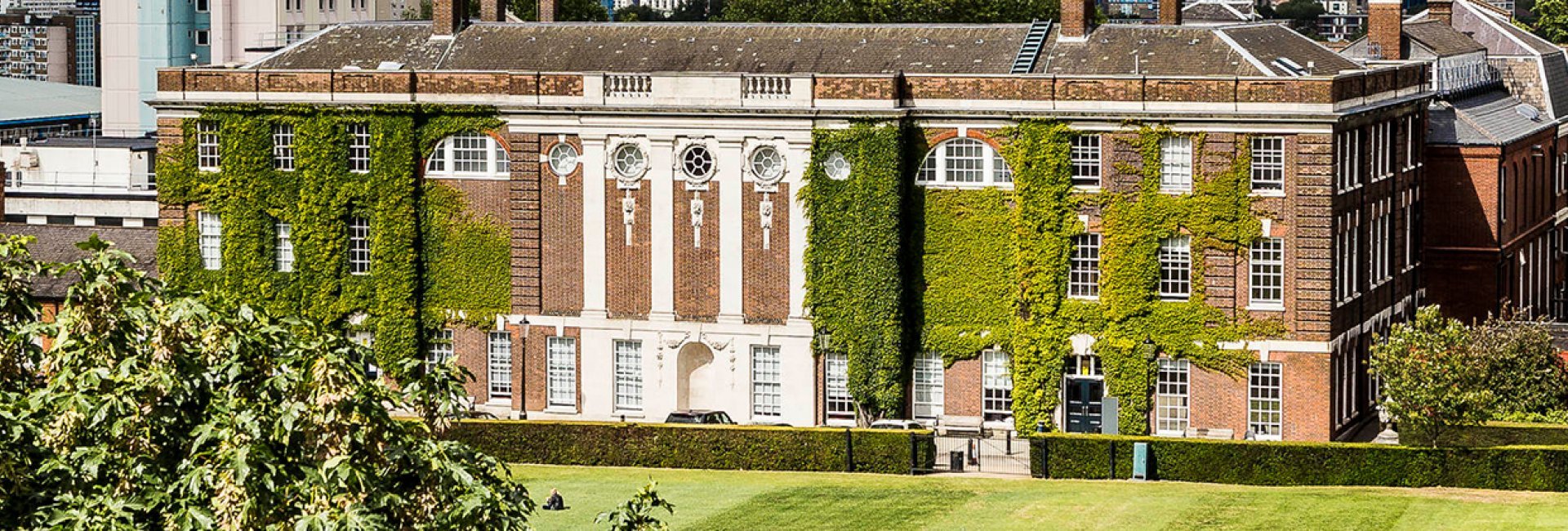
Goldsmiths, University of London - Virtual Campus Tour
25 Nov 2025, 12:00
London

Race, Media and Social Justice offers a rigorous and academic approach to deepen your understanding of contemporary issues regarding race and ethnicity, in order to form your own interventions that can contribute to social justice and equality.
Learn via a systematic exploration of research and scholarship into race and ethnicity across the overlapping fields of sociology, media and cultural studies.
An interdisciplinary approach is used to provide you with the analytical tools and skills needed to enable you to explain and critique why contemporary understandings and representations of race take the shape that they do.
The programme is broadly framed in terms of issues of social justice, specifically the social ideals of equality, valuing diversity, and the right to live in dignity, and how this relates to the formation of racial and ethnic identities.
The Department of Media, Communications and Cultural Studies has been ranked second in the UK for 'world-leading or internationally excellent' research (Research Excellence Framework, 2021) and 16th in the world (third in the UK) in the 2024 QS World Rankings for communication and media studies.
The programme consists of two main components:
Conceptual understanding
The first component is designed to give you a foundation in sociological and critical cultural approaches to race and ethnicity, offering a strong conceptual basis for understanding matters of race and racialisation historically and with regard to contemporary contexts and debates. This includes a critical analysis of the social/political theory of the liberal/ multicultural/postcolonial/cosmopolitan settlements of ‘race’. The aim is to deepen your understanding of the formation of ethnic and racial identities, racism and multiculturalism in relation to issues of social justice.
Contextual knowledge
The second component situates the study of race and racism more explicitly within the context of the media, looking at issues of representation and the persistence of historical constructions of Otherness. The unique intervention of the programme is in drawing attention to the context of production, exploring the experience of people of colour working in the cultural industries. This component will be enhanced by a series of industry talks from BAME practitioners working in the creative, cultural and communication industries, which will give you practical insight into the experience of race in the media.
Choose a specific option to see funding information.
Course optionsNew Cross
Lewisham
SE14 6NW
Email:course-info@gold.ac.uk
Phone:020 7078 5300