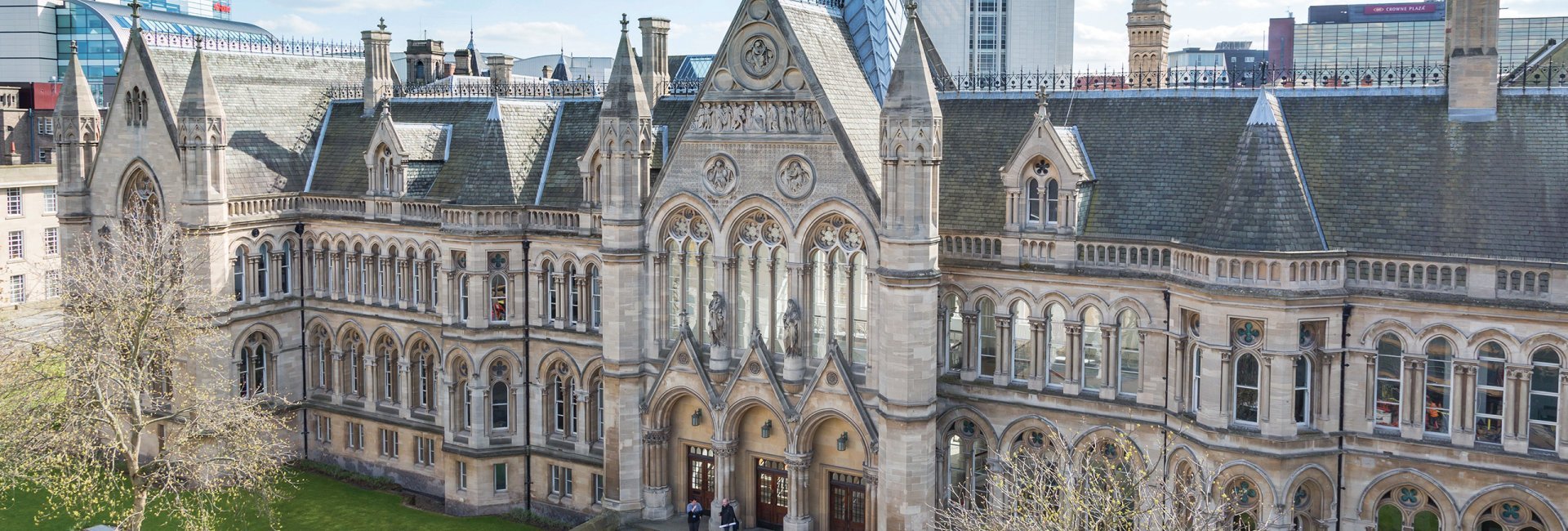
Nottingham Trent University - 27 June Open Day
27 Jun 2026, 08:00
Nottingham

Microbiology focuses on the amazing hidden world of microorganisms that are too small to see with the naked eye. Microbes are everywhere and influence all aspects of our lives - their activities underpin the air we breathe, the food we eat, and even our own bodies are "mostly microbe"!
At NTU, it’ll all start with getting to know your way around a lab – picking up all the techniques, tests and applications a future employer could wish for. Then we’ll replicate workplace-like experiences for you, whatever area of microbiology you are interested in whether it is medical research, biotechnology, food safety or infection diagnostics. In each area, you will learn how to analyse and communicate your results.
Taught by internationally renowned experts, you will learn about the microorganisms associated with global health issues such as human immunodeficiency virus (HIV), tuberculosis (TB) and influenza, paying particular attention to microbes of medical importance.
We’ll also show you how microorganisms influence the world around us, and how microbiology knowledge can help solve big global problems such as climate change, pollution and antibiotic resistance.
Why study BSc (Hons) Microbiology at NTU?
Get industry experience
Through group work and the Practical Techniques for Biology and Professional Skills in Microbiology modules, you’ll start designing your own experiments and trying things out. Problem solving skills are valuable for any graduate and we make sure you develop these right from the start of your course, with lots of opportunities to test things out and learn by doing. We’ve also embedded employability skills in the course, so you are not only learning theory and skills, but you know where to find your dream job and how to apply for it.
In your second year you’ll take part in the Microbiology Society’s Unearthed Scheme. Through testing your own soil samples you’ll be trying to isolate antibiotic producing bacteria. Your results will be used as part of the data collect from around the world.
Take a work placement
Placements tell future employers you know how to do it as well as why. Our industry connections as well as the support you'll get from our Employability team all add up to a valuable work placement experience.
In Year Three, you’ll be encouraged to take a year-long placement overseas, or in the UK. Our recent students have taken placements across a wide range of companies including the NHS, Scancell and GlaxoSmithKline. They secured varied roles such as Research Assistant, Trainee Biomedical Scientist (Microbiology) and Assistant Project Worker.
You'll be supported throughout your placement year and will write a reflective report and diary during your placement. When you successfully complete your placement, you will be eligible to receive an additional award of a Diploma in Professional Practice.
Develop your portfolio
While you are at NTU you’ll create a skills portfolio. This is where you’ll keep evidence of all the techniques and skills you’ve mastered. These portfolios help you to document and develop your skills while you are with us. And they are a valuable tool when you graduate too, as they can be used to show future employers you are ready to work in a professional environment.
Professional accreditation
The Royal Society of Biology have accredited this course. Accreditations are a seal of approval from professional bodies and our assurance to you that your course is relevant and valued by industry.
This is the equal consideration deadline. You can still apply after this date, but your application may not receive guaranteed consideration.

Nottingham Trent University has participated in the Teaching Excellence Framework. These ratings were awarded in 2023, for four years.
See why these ratings were awarded
What does this TEF outcome mean?
The following entry points are available for this course:
112 - 120 UCAS Tariff points from up to four qualifications (two of which must be A-level equivalent including Biology grade C or equivalent)
112 - 120 UCAS Tariff points from up to four qualifications (two of which must be A-level equivalent including Biology grade C)
DDM from a BTEC Extended Diploma including relevant Biology modules
Pass your Access course with 60 credits overall with a minimum of 45 credits at level 3 including relevant Biology modules
112 - 120 UCAS Tariff points from your BTEC Level 3 National Diploma and up to two other qualifications including A-Level Biology grade C or equivalent
112 - 120 UCAS Tariff points from your BTEC Level 3 National Extended Certificate and up to three other qualifications (one of which must be A-Level equivalent including Biology grade C or equivalent).
We will consider T Levels for entry to this course, either as stand-alone qualifications or in conjunction with other Level 3 qualifications, in accordance with the specified course tariff points.
A lower offer may be made based on a range of factors, including your background (such as where you live and the school or college you attended), your experiences and individual circumstances (you may have been in care, for example). This is called a contextual offer and we get data from UCAS to make these decisions. NTU offers a student experience like no other, and this approach helps us to find students who have the potential to succeed here, but may have faced barriers that can make it more difficult to access university.
We also consider equivalent qualifications and combinations. Please contact Nottingham Trent University Admissions team for further information.
NTU makes contextual offers for this course to give everyone a fair chance to access their chosen degree.
Contextual offers are lower than our standard entry criteria or may be an unconditional offer for courses that require a portfolio. We also take individual circumstances into account when we receive results and may accept grades lower than our published criteria.
We use a range of data from UCAS to make our offers and more information on our approach is available at the link below.
This section shows the range of grades that students who received offers were previously accepted on to this course with (learn more).
It is designed to support your research but does not guarantee whether you will or won't get a place.
Admissions teams consider various factors, including interviews, subject requirements, and entrance tests. Check all course entry requirements for eligibility.
We are unable to show previous accepted grades for this course. This could be because the course is new, it's a postgraduate course, there isn't enough historical data, or the provider has opted out of sharing their entry grades data for this course - learn more.
| Location | Fee | Year |
|---|
Tuition fee status depends on a number of criteria and varies according to where in the UK you will study. For further guidance on the criteria for home or overseas tuition fees, please refer to the UKCISA website.
The tuition fees above are subject to parliamentary procedure. They haven't been confirmed yet, but we expect them to be finalised by May 2026. The level of tuition fees for the second and subsequent years of your undergraduate course may increase in line with inflation and as specified by the UK government.
Phone:+44(0)115 848 4200
50 Shakespeare Street
Nottingham
NG1 4FQ
At Nottingham Trent University