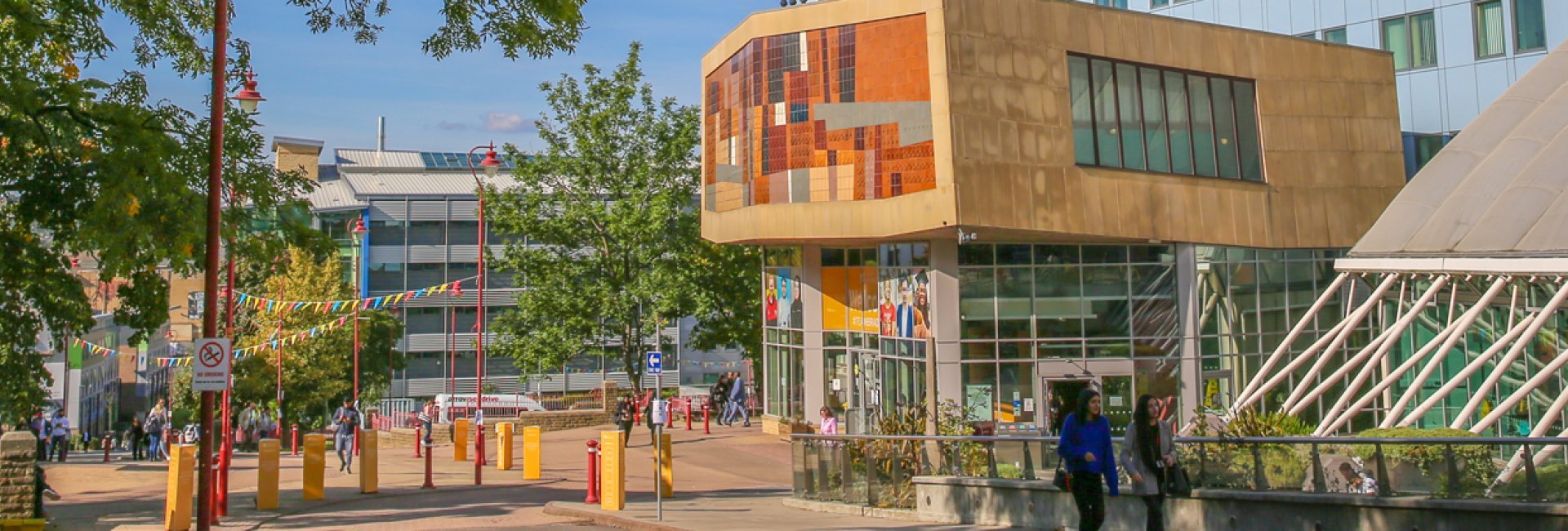
University of Bradford - Undergraduate Open Day
27 Jun 2026, 08:00
Bradford

This pioneering degree programme responds to the world’s need for cleaner and more efficient processes, to move towards a sustainable society.
You'll gain the knowledge and skills to design, optimise, and implement sustainable industrial processes. As a graduate, you'll be sought after in industries focused on energy efficiency, waste reduction, and environmental sustainability.
You'll train as a future leader, ready to drive sustainable social and economic development through cleaner and more efficient chemical and manufacturing processes.
This programme will provide you with the knowledge and understanding of many areas of sustainable processing, including:
carbon management
renewable energy
water and wastewater treatment
food
waste
plastics
circular economy
environmental engineering
sustainable process design
green chemistry
energy efficiency
You'll be able to incorporate the concept of sustainability into the design, commissioning and efficient operation of chemical and manufacturing plants. In doing so, you'll help create a greener and more sustainable world.
You'll have the opportunity to:
work on sustainability-related projects, including the evaluation of the environmental impacts of processes using Life Cycle Assessment (LCA)
engage with industrial speakers regarding sustainable processing
work with the latest in sustainable processing education technology to further your technical capabilities
work with process design and simulation industry-grade software such as LCA, ASPEN, MATLAB, Ansys
Year 1:
Mathematical Methods and Applications,
Computer Aided Engineering,
Design, Build & Test (Sustainable Process Engineering),
Fundamentals of Sustainability,
Engineering Materials,
Thermofluids.
Year 2:
Chemistry for Engineers,
Thermodynamics and Carbon Management Technologies,
Further Mathematics and Statistics,
Mass Transfer Operations,
Reaction Engineering,
Transport Processes.
Year 3:
Sustainable Process Engineering Design Project (Core),
Process Design and Control (Core),
Environmental and Sustainable Engineering (Core),
Reliability & Safety Engineering (Core),
Project Management & Six Sigma (Option),
Sustainable Energy (Option).
The Sustainable Process Engineering (SPE) programme is designed to help you progress in your learning across different study levels, focusing on various competencies related to the subject. Throughout the programme, you will engage in collaborative work, highlighting the importance of teamwork in both disciplinary and multidisciplinary tasks. Various group tasks, such as design challenges, experiments, presentations, and industry projects, create a flexible learning experience. Authentic real-life challenges help develop your critical thinking skills.
Assessment methods reflect the same progression in learning independence as you advance through your SPE journey. In the early stages, you will receive close guidance from tutors and have access to additional support. Assessments include exams, quizzes, practical tests, and coursework, focusing on fundamental knowledge of Process and Sustainable Engineering. At Level 5, assessments will emphasise how you apply your knowledge to simpler assignments and experimental activities, leading to more independent learning. Levels 6 and 7 will focus on applying advanced SPE knowledge and assessing your ability to create and evaluate solutions.
Professionally accredited courses provide industry-wide recognition of the quality of your qualification.
This is the equal consideration deadline. You can still apply after this date, but your application may not receive guaranteed consideration.

University of Bradford has participated in the Teaching Excellence Framework. These ratings were awarded in 2023, for four years.
See why these ratings were awarded
What does this TEF outcome mean?
The following entry points are available for this course:
104 UCAS tariff points to include GCE Advanced Level Mathematics at Grade C and an additional Science subject, plus GCSE English and Mathematics at grade C/grade 4 or equivalent.
104 UCAS points to include Maths at grade C and an additional Science subject
Acceptable subjects: Any Engineering:
BTEC Extended Diploma (2010): To include Further Mathematics for Engineering Technicians module (Unit 28) at Merit.
BTEC National Extended Diploma (2016): To include Calculus to Solve Engineering Problems (Unit 7) and Further Engineering Mathematics (Unit 8) at Merit.
104 UCAS tariff points to include 12 Level 3 Maths credits at Merit. Applicants should be studying an Access to HE in Science or Engineering.
104 UCAS tariff points to include Advanced Higher grade D in Maths and an additional Advanced Higher Science subject plus SQA Credit standard grade / Intermediate 2 at grade 3 in English or SQA National 5 grade C in English.
104 UCAS tariff points to include Higher Level Maths at grade 5 and an additional Higher Level Science subject plus Higher Level grade 3 or Standard Level grade 4 in English.
104 UCAS tariff points to include five Higher Level subjects including Higher Level Maths at grade H1 and an additional Science subject plus Ordinary Level English at grade O4.
Overall Merit from the following T Level routes:
• Science
• Maintenance, Installation and Repair for Engineering and Manufacturing
• Design and Development for Engineering and Manufacturing
• Engineering, Manufacturing, Processing and Control
The University welcomes applications from students with a wide range of qualifications from the UK and overseas, including combinations of qualifications. To check whether your qualifications meet the entry requirements for this course, please contact the University.
English language requirements for International and EU applicants:
The standard University requirement is IELTS 6.0 with no sub-test less than 5.0 (or equivalent). However, if you require a Tier 4 (student) visa to study you will need to meet the UK Visas and Immigration (UKVI) department's requirement which is currently IELTS 6.0 with no sub-test less than 5.5. Conditional offers to international students will be made on this basis.
We are proud to be one of the most inclusive universities in the UK. All our students have potential, and we believe that as many people as possible should have the chance to benefit from higher education, no matter what their background or circumstances.
We take the time to understand the background of our applicants, understand their journey to education, and make decisions based on an applicant’s potential to thrive at university and beyond.
This section shows the range of grades that students who received offers were previously accepted on to this course with (learn more).
It is designed to support your research but does not guarantee whether you will or won't get a place.
Admissions teams consider various factors, including interviews, subject requirements, and entrance tests. Check all course entry requirements for eligibility.
We are unable to show previous accepted grades for this course. This could be because the course is new, it's a postgraduate course, there isn't enough historical data, or the provider has opted out of sharing their entry grades data for this course - learn more.
| Location | Fee | Year |
|---|
* This is a provisional fee and subject to change.
Tuition fee status depends on a number of criteria and varies according to where in the UK you will study. For further guidance on the criteria for home or overseas tuition fees, please refer to the UKCISA website.
No additional fees or cost information has been supplied for this course, please contact the provider directly.
Email:admissionsedt@bradford.ac.uk
Phone:01274 236088
Richmond Road
Bradford
BD7 1DP
At University of Bradford