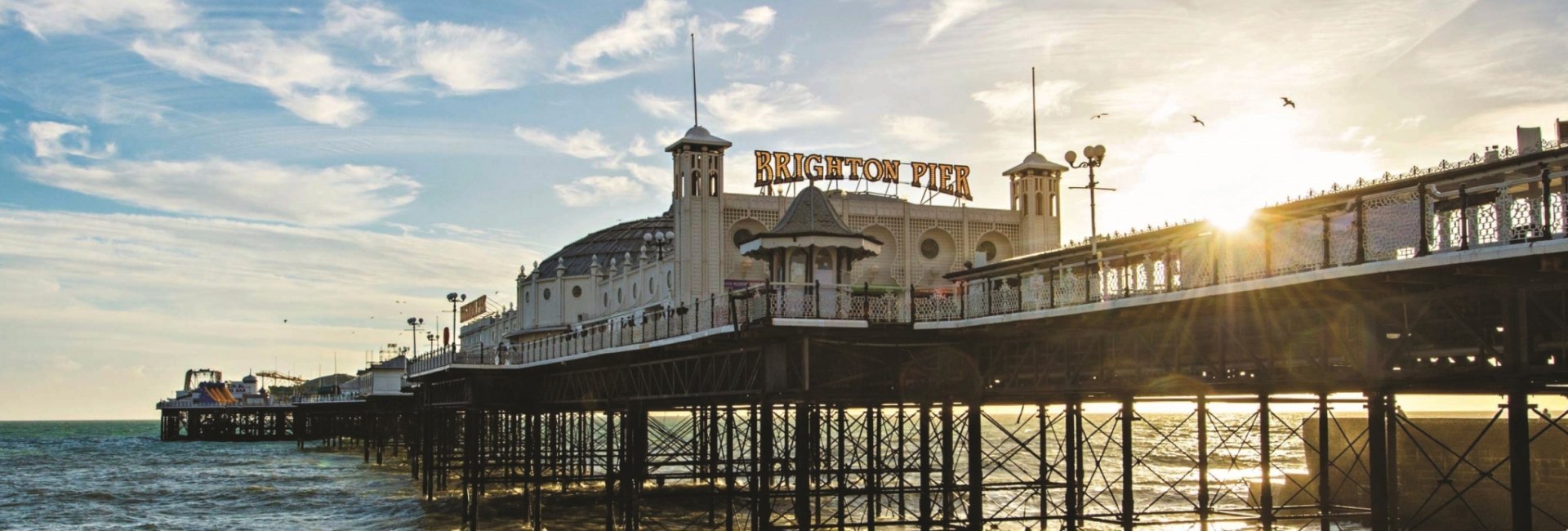
University of Brighton open day - Moulsecoomb campus
13 Jun 2026, 08:30
Brighton

An Environmental Sciences degree at Brighton prepares you to understand and address the complex interactions between people and the planet. You’ll study the science behind climate change, biodiversity loss and environmental degradation, and learn how to develop solutions for a sustainable future.
At Brighton, you’ll gain practical experience through fieldwork, laboratory sessions and real-world projects. You’ll explore topics such as ecology, environmental chemistry, pollution control and sustainability, and develop technical skills in GIS, remote sensing and data analysis for environmental monitoring and planning.
Brighton graduates go on to careers in environmental consultancy, conservation, sustainability management, water and waste industries, and government agencies. Many progress to postgraduate study or specialise in areas such as environmental assessment, renewable energy or climate adaptation.
Top reasons to choose this course
Gain a degree with professional accreditation from the Institution of Environmental Sciences (IES), recognising its quality and relevance to industry standards.
100% of students on this course who filled out the National Student Survey 2025 said that teaching staff are good at explaining things; 95% said that they make the subject engaging and that the course is intellectually stimulating and challenged them to achieve their best work.
Brighton’s sustainability commitment – study in a city with strong environmental initiatives and access to the South Downs National Park and The Living Coast UNESCO Biosphere.
Fieldwork every year – learn practical skills on day trips and residential field trips, with options to study diverse environments in the UK and overseas.
Travel and accommodation included for mandatory residential trips to locations such as Wales and Sicily (see Fees and costs section for details).
Boost your CV with work experience – take advantage of an optional placement year, funded internships and community volunteering opportunities.
Build professional skills in geospatial data analysis, environmental impact assessment and planning, all highly valued across environmental sectors.
Strengthen transferable skills in time management, teamwork, communication, presenting, designing solutions and software proficiency to prepare for your career.
Contribute to cutting-edge research in areas such as environmental change, conservation management, geohazards, climate systems and aquatic environments.
Study at a university with impact – 100% of our research impact is rated ‘outstanding’ or ‘very considerable’ for reach and significance (REF 2021).
Why Brighton is a great place to study Environmental Sciences
Our Moulsecoomb campus puts you at the heart of one of the UK’s most ecologically diverse regions. Just minutes from the South Downs National Park and close to coastal habitats, you’ll have easy access to woodlands, wetlands and marine environments for fieldwork and research.
Brighton is a vibrant, creative city with strong environmental networks and conservation organisations, offering opportunities for volunteering, placements and community projects. Excellent transport links make it simple to reach local nature reserves, national parks and employer events, ensuring field trips and industry engagement are part of everyday learning.
Year 1
Your first year introduces the foundations of environmental science, covering physical geography, global environmental challenges and ecology. You’ll develop essential fieldwork skills through a UK-based residential trip and learn survey techniques, risk assessment and research ethics.
Alongside this, you’ll gain practical experience in statistical and spatial data analysis, including GIS and remote sensing, and explore climate change and environmental degradation through case studies. Option modules allow you to broaden your knowledge in areas such as ecology, marine and freshwater biology or microbiology and prepare you for advanced study in later years.
Core modules
Exploring Environments: An Introduction to Geographical and Environmental Fieldwork
Statistical and Spatial Data Analysis
Fundamentals of Physical Geography
Global Challenges: Climate Change and Environmental Degradation
Academic Learning for Geography and Environmental Studies
Options*
Introduction to Ecology and Conservation
Introduction to Microorganisms and Plants
Fundamentals of Marine and Freshwater Biology
Year 2
In your second year, you’ll advance your analytical and applied skills, focusing on sustainability, pollution control and global environmental challenges. You’ll gain practical experience with GIS and remote sensing for environmental monitoring, and develop advanced data analysis and research design skills to prepare for your dissertation.
Fieldwork, including an international residential trip, will enhance your ability to apply theory in real-world contexts. You’ll also build professional competencies through consultancy-style projects, strengthening your skills in project management, teamwork and problem-solving for careers in environmental science.
Core modules
Professional Practice for Global Challenges
GIS and Remote Sensing: Principles and Practice
Research Design and Advanced Data Analysis
Options*
Earth Surface Processes
Sustainable Futures
Environmental Pollution
Programming for Data Science
Ecology and Conservation International Field Course
Geography and Environment International Field Work
Animal Diversity and Adaptations
Marine and Freshwater Ecology
Optional Placement Year
You can choose a salaried professional placement after year two so you gain hands-on experience with environmental consultancies, research organisations, sustainability teams or government agencies. This year gives you the opportunity to apply your academic knowledge to real-world projects such as environmental monitoring, pollution control and resource management. You’ll develop practical skills in GIS, data analysis and environmental assessment while building valuable industry contacts. The placement enhances your employability and confidence, giving you a competitive edge for careers in environmental science and sustainability.
Final year
Your final year focuses on independent research through a dissertation on a topic of your choice, where you’ll apply the advanced analytical and field skills you’ve developed. You’ll also study environmental impact assessment and have the option to specialise in areas such as advanced GIS, water and sanitation, political ecology, environmental economics or community engagement.
You will build high-level research, consultancy and problem-solving skills to prepare you for careers in environmental science or progression to postgraduate study.
Core modules
Dissertation
Options*
Ecological Impact Assessment
Community Placement
Advanced GIS and Remote Sensing
The Frozen Planet
Water, Sanitation and Health
Political Ecology: Contested Environments
Environmental Economics
Environmental Impact Assessment
Current Topics in Aquatic Environments
Species Interactions
*Option modules are indicative and may change, depending on timetabling and staff availability.

University of Brighton has participated in the Teaching Excellence Framework. These ratings were awarded in 2023, for four years.
See why these ratings were awarded
What does this TEF outcome mean?
This course may be available at alternative locations, please check if other course options are available.
Course optionsPass Access to HE Diploma with at least 45 credits at Level 3, 24 at merit.
Must include three subjects at Higher Level.
| Test | Grade | Additional details |
|---|---|---|
| IELTS (Academic) | 6 | 6.0 overall with a minimum of 5.5. in each element, or equivalent English Language qualification. |
At Brighton we recognise that not everyone's background provides the same advantages, and we know that grades are not the only indicator of potential.
If you meet our contextual admissions criteria we will make you an offer which is at least 16 UCAS points lower than our standard offer. You may also be eligible for additional financial and practical support from us through the Brighton Boost cost of living support package.
This section shows the range of grades that students who received offers were previously accepted on to this course with (learn more).
It is designed to support your research but does not guarantee whether you will or won't get a place.
Admissions teams consider various factors, including interviews, subject requirements, and entrance tests. Check all course entry requirements for eligibility.
This course may have Historical entry grades data available, please select a course option to view.
Course options| Location | Fee | Year |
|---|---|---|
| England, Scotland, Wales & Northern Ireland | £10050 | |
| International | TBC |
Tuition fee status depends on a number of criteria and varies according to where in the UK you will study. For further guidance on the criteria for home or overseas tuition fees, please refer to the UKCISA website.
No additional fees or cost information has been supplied for this course, please contact the provider directly.
Phone:01273 644644
Mithras House
Lewes Road
Brighton
BN2 4AT
At University of Brighton