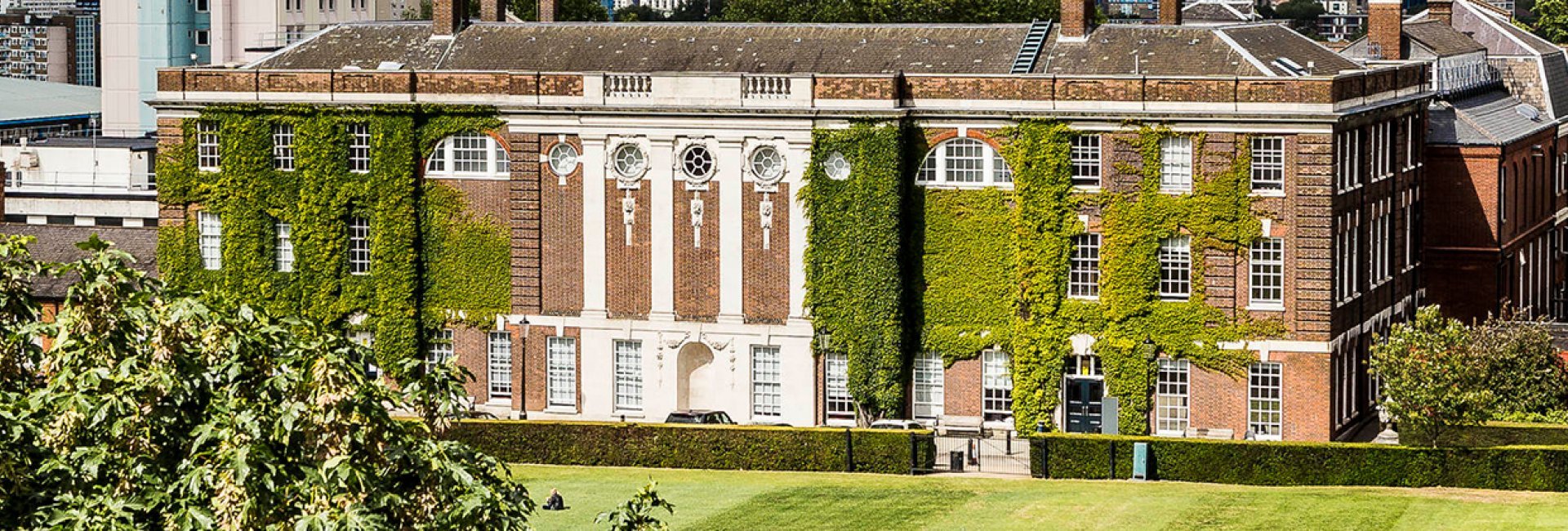
Goldsmiths, University of London - Virtual Campus Tour
25 Nov 2025, 12:00
London

Design isn’t just a way of making and doing; it’s a way of understanding and engaging with the world.
Why study BA Design at Goldsmiths
The BA Design degree enables you to think imaginatively about the possibilities of design. Not just what design is - but what it might be. You’ll discover how design affects the environment as a whole, as you investigate its role within society and culture. You’ll learn to see design as a complex combination of systems and actions, and not just as a set of distinct practical skills.
We give you access to studio space and industry-standard workshops, with the latest in laser cutting and 3D modelling technology.
You’ll work on live briefs set by real life companies. These projects allow you to develop your ideas and present to design professionals, gaining valuable experience and insight.
In your second year, you’ll have the chance to do a placement. Past placement hosts have included Selfridges and Alexander McQueen.
Our graduates have gone on to work for top London design consultancies and major international brands including Dyson, LEGO, Google and Burberry. Many have also gone on to set up their own design studios.
Students and graduates have also been successful in national and international competitions, winning awards including the New Designer of the Year Award, RSA Design Directions Award, the Design Museum’s ‘Design Mart’ and NESTA’s Creative Pioneer Programme.
Please note the BA Design only accepts applications for first year entry.
Year 1
Studio Practice - Studio projects are formulated to allow you to develop your own ways of thinking. You will be challenged to push your ideas, and given space and support to develop an understanding of artefact, user, site and situation. Studio Practice is where the majority of practical, project-based work is delivered, discussed and assessed.
Contextual Studies - provides the theoretical core of the programme. In your first year you study:
Histories and Theories
Design and Meaning
Philosophy and Design
Methods and Processes - Concentrating on the techniques and processes in research, modelling and drawing, this module equips you with a set of tools for designing, looking at research methods and ways to generate and record ideas.
Technical Studies - These workshops focus on specific areas within the discipline. They'll give both a critical and technical introduction into areas such as making, still image, graphic communication and textiles.
Year 2
Studio Practice - You'll explore ways that the contemporary designer can negotiate a changing social, cultural, ecological and political terrain. You'll be encouraged to adopt a personal, ethical and ideological stance in tackling projects concerning the social, cultural, environmental and political domain.
In the spring term, you'll work on ‘industry-based projects’, the briefings for which come from the commercial sector. These projects allow you to present to design professionals, gaining valuable experience and insight. The projects are set by a broad range of design professional and commercial sectors, such as Imagination, Pentagram, Hive, Raw Nerve and Lewisham Council.
Contextual Studies:
Society and Culture
Material Culture
Design Politics and Ethics
Methods and Processes – Professional Practice
This module asks you to engage in design as a professional practice and prepares you for workplace environments. It opens up the extensive nature of the design industry, in order to increase your understanding of the role of a practising designer.
Technical Studies - These sessions cover a range of skills, which build upon the previous year. We offer workshops such as interactive design, moving image, electronics, object manufacture, rapid prototyping/CAD and graphic communication.
Professional Practice - During the summer term, you are expected to secure and undertake a placement of at least six weeks. At the beginning of Year 3, you will be assessed on a presentation based on your work placement.
Year 3
Studio Practice - You'll develop your own projects , supported by an individual ‘mentor’. Workshops enable you to formulate, develop and realise a project. Major projects must have a strong conceptual underpinning and be well-founded and reasoned.
The final stage of Year 3 is the presentation and exhibition of design practice project work. This is an important part of the educational experience – calling for teamwork, organisation, management and design, developing a range of skills critical to future careers.
Contextual Report - This major piece of writing presents the contextual and theoretical framework for your major project. This 6,000-word report develops alongside your project and is a personal piece of work.
Please note that due to staff research commitments not all of these modules may be available every year.
You’ll be assessed by a variety of methods, depending on your module choices. These include coursework, examinations, group work and projects.
This is the equal consideration deadline. You can still apply after this date, but your application may not receive guaranteed consideration.

Goldsmiths, University of London has participated in the Teaching Excellence Framework. These ratings were awarded in 2023, for four years.
See why these ratings were awarded
What does this TEF outcome mean?
The following entry points are available for this course:
You may also be able to apply if you're a mature student without formal qualifications, as long as you have relevant work experience and examples of your art and design work. If you don't have A-levels in Art and Design, but have an interest in a future career in the creative industries (this may include students with strong A-levels in the humanities and sciences), then we will also consider your application.
| Test | Grade | Additional details |
|---|---|---|
| IELTS (Academic) | 6 | With a 6.0 in writing and no element lower than 5.5 |
We pay careful attention to your personal statement which is your opportunity to demonstrate your interest in your desired subject. Portfolio programmes offer you the opportunity to demonstrate your potential in your desired subject. Referees are also welcome to include any relevant contextual comments around your academic achievements. We consider all these things when making a decision as well as your qualifications and grades. If you are unsure about applying, we would be happy to advise you.
This section shows the range of grades students (with UK A-Levels or Pearson BTEC Level 3 National Extended Diplomas) who received offers were previously accepted with (learn more). It is designed to support your research but does not guarantee whether you will or won't get a place. Admissions teams consider various factors, including interviews, subject requirements, and entrance tests. Check all course entry requirements for eligibility.
Students aged 17/18 who applied to this course were offered a place.
See how students with your grades have been accepted onto this course in the past.
Operated by the Office for Students
Employment after 15 months (Most common jobs)
Go onto work and study
The number of student respondents and response rates can be important in interpreting the data – it is important to note your experience may be different from theirs. This data will be based on the subject area rather than the specific course. Read more about this data on the Discover Uni website.
No fee information has been provided for this course
Tuition fee status depends on a number of criteria and varies according to where in the UK you will study. For further guidance on the criteria for home or overseas tuition fees, please refer to the UKCISA website.
To find out more about fees and funding, please check our undergraduate fees guidance or contact the Fees Office https://www.gold.ac.uk/ug/fees-funding/
New Cross
Lewisham
SE14 6NW
Visit our website Visit our course page
Email:course-info@gold.ac.uk
Phone:020 7078 5300