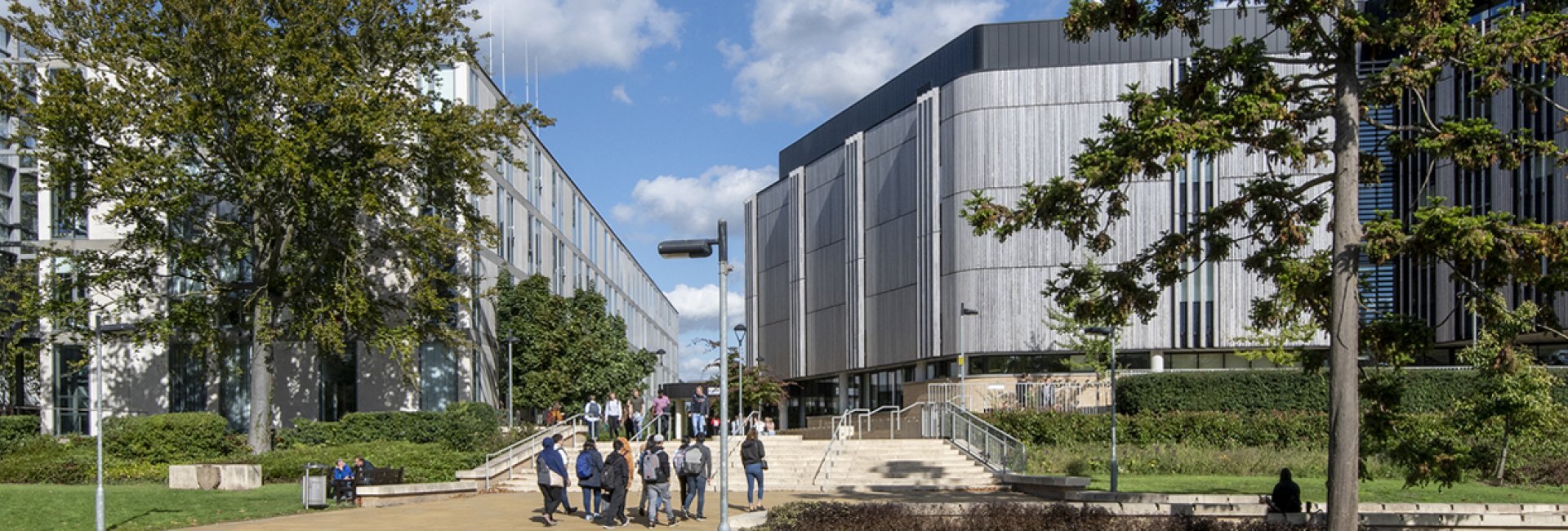
Winchester School of Art - Open Day
6 Jun 2026, 09:00
Winchester
About this course
Explore how our ancestors engaged with the world, and gain a fascinating insight into what it means to be human. Our BA Archaeology and Anthropology degree teaches you how human societies came into being, how they have changed over time, and the underlying reasons for human diversity today. You'll study global human diversity in time and space, in a truly interdisciplinary way through our 'four-field' anthropological approach: archaeological, physical, linguistic, and cultural. On this anthropology and archaeology degree you'll gain hands-on experience with archaeological artefacts and materials, and receive the practical training needed for a career in archaeology or anthropology. The modular structure allows you to personalise your degree to choose aspects of archaeology and anthropology that interest you most. You'll also deepen your understanding of archaeology with practical experience of field work, including excavating archaeological sites and analysing artefacts, as well as human and animal remains.
As an Archaeology and Anthropology graduate, you have the privilege and responsibility of being a custodian of the past. Whether you're excavating ancient cities, preserving historical landmarks, or educating the public, your work contributes to the incredible stories of human history and culture, today and into the future. Your archaeological expertise can be applied in diverse fields, heritage management and conservation, via education, journalism and creative, entrepreneurial and digital careers, to academia and beyond, making a tangible impact on how we understand and engage with our past.
Key features of the course
You'll deepen your understanding of archaeology with three weeks of practical experience of field work, including excavating archaeological sites, survey, or post-excavation.
Join a department ranked 7th in the UK for Archaeology in the Complete University Guide, 2026.
Learn in £3m purpose-built archaeology facilities including superb labs for osteoarchaeology, isotope sampling, and ceramic and lithic analysis.
Our Digital Humanities facilities will allow you to study and research through cutting-edge technology, such as virtual reality, 3D scanners and printers, and a 360 degree fully immersive audio-visual centre.
100% of our Archaeology graduates were in employment or further study 15 months after graduation” Graduate Outcomes, 2022/2023, published in 2025.
Student support
From day one, you’ll be part of a friendly, supportive community of students and academics in Archaeology. Experienced tutors, who are also active researchers, will guide you through practical and academic challenges, while small-group teaching ensures you get personalised support. You’ll develop teamwork and communication skills alongside your peers, and have access to pastoral care, wellbeing services, and a wide range of student-led societies to help you thrive both academically and personally.
Further information
Carry out fieldwork, including 3 weeks as part of an active research project at sites in the UK or abroad. On the year abroad pathway spend a year at one of our partner institutions such as the University of Malta or the Universidad Autonoma de Barcelona.
Over the three years of this Archaeology and Anthropology course, you will personalise your education, developing new skills and knowledge for your future.
Year 1: Develop the foundations in archaeology and anthropology, fieldwork and analysis.
Year 2: Deepen your understanding and prepare for fieldwork with at least 3 weeks of practical experience in a field school or research project in the UK or overseas.
Year 3: Develop your interests with a wide range of optional modules, including Children and Society, Ancient Egypt, Intersectional Perspectives on Modernisation, and the Anthropology of Adornment - and explore your interests your own specialist interest with a dissertation on a research topic of your choice. This is an opportunity to demonstrate your planning, research, data collation, analysis, and communication skills.
You will also have opportunities to tailor your learning through student-selected units and an elective placement.
For a full list of modules available please visit the course page - https://www.southampton.ac.uk/courses/archaeology-anthropology-degree-ba#modules.
On this course you will learn through a range of activities that may include lectures, classes and tutorials, coursework, individual and group projects, and independent learning (studying on your own).
You will be able to demonstrate what you have learnt through a variety of assessment methods, such as examinations, essays, extended essays, practical assignments in both the laboratory and the field, presentations, portfolios and the dissertation.
You’ll be supported by a personal academic tutor who will offer support and advice throughout your studies. You will also receive feedback throughout your course, enabling you to identify areas for improvement before your work is formally assessed.
The following entry points are available for this course:
Find out about equivalent entry requirements and qualifications for your country: https://www.southampton.ac.uk/uni-life/international/your-country.page
We welcome applicants with other qualifications eg. European Baccalaureate. You will be expected to attain an A level equivalent standard.
The University of Southampton requires all applicants to achieve at least a Grade 4 in English and Mathematics GCSEs (taken in England) or a Grade C in both subjects (where taken in Northern Ireland or Wales). Some degree subjects stipulate specific additional GCSE minimum grades, which will be specified as part of the individual degree programme entry requirements.
For more details on the suitability of your qualifications or foundation programme please contact the Faculty of Arts and Humanities Admissions Team at AdmissionsUG.AH@southampton.ac.uk
| Test | Grade | Additional details |
|---|---|---|
| IELTS (Academic) | 6.5 | with no component below 6.0 |
Find out more about the University’s English Language requirements https://www.southampton.ac.uk/studentadmin/admissions/admissions-policies/language.page
Most of the students who enrolled on this course in previous years met their offer conditions at our published entry criteria, securing their place on their chosen course. We encourage all applicants with the potential to succeed, regardless of their background, to apply to study with us. Applicants who qualify for contextual admissions will be made an offer which is lower than the typical offer for that programme.
This section shows the range of grades students (with UK A-Levels or Pearson BTEC Level 3 National Extended Diplomas) who received offers were previously accepted with (learn more). It is designed to support your research but does not guarantee whether you will or won't get a place. Admissions teams consider various factors, including interviews, subject requirements, and entrance tests. Check all course entry requirements for eligibility.
We are unable to show previous accepted grades for this course. This could be because the course is new, it's a postgraduate course, there isn't enough historical data, or the provider has opted out of sharing their entry grades data for this course - learn more.
| Location | Fee | Year |
|---|---|---|
| England | £9535* | Year 1 |
| Northern Ireland | £9535* | Year 1 |
| Scotland | £9535* | Year 1 |
| Wales | £9535* | Year 1 |
| Channel Islands | £9535* | Year 1 |
| Republic of Ireland | £9535* | Year 1 |
| EU | £25500 | Year 1 |
| International | £25500 | Year 1 |
* This is a provisional fee and subject to change.
Tuition fee status depends on a number of criteria and varies according to where in the UK you will study. For further guidance on the criteria for home or overseas tuition fees, please refer to the UKCISA website.
Please see our website for further details and updates: www.southampton.ac.uk/uni-life/fees-funding.page
Highfield
Southampton
SO17 1BJ
Visit our website Visit our course page
Email:AdmissionsUG.AH@soton.ac.uk
Phone:023 8059 4732
At University of Southampton