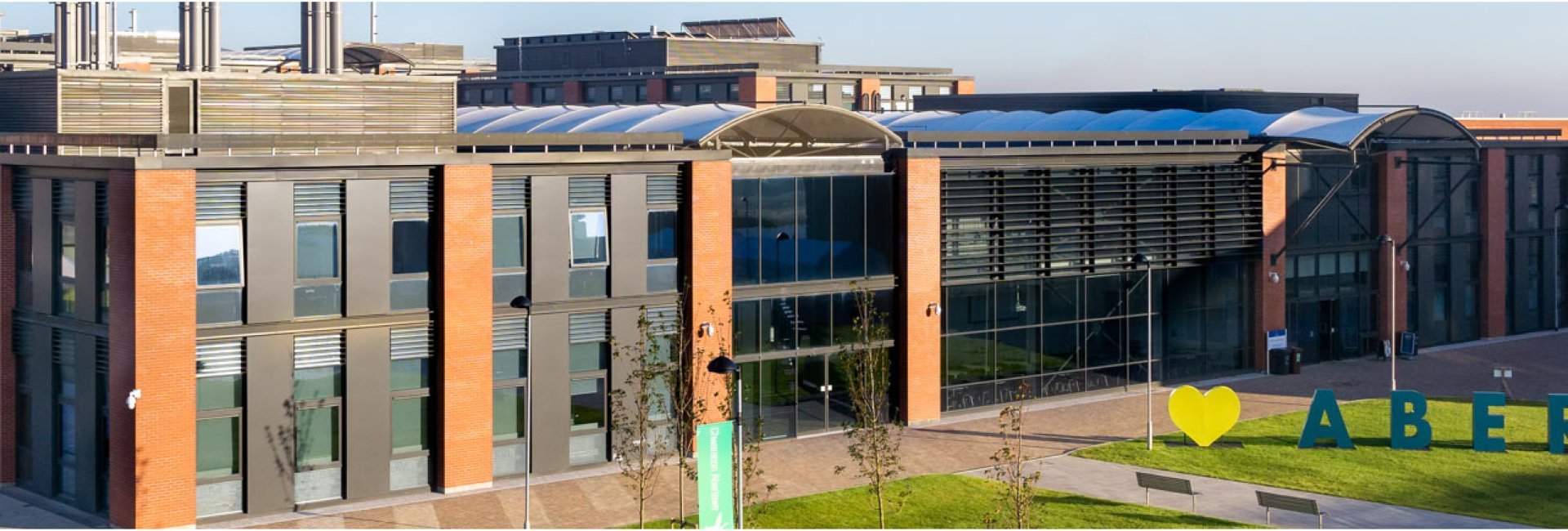
Undergraduate On-Campus Open Day at Swansea University - Singleton Park Campus and Bay Campus - 28 March 2026
28 Mar 2026, 08:30
Swansea

Philosophy is the love of wisdom - it is the search for truth and understanding, whether about ourselves, society, the world, or reality itself. It is a wide-ranging academic discipline, incorporating the study of ethics and morality, politics, human nature, knowledge and the universe.
The BA Philosophy programme at Swansea will introduce you to major philosophical theories and debates across different traditions, cultures and schools of thought. It will equip you with the ability to reflect on questions of fundamental importance (How should we live our lives? What does a just society look like? How can we know what exists?), to think creatively and logically, and to debate issues in a clear and persuasive manner.
An important focus of the programme is applying philosophy to practical, contemporary problems. For example, what is the impact of technology on wellbeing, and what it means to be human? How should forms of offensive or hateful speech be regulated? As a result, the study of philosophy is about both understanding the world, and working out how we can change it for the better.
Throughout the degree, you will be equipped with creative and critical thinking skills, coupled with the ability to reflect ethically and innovatively. You will learn to connect abstract ideas and ideals with practical problems and questions. At the heart of the degree is a focus on ensuring that you can identify, assess, develop and communicate arguments and theories. This involves complex conceptual reasoning and information analysis, as well as an appreciation of the views and experiences of people across historical and geographical contexts.
You will study at our Singleton Park Campus, in beautiful parkland, overlooking Swansea Bay on the edge of the Gower Peninsula.
You will be joining a high-performing department, which is currently ranked:
• 5th in the UK for Overall Positivity (NSS 2025)*
• 7th in the UK for Student Experience (Times Good University Guide 2026)
• 7th in the UK for Teaching Quality (Times Good University Guide 2026)
*Based on the average positivity score for questions 1-26, NSS 2025.
Key modules include:
Ethics and Moral Philosophy: What makes an action morally wrong or right? Are animals our moral equals? Is morality relative to different cultures? Are abortion or euthanasia morally permissible? Should we be able to genetically-engineer our children?
Metaphysics: Does time exist? How do objects persist through change? What is the nature of “truth”? Is the mind distinct from the body?
Political Philosophy: What is a “just” society like? How should resources and opportunities be distributed in society? To what extent is government justified in interfering with our lives? Do we have duties to future generations?
Epistemology: How can we be certain that our beliefs are true? Is our knowledge of reality shaped by our language? Is truth relative to different cultures? Can we know the world as it is in itself?
Philosophy of Mind: What is the nature of consciousness? How can our thoughts control our physical actions? Could a machine ever be self-conscious and/or sentient? What makes you “you”? How can we know what other people’s minds are like?
Existentialism: What does it mean to live an “authentic” life? Are we radically free and, if so, how should we live our lives? Is our experience of the world shaped by the body we have? How do and should we relate to other people?
This course offers you the opportunity to spend a Year In Industry, in the UK or overseas*, giving valuable workplace experience. The University advocates for only paid placements, which on average have a salary of over £20,000. Unpaid placements are considered on a case-by-case basis.
Although securing a placement is the responsibility of the student, we work with a number of organisations that provide a range of placement opportunities. Students are also supported throughout their application journey with advice, guidance and additional resources. If you are unable to secure a placement by the end of the second year of your studies, you will transfer onto the equivalent degree programme.
*Overseas locations are dependent on VISA restrictions per country.
The following entry points are available for this course:
If you are an International Student, please visit our International pages for more information about entry requirements: http://www.swansea.ac.uk/international/students/requirements/
Discover what it's like to study Philosophy with a Year in Industry at Swansea University: insights on the course, making friends, personal statement tips, uni prep, and recommended books, podcasts, and videos.

English Language Requirements at Swansea University https://www.swansea.ac.uk/admissions/english-language-requirements/
UK applicants who meet course requirements are guaranteed a conditional offer. We assess applications on individual merit. We consider making reduced offers, eg. to Care Leavers or students with extenuating circumstances. We encourage you to disclose any relevant circumstances.
The Advanced Skills Baccalaureate Wales is considered as equivalent to one full A-Level and students can take x2 A-levels alongside this. EPQ students predicted Grade B or above will receive a one-grade offer reduction.
This section shows the range of grades students (with UK A-Levels or Pearson BTEC Level 3 National Extended Diplomas) who received offers were previously accepted with (learn more). It is designed to support your research but does not guarantee whether you will or won't get a place. Admissions teams consider various factors, including interviews, subject requirements, and entrance tests. Check all course entry requirements for eligibility.
Students aged 17/18 who applied to this course were offered a place.
See how students with your grades have been accepted onto this course in the past.
Operated by the Office for Students
Employment after 15 months (Most common jobs)
Go onto work and study
The number of student respondents and response rates can be important in interpreting the data – it is important to note your experience may be different from theirs. This data will be based on the subject area rather than the specific course. Read more about this data on the Discover Uni website.
No fee information has been provided for this course
Tuition fee status depends on a number of criteria and varies according to where in the UK you will study. For further guidance on the criteria for home or overseas tuition fees, please refer to the UKCISA website.
For the latest fee information, please check the individual course page on our website. Our full range of programmes are listed here: https://www.swansea.ac.uk/undergraduate/courses/
Further information on tuition fees can be found here: https://www.swansea.ac.uk/undergraduate/fees-and-funding/tuition-fees/
You may be eligible for funding to help support your study.
To find out about scholarships, bursaries and other funding opportunities that are available, please visit the University's scholarships and bursaries page https://www.swansea.ac.uk/undergraduate/scholarships/
Academi Hywel Teifi at Swansea University and the Coleg Cymraeg Cenedlaethol offer a number of generous scholarships and bursaries for students who wish to study through the medium of Welsh or bilingually. For further information about the opportunities available to you, visit the Academi Hywel Teifi Scholarships and Bursaries page https://www.swansea.ac.uk/academi-hywel-teifi/learn/scholarships/