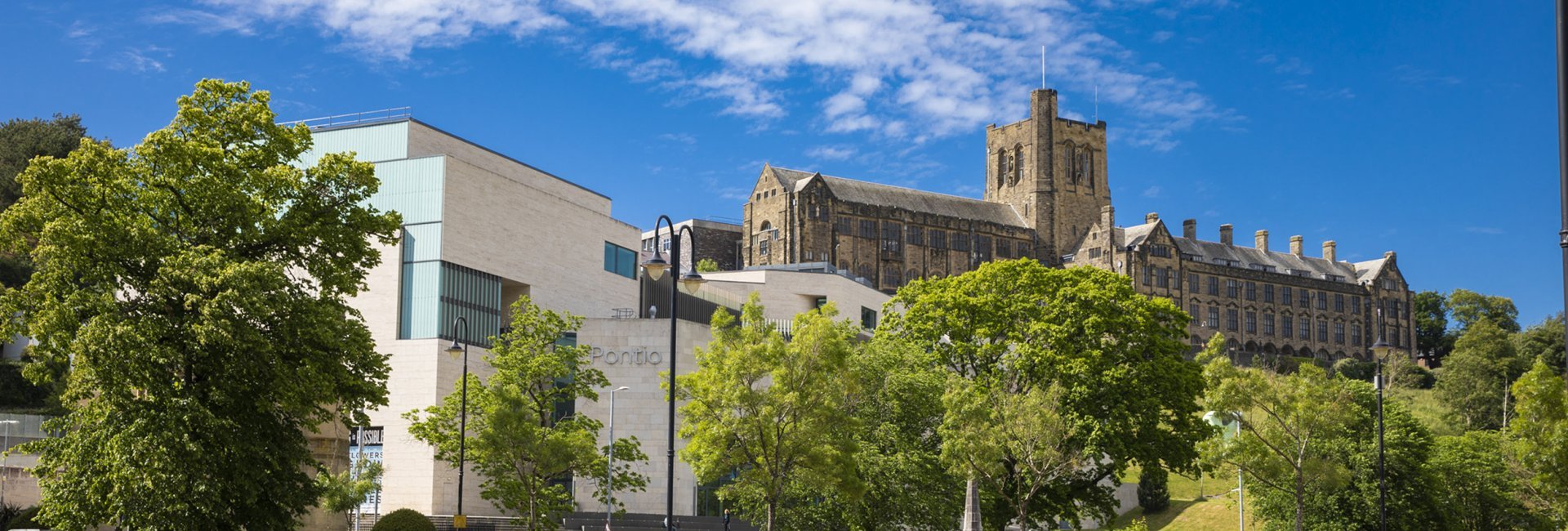
Bangor University Open Day
4 Jul 2026, 07:45
Bangor

If you have an enquiring mind and are interested in the vast breadth of views, beliefs, morals, philosophies and ideals that exist within our society today, studying Philosophy, Ethics and Religion can deepen your understanding and enhance your knowledge of societies across the world.
During the degree you'll examine worldviews and traditions that shape contemporary identities, and their impact on society, we will encourage you to explore key questions about human experience and existence.
Our staff specialise in diverse fields such as religious extremism, ethics, gender and identification, aesthetics and psychology, and interfaith dialogues. Interests span a host of ethical approaches, from queer and feminist ethics to religious ethics, and normative ethical traditions. We engage with worldwide religions, such as Christianity, Islam, Hinduism, Buddhism, Sikhism, Judaism, Haitian Voodoo, Satanism, Paganism, and Native American Spirituality. Placing philosophical methodologies at the core, we offer key insights into significant areas of research and discussion, within and outside of academia.
In addition to a range of transferrable skills, such as critical thinking, analysis, logic and reason, this degree will prove valuable in your personal and professional life. The breadth of topics encourages you to be reflective and respectful towards diverse cultures and varying attitudes and opinions.
‘Placement Year’ and 'International Experience Year’ options are available for this course. You will have the opportunity to fully consider these options when you have started your course at Bangor and can make an application for a transfer onto such a pathway at the appropriate time. You can find more information about these options on our website and if you have any questions, please get in touch.
If you don’t have the required qualifications for this degree-level course or are looking to re-enter education after time away from study, then a Foundation Year Programme might be the right choice for you. Please see Politics (with Foundation Year) L20F.
The following entry points are available for this course:
Discover what it's like to study Philosophy, Ethics and Religion at Bangor University: insights on the course, making friends, personal statement tips, uni prep, and recommended books, podcasts, and videos.

General Studies and Key Skills not accepted.
We will also consider other BTEC qualifications in conjunction with other level 3 qualifications.
Accepted.
Minimum of 5 Scottish Highers - some subject specific grades/Advanced Highers may be required.
Accepted.
We will accept this qualification in conjunction with other level 3 qualifications.
Points can include a relevant Extended Project (EPQ) but must include a minimum 2 full A-levels, or equivalent. Please contact us for more information.
T Level qualifications are accepted on a case by case basis.
We allow you flexibility in meeting our entry requirements and accept a broad range of qualifications. We are happy to accept combinations of the qualifications listed above, as well as alternative Level 3 qualifications such as City & Guilds, Access and Cambridge Technical Diplomas. We also welcome applications from mature learners and/or those with other qualifications are considered on individual merit. If you cannot find the qualifications that you are studying (or have completed) listed above, please contact us for advice: applicantservices@bangor.ac.uk
If you don't think you'll meet the entry requirements specified, you may be able to gain entry to this course via a Foundation Year route. Please see: History with Foundation Year (UCAS code: V10F).
International Candidates: school leaving qualifications that are equivalent to A levels/Level 3 and/or college diplomas are accepted from countries worldwide (subject to minimum English Language requirements), details at: www.bangor.ac.uk/international/applying/entryrequirements
For the most up-to-date information on acceptable English Language proficiency qualifications, please visit our webpage below.https://www.bangor.ac.uk/international/future/englishlanguage
Bangor University is committed to widening participation in Higher Education (HE) and accepts students from a broad range of backgrounds.
To support students into Higher Education, we use a number of indicators to identify students who may be at a disadvantage in their ability to access Higher Education, in order to provide additional support.
Our admissions process involves assessing the entire application to make an assessment based on your grades and individual circumstances.
This section shows the range of grades that students who received offers were previously accepted on to this course with (learn more).
It is designed to support your research but does not guarantee whether you will or won't get a place.
Admissions teams consider various factors, including interviews, subject requirements, and entrance tests. Check all course entry requirements for eligibility.
We are unable to show previous accepted grades for this course. This could be because the course is new, it's a postgraduate course, there isn't enough historical data, or the provider has opted out of sharing their entry grades data for this course - learn more.
| Location | Fee | Year |
|---|
Tuition fee status depends on a number of criteria and varies according to where in the UK you will study. For further guidance on the criteria for home or overseas tuition fees, please refer to the UKCISA website.
Tuition fees and scholarship information for Home applicants can be found here:
https://www.bangor.ac.uk/studentfinance/new-undergraduates
Tuition fees and scholarship information for International applicants can be found here:
https://www.bangor.ac.uk/international/tuition
Email:admissions@bangor.ac.uk
Phone:01248 383717
Bangor (Wales)
LL57 2DG
At Bangor University