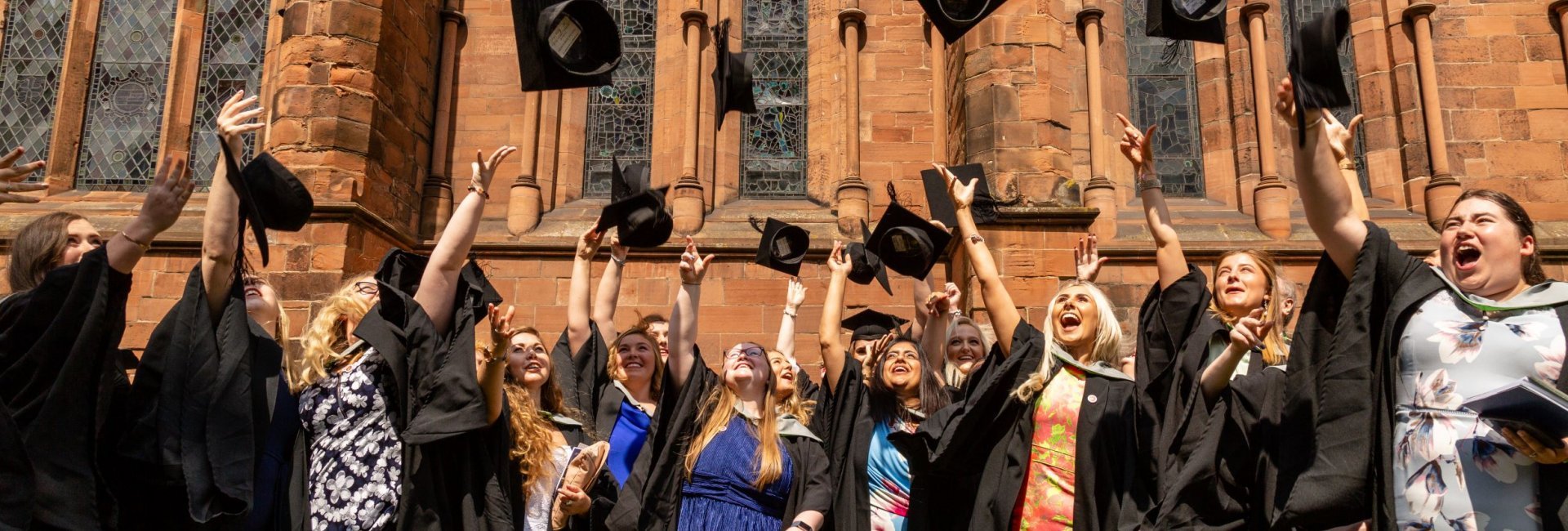
Carlisle Brampton Road Campus Open Day
6 Jun 2026, 09:00
Carlisle

Capture the world in its many facets and faces. Create and seize unique moments in time. Explore your creative passion and bring it to life.
Based on our dedicated arts campus, this photography degree with an integrated foundation year will help you explore your creative passion and become a professional photographer.
Course Overview
Our foundation course in photography will give you a strong grounding to experience life through the camera lens to advance your studies to degree level.
You’ll learn all the essential photography basics - how to use a variety of cameras, both digital and film, how to make creative images, work in a studio and on location, and how to print your photos to a high standard.
In addition, on this photography course you’ll explore historical and contemporary photographers and images to encourage you to develop your own style and flourish as a photographer ready for year one of the degree course.
Former students have gone into a range of photographic careers, become freelance photographers, curators and editors and some have secured solo exhibitions in art galleries just months after graduating.
On this course you will:
Develop your photographic and editing skills while experimenting during workshops and outdoor activities.
Work with students across the creative arts, collaborating on projects and exploring new mediums.
Be taught by industry experts with experience working freelance and within creative organisations.
Have the opportunity to exhibit your work publicly alongside the work of classmates across the arts.
What you will learn
Photography is a fantastically versatile discipline and as such offers many routes into employment within the creative industries.
At the University of Cumbria, we have designed a programme that allows you to experiment with techniques, develop your practical skills, study through critical thinking and enquiry.
Informed by the clear integration of practice and theory, and by an expectation of your intellectual engagement in Photography practice, you will develop transferable skills.
Year One
Making Images
Making Objects
Visual Enquiry
Environment
Portfolio and Progression
Year Two
Photographic Image Capture
Cultural Contexts
Picturing Place: Culture & Identity
Collaborative Practice
Year Three
Networks & Narratives: Photography in the Community
Immersive Image-Making
The Photographic Interface: Industry Experience
Theorising Photography
Year Four
Blueprint of Practice
Independent Research Paper
Resolution of Practice
A key feature of this IFY programme is the opportunity to work closely with a range of specialist creative staff, as well as alongside students studying fine-art, graphic design and illustration.
By learning as an integrated member of this creative community you will experience, first-hand, the methods and techniques used by other visual practitioners. This will foster an appreciation of how your work fits into the wider world of the visual arts and provide you with greater confidence, knowledge and skills as you progress to Level 4 of the programme.
Most of your studies will be centred around practical projects that have been designed to not only help you practice and improve visual skills, but also develop your study skills, methods of research, critical and analytical abilities, and your ability to manage your time and plan your work.
A range of graded and non-graded assessments will take place throughout the course. Our programme is designed to encourage inquiry, curiosity, and the exploration of personal interests, allowing you to tailor briefs as you become more confident in your practice. Work and learning outcomes are in tune with industry demands, preparing you for professional practice through portfolios, exhibitions, photo books, and mock interviews.
You’ll be continuously involved in the assessment of your own work and that of your peers; developing critical interpersonal and team-working skills. Examples of the assessment types you will tackle include: Class critiques, written essays, peer review, portfolio reviews, mock interviews, and exhibitions.
This course is not accepting applications at this time. Please contact the provider to find out more.
This is the equal consideration deadline. You can still apply after this date, but your application may not receive guaranteed consideration.

University of Cumbria has participated in the Teaching Excellence Framework. These ratings were awarded in 2023, for four years.
See why these ratings were awarded
What does this TEF outcome mean?
This course is not accepting applications at this time. Please contact the provider to find out more.
The following entry points are available for this course:
Potential to succeed can be measured in a number of ways including academic qualifications and skills obtained outside academic study such as work experience.
You can find out more about the tariff and qualification options from the UCAS tariff table.
Please check selection criteria for any additional entry requirements.
60 credits with 45 graded credits at Level 3
If you are over 21 and returning to study after being in relevant employment for a minimum of 3 years and do not meet the published entry requirements for Year 1 of our degree courses, please do not assume you are not qualified to join us. Our experienced Admissions and Academic staff will review your prior qualifications and professional experience to support your application. The Integrated Foundation Year programmes support your return to education and are specifically designed for students who have the ability to study for a degree but may not have all the necessary qualifications, skills or experience to join the degree in Year 1. Contact our Course Enquiries Team for more information.
Contextual information is used to support accessibility to all who have the potential to succeed. Qualifications and grades are important but are considered alongside other information that helps us identify potential and widen access to study. We consider an individual’s circumstances alongside their grades & may accept someone with a lower grade profile based on personal circumstances, particularly those impacted during the pandemic. Our entry requirements are now higher than previous cycles.
This section shows the range of grades that students who received offers were previously accepted on to this course with (learn more).
It is designed to support your research but does not guarantee whether you will or won't get a place.
Admissions teams consider various factors, including interviews, subject requirements, and entrance tests. Check all course entry requirements for eligibility.
We are unable to show previous accepted grades for this course. This could be because the course is new, it's a postgraduate course, there isn't enough historical data, or the provider has opted out of sharing their entry grades data for this course - learn more.
| Location | Fee | Year |
|---|
Tuition fee status depends on a number of criteria and varies according to where in the UK you will study. For further guidance on the criteria for home or overseas tuition fees, please refer to the UKCISA website.
These fees are for the first year only. For years 2 - 4, the BA or BSc fee will apply.
Visit www.cumbria.ac.uk/studentfinance for more information about student fees and finance, and for details about our alumni discount.
Phone:01228 588 588
Registered Office
Fusehill Street
Carlisle
CA1 2HH
At University of Cumbria