University of Brighton
Mithras House
Lewes Road
Brighton
BN2 4AT

A Brighton Electronic Music and Sound degree prepares you for exciting careers in sound composition, sound design, post-production, film/TV/games audio, performance and experimental music.
Studying here at Brighton, you’ll be part of a community that helps you grow, no matter what your background. This course is packed with opportunities to build real-world experience, including a paid placement after year two. Our inclusive approach to learning will help you go further; we’ll make sure you play to your strengths and learn in ways that suit you best.
Recent graduates from this course have gone on to work as sound designers, composers, music producers, sound artists and media technologists, some running their own production companies or freelancing in post-production and experimental arts.
Top reasons to choose this course
Benefit from strong links with local music venues so you can get used to playing live and make industry connections.
Follow an artistic, experimental curriculum where you are encouraged to discover and develop your own unique creative voice.
We have a strong track record for producing graduates who have gone on to rewarding careers and are celebrated in the field of sound and music.
Learn from professional musicians and artists who bring industry experience, insight and passion to their teaching.
Have the freedom to experiment with our excellent studios, workshops, audio tools that are available to you.
Boost your CV with an optional paid placement year where you’ll apply your technical, artistic and professional skills in a real-world setting and gain valuable industry connections.
Collaborate with staff and peers in shared creative projects, helping you learn in a supportive environment and push your work further.
Why Brighton is a great place to study Electronic Sound and Music
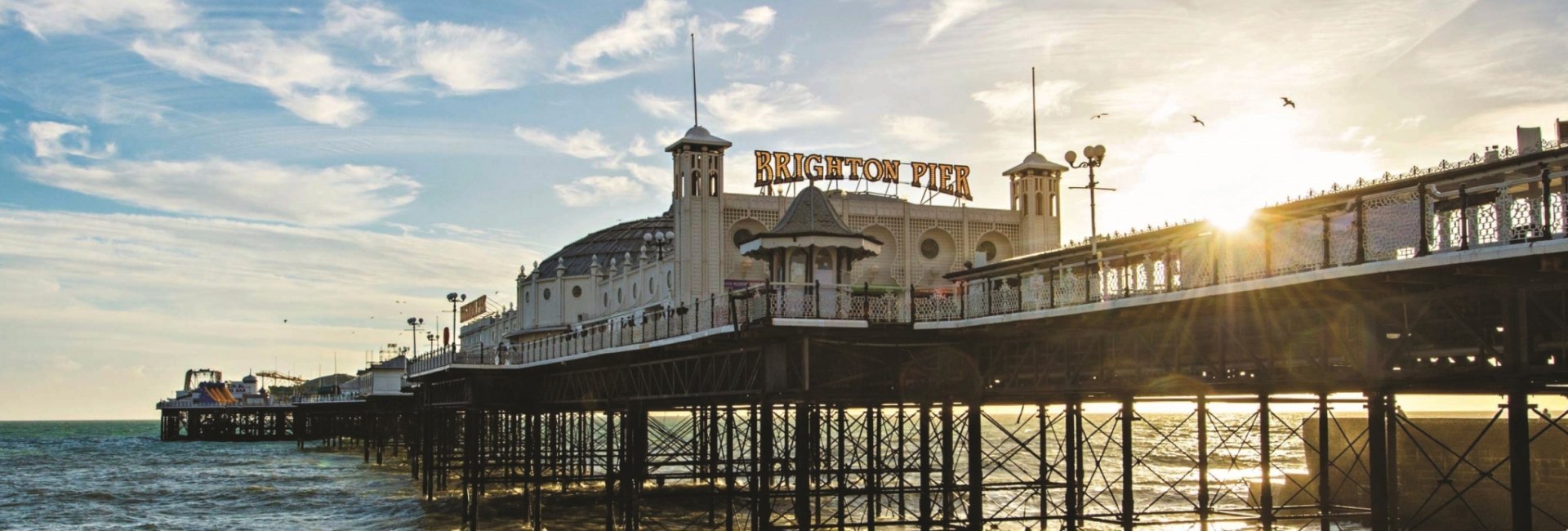
Brighton is a city with creativity at its heart, making it the perfect setting to study Electronic Music and Sound. With its exciting live music scene, renowned festivals and venues, the city offers endless inspiration and opportunities to engage with the creative community.
Our long heritage in art and design education means you’ll be part of a diverse network of creatives, with access to opportunities and industry connections that extend beyond the campus.
Named one of the best cities on the planet and third best city in the UK by Time Out, Brighton is also a bustling hub for media, design and film.
Year 1
You’ll explore the fundamentals of sound, experimentation and composition. Core work includes creative studio techniques, sound synthesis, acoustics, perception of sound, music analysis and instrument design. You’ll learn to use tools like Logic Pro, Ableton Live, Pro Tools, Max/MSP, Pure Data and be encouraged to experiment.
Core modules
Practice 1: Introduction to Sound
Practice 2: Sound as Material – Perception and Experimentation
HCS 1: Sonic Cultures
Practice 3: Sound Distribution
Practice 4: Creative Audio Systems
Popular Music: Histories and Contexts
Year 2
You’ll build specialist skills in composition and sound design for moving images, sound art and new media, supported by theory modules that explore contemporary audiovisual practices. You’ll also work across film, TV, games, radio, installations and digital platforms, developing both experimental and industry-focused approaches to sound.
Core modules
Practice 6: Sound for Screen
HCS 3: Sound, Music and the Moving Image
Practice 7: Sound Arts Practice
HCS 4: Theory and History of Sound Art
Practice 8: Final Project and Research Essay Proposals
Optional placement year
An optional placement year gives you the opportunity to apply your skills in professional settings, make industry connections and return for your final year with more confidence, insight and a portfolio filled with real-world work.
Final year
You’ll undertake an independent project combining creative, technical and professional elements alongside a research essay, professional practice modules and curated final-project work that culminates in exhibition or public presentation. One-to-one tutorials and critical reviews will help refine your voice and work.
Core modules
Perspectives on Art 3: Art Writing
Practice 9: Final Project Development
Professional Practice
Practice 10: Final Project
This is the equal consideration deadline. You can still apply after this date, but your application may not receive guaranteed consideration.

University of Brighton has participated in the Teaching Excellence Framework. These ratings were awarded in 2023, for four years.
See why these ratings were awarded
What does this TEF outcome mean?
The following entry points are available for this course:
Further Details: Your portfolio of work is the most important part of your applications for this course. It’s not just about finished work, this is your opportunity to show us your thinking, ideas and abilities. We will assess it alongside your UCAS application.
Or equivalent combination of grades.
A foundation diploma is not a requirement for entry – it is just one of a range of qualifications (for example, A level, BTEC or Access Diploma etc) that is accepted for admission to the course.
| Test | Grade | Additional details |
|---|---|---|
| IELTS (Academic) | 6 | 6.0 overall with a minimum of 5.5. in each element, or equivalent English Language qualification. |
At Brighton we recognise that not everyone's background provides the same advantages, and we know that grades are not the only indicator of potential.
If you meet our contextual admissions criteria we will make you an offer which is at least 16 UCAS points lower than our standard offer. You may also be eligible for additional financial and practical support from us through the Brighton Boost cost of living support package.
This section shows the range of grades that students who received offers were previously accepted on to this course with (learn more).
It is designed to support your research but does not guarantee whether you will or won't get a place.
Admissions teams consider various factors, including interviews, subject requirements, and entrance tests. Check all course entry requirements for eligibility.
We are unable to show previous accepted grades for this course. This could be because the course is new, it's a postgraduate course, there isn't enough historical data, or the provider has opted out of sharing their entry grades data for this course - learn more.
| Location | Fee | Year |
|---|
Tuition fee status depends on a number of criteria and varies according to where in the UK you will study. For further guidance on the criteria for home or overseas tuition fees, please refer to the UKCISA website.
Fees are payable each year and will increase annually in line with inflation.
Tuition fees for full-time UK / Home undergraduate students in academic year 2026–27
Annual course fees:
Honours degree £9,790
Placement year £1,958
Integrated foundation year (except the School of Business and Law) £9,790
Integrated foundation year in the School of Business and Law* £5,760*
*The £5,760 fee is for the foundation year only. Subsequent years are charged at the regulated undergraduate fee.
Many courses include the option of a salaried placement year. Tuition fees for a placement year are charged at a lower rate.
Regulated fees:
Tuition fees for UK / Home students on undergraduate courses in England are set by the UK government and are known as regulated fees. From academic year 2026–27 onwards, regulated fees will increase annually in line with forecast inflation. The regulated fee will be £9,790 in academic year 2026–27 and £10,050 in academic year 2027–28 (subject to parliamentary approval).
Standard tuition fees for full-time international students in academic year 2026–27:
Classroom-based courses £17,796–19,692
Laboratory or studio-based courses £17,796–19,692
Placement year £1,958
Mithras House
Lewes Road
Brighton
BN2 4AT
At University of Brighton