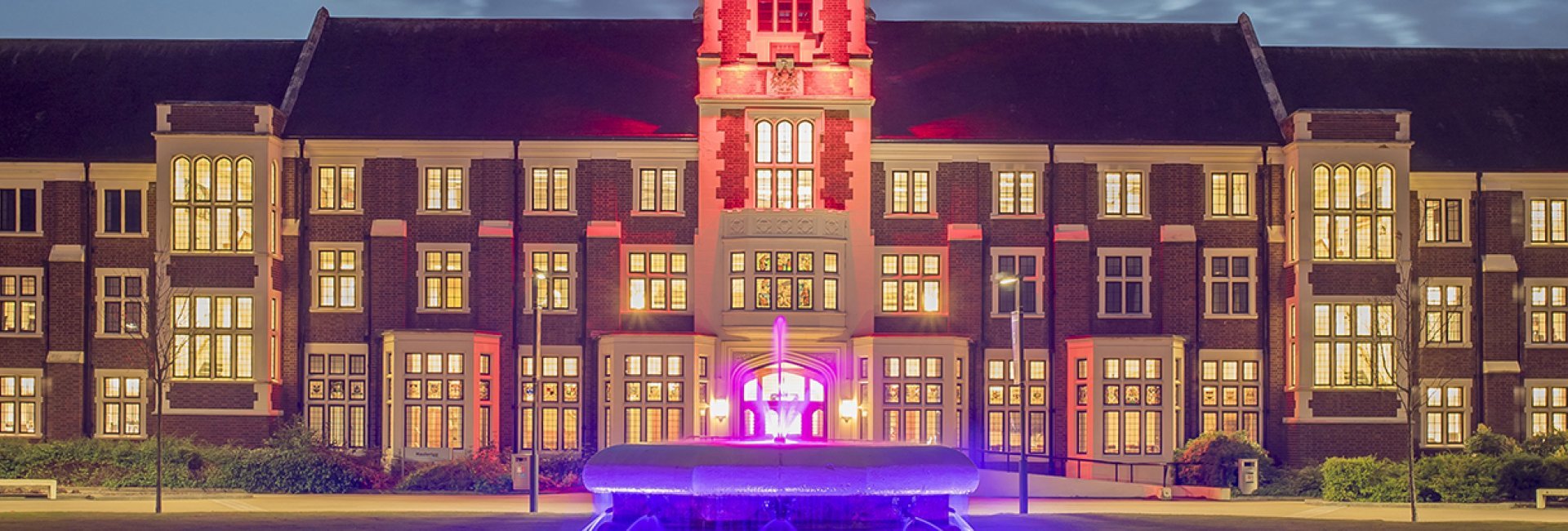
Loughborough University - open day event
19 Jun 2026, 08:00
Loughborough

Autonomous and robotic systems are ever-growing around us, from industrial robotic arms in production chains, to robot vacuum cleaners, lawn mowers, self-driving cars and drones to space robotics or any other mechatronic or autonomous system.
There is a strong strategic direction for global industry in Robotics and Automated Systems (RAS) as evidenced by a host of national and international strategy documents and networks. Companies are developing robotic and autonomous solutions and products and now need graduate engineers with the expertise to define the technology.
The aim of this course is to provide core skills and knowledge in robotics, mechatronics and control disciplines. The course will enable students to understand the fundamental processes and techniques in autonomous systems, blending subjects such as, electronics, control, manufacturing principles and mechanics. It combines theoretical and practical engineering principles, with application to real industrial problems.
If you’re choosing between the BEng and MEng, here’s the good news: the first three years are the same on both routes, so you’ll build the same strong foundation in engineering science, design and hands‑on problem‑solving whichever degree you start with.
A BEng gives you everything you need to launch into exciting early‑career engineering roles. You’ll learn the core technical principles, develop practical skills, and get plenty of opportunities to tackle real engineering problems. It’s a great choice if you want a solid engineering qualification in three years, with the flexibility to enter industry sooner.
The MEng includes everything in the BEng plus an additional year when you can dive deeper into the areas of engineering that excite you most. You’ll choose from a wide range of optional modules, allowing you to specialise and explore advanced topics. You’ll also take part in a major multidisciplinary design project that involves real companies or research teams to help strengthen your employability by building standout technical and teamwork skills.
If you’re already aiming high and want to become a future industry leader, the MEng is the most direct route. That extra year means the degree meets the educational requirements for later professional registration as a Chartered Engineer (CEng), which many top employers look for.
Pick BEng if you want a high‑quality engineering degree with the option to start your career sooner. High‑performing BEng students can apply to move onto the MEng as long as you meet the required academic level, so you’re not locked into your choice.
Choose MEng if you’re ambitious, want to specialise, enjoy project‑based learning, and like the idea of graduating ready for professional recognition as a Chartered Engineer.
Both routes set you up for success. You just get to choose the path that suits your goals and ambitions best.
For a full list of areas studied, see the 'What You'll Study' section of the course page on our website.
Lecture based modules are assessed by a combination of coursework and formal examinations taken at the end of each semester.
Project module assessments require written reports and technical presentations, preparing you for your subsequent career.
The proportion of coursework assessment is approximately 30% to 50% depending on degree course, semester/year and optional modules.
Professionally accredited courses provide industry-wide recognition of the quality of your qualification.
This is the equal consideration deadline. You can still apply after this date, but your application may not receive guaranteed consideration.

Loughborough University has participated in the Teaching Excellence Framework. These ratings were awarded in 2023, for four years.
See why these ratings were awarded
What does this TEF outcome mean?
The following entry points are available for this course:
AAA including Maths and either Computing, Computer Science, Electronics, Further Maths or Physics
T Level in Design and Development for Engineering and Manufacturing and Electrical and Electronic Engineering or Control and Instrumentation Engineering Occupational Specialism is considered.
Distinction overall with A in core component, Distinction in Occupational Specialism, Pass in Industry Placement and A in A level Maths.
Not accepted - Foundation entry only.
GCSE English Language grade 4/C
AA in Maths and either Computer Science, Electronics, Mechatronics or Physics, plus Highers at AAA in three other subjects
Grades DD in BTEC Level 3 National Diploma in Engineering plus Grades AA from two A levels.
A level subjects: All offers include Maths and either Computing, Computer Science, Electronics, Further Maths or Physics.
Preferred BTEC: Computing, Electrical/Electronic or Engineering
We recognise the benefit of the Extended Project in developing independent research and critical thinking skills. We would consider this as evidence of motivation to study a specific subject in more depth, and while we do not generally include it as part of our offer conditions, it may be used to further consider an application upon receipt of final examination results. www.lboro.ac.uk/study/undergraduate/apply/entry-requirements/
37 (6,6,6 HL) including HL Maths and either Computer Science or Physics at HL
BTEC Level 3 National Extended Diploma: DDD* in a relevant subject plus A level Maths at Grade A.
Preferred BTEC: Computing, Electrical/Electronic or Engineering
We accept a wide range of international qualifications for entry as outlined on our website – please view the individual course typical offers on our website and choose Ireland in the Country/region drop down field for more information.
Grade D in BTEC Level 3 National Extended Certificate in Engineering plus Grades AA from two A levels.
A level subjects: All offers include Maths and either Computing, Computer Science, Electronics, Further Maths or Physics.
Preferred BTEC: Computing, Electrical/Electronic or Engineering
Applicants taking the Welsh Baccalaureate Advanced Diploma will be asked to achieve the A level requirements for their course as part of their qualification. The Skills Challenge Certificate will be accepted alongside two A levels as long as individual course entry and subject requirements are met. www.lboro.ac.uk/study/undergraduate/apply/entry-requirements/
Loughborough accepts a wide range of qualifications for entry as outlined on our website www.lboro.ac.uk/study/undergraduate/getting-started/applying/entrance-requirements/. This information details the general requirements and should be read in conjunction with the information given for each course. https://www.lboro.ac.uk/study/undergraduate/getting-started/applying/entrance-requirements/
We consider contextual information as part of the assessment of an application to provide us with further insight into your achievements. This may lead to reduced offers, up to two grades lower than the typical offer requirements, as well as additional consideration when your results are received. For further information about Contextual Admissions at Loughborough including our Access Loughborough Contextual Offer please visit our website.
This section shows the range of grades that students who received offers were previously accepted on to this course with (learn more).
It is designed to support your research but does not guarantee whether you will or won't get a place.
Admissions teams consider various factors, including interviews, subject requirements, and entrance tests. Check all course entry requirements for eligibility.
We are unable to show previous accepted grades for this course. This could be because the course is new, it's a postgraduate course, there isn't enough historical data, or the provider has opted out of sharing their entry grades data for this course - learn more.
| Location | Fee | Year |
|---|---|---|
| EU & International | TBC | |
| England, Scotland, Wales & Northern Ireland | £10050 |
Tuition fee status depends on a number of criteria and varies according to where in the UK you will study. For further guidance on the criteria for home or overseas tuition fees, please refer to the UKCISA website.
The fees stated above are for the 2027/28 academic year; international fees are still to be approved. We will update this information as soon as it is available. Fees are reviewed annually and are likely to increase to take into account inflationary pressures.
While the cost of your tuition covers lots of things, it doesn’t cover everything. For instance this course doesn’t cover the cost of any stationery, printing, books or re-assessments which you might need.
UK tuition fees align with the applicable fee caps set by the UK government, and as such they are subject to changes made to the agreed cap in a specific year.
All of our courses have an established reputation with employers in industry. Companies, therefore, target the School with placement year opportunities and a number of companies offer sponsorship, for which there is intense competition. Students seeking sponsorship are urged to consult publications such as Career Research and Development (CRAC) and Engineering Opportunities.
Students studying any of the School’s degree courses and intending to take up a career in the Armed Forces or Civil Service may be eligible for financial support under the Defence STEM Undergraduate Scheme.
Email:admissions@lboro.ac.uk
Phone:01509 274 403
Loughborough
LE11 3TU
At Loughborough University