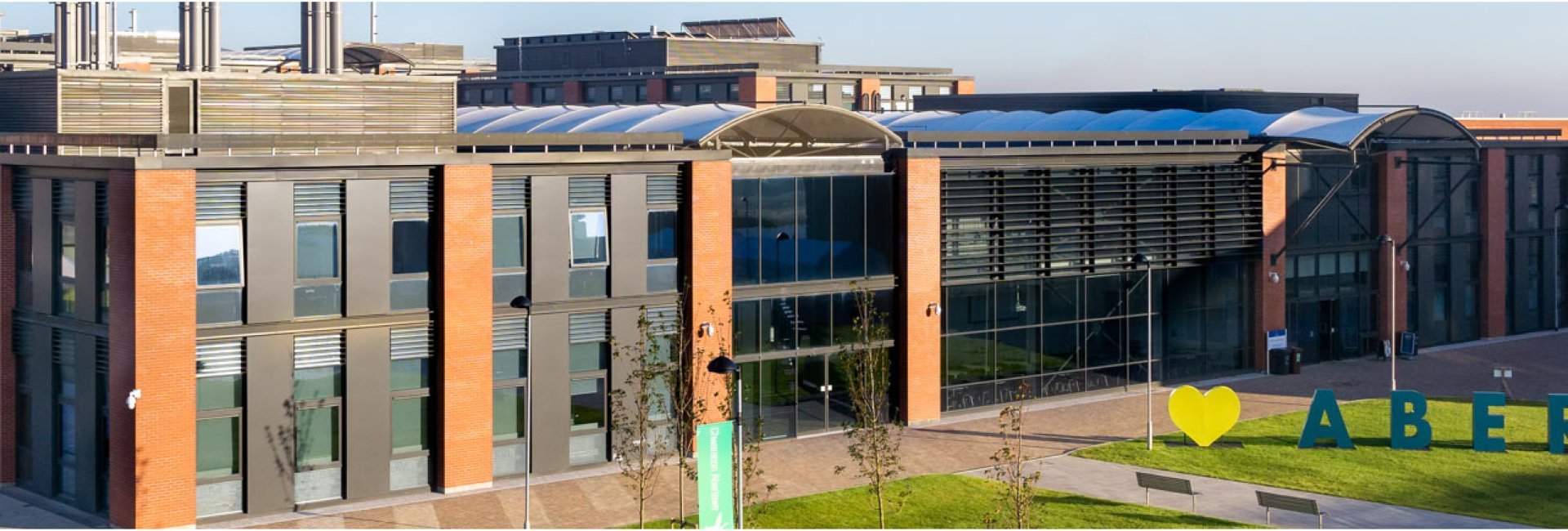
Undergraduate On-Campus Open Day at Swansea University - Singleton Park Campus and Bay Campus - 28 March 2026
28 Mar 2026, 08:30
Swansea

The public relations and media landscape is evolving rapidly, shaped by digital technologies, social media, and the demand for authentic communication. Our BA Public Relations and Media degree combines critical theory with practical experience, equipping you with the skills to analyse, create, and innovate across PR, journalism, digital media, and film.
PR today is far more than press releases. This programme focuses on digital PR, social media strategy, and PR as a key management function within corporate communications. You will gain hands-on experience with industry-standard tools and platforms, from content creation and influencer marketing to social media analytics. Practical projects and authentic assessments prepare you to manage campaigns, online reputation, and digital communications in a fast-changing environment.
In an era of instant communication and heightened scrutiny, crisis management is essential. Through real-world case studies, simulations, and strategic exercises, you’ll learn how to respond swiftly and effectively to emerging issues.
PR is a collaborative discipline that intersects with journalism, marketing, and media production, you will also study these disciplines to understand integrated communications and work confidently in cross-functional teams. Ethical practice and social responsibility are central to the programme, with a focus on transparency, corporate social responsibility, and tackling challenges such as misinformation and brand authenticity.
With bilingual study options in English and Welsh, you can enhance your career prospects and open doors to opportunities across Wales and beyond, making you even more adaptable in a global media landscape.
Why Public Relations and Media at Swansea?
You will be based on our stunning Singleton Park Campus, overlooking Swansea Bay on the edge of the Gower Peninsula.
Our Media and Communication programmes are consistently high-performing, and are currently ranked:
2nd in the UK for Student Satisfaction (Complete University Guide 2026)
5th in the UK for Student Experience (Times Good University Guide 2026)
5th in the UK for Student Voice (NSS 2025)*
9th in the UK for Career Prospects (Guardian University Guide 2026)
*based on the average positivity score per theme in the NSS 2025 when ranked against universities as featured in the Times Good University Guide.
We pride ourselves in preparing you for life beyond university. We are able to do this by using our connections to industry, and our emphasis on the particular interpersonal skills that our industry panel identify as key within their recruitment processes
Your Public Relations and Media Experience
You can tailor your studies to your interests and align with your career goals. The programme also includes the opportunity to study a Year Abroad or a Year in Industry. A Year Abroad allows you to hone your intercultural awareness, developing your skills in relation to international journalism and content creation.
The Year in Industry can be spent in the UK or overseas, giving you valuable workplace experience. The University advocates for paid placements, with an average salary of £20,000+. Unpaid placements are considered on a case-by-case basis. Although securing a placement is the responsibility of the student, we work with several organisations who provide a range of opportunities. If you choose to pursue a Year in Industry, you will be supported throughout the application journey with advice, guidance, and resources. If you are unable to secure a placement by the end of the second year of study, you will be able to transfer onto the equivalent 3-year degree programme.
In Year 1, you will typically study areas including: Introduction to Media Communication; Delivering and Decoding the News; Principles of Mediation; Creative Media Platforms; PR and Strategic Communications; Introduction to Film Studies and Pitch Invasion: Sport and its Impact on Society
In Year 2, you will typically study areas including: Theorising the Media; Public Relations Theory in Action; Introduction to Writing Fiction; Introduction to Film Production; Professional Development: Preparing for Work; Misinformation, Fake News and Fact-Checking; Approaches to Film Analysis; Introduction to Writing Drama....
In Year 3, you will typically study areas including: Strategy, Marketing and Branding; Guerrilla Campaigns: Subversive and Interruptive PR; The Story of the USA on Film and Television, 1865-2008; Media and Identities; Documentary and Fiction Filmmaking; Keeping it Reel – Studying Documentary; Journalism in Practice; Science Fiction and Media; Contemporary Film and Television...
We are proud to provide an outstanding educational experience, using the most effective learning and teaching approaches, carefully tailored to suit the specific needs of your course. Apart from a small number of online-only courses, most of our courses consist of in-person, on-campus teaching, enabling full engagement with your lecturers and fellow students.
Practical skills sessions, lab work seminars, and workshops predominantly take place in person, allowing for group working and demonstrations. We also operate virtual labs and Simulated Learning Environments which will facilitate greater access to training opportunities in the future. However, our approach also includes the use of some online learning to support and enhance traditional face-to-face teaching.
Online learning may take place ‘live’ using software such as Zoom, allowing you to interact with the lecturer and other students and to ask questions. Lecture recordings also allow for more flexibility to revisit material, to revise for assessments and to enhance learning outside of the classroom. Some modules have extra resources in Canvas, such as videos, slides and quizzes enabling further flexible study.
This course may offer some modules taught through the medium of Welsh or bilingually for students who consider themselves to be fluent Welsh speakers. For more details on the provision available see the Welsh Provision expander below.
Professionally accredited courses provide industry-wide recognition of the quality of your qualification.
The following entry points are available for this course:
If you are an International Student, please visit our International pages for more information about entry requirements: http://www.swansea.ac.uk/international/students/requirements/
Discover what it's like to study Public Relations and Media at Swansea University: insights on the course, making friends, personal statement tips, uni prep, and recommended books, podcasts, and videos.

English Language Requirements at Swansea University https://www.swansea.ac.uk/admissions/english-language-requirements/
UK applicants who meet course requirements are guaranteed a conditional offer. We assess applications on individual merit. We consider making reduced offers, eg. to Care Leavers or students with extenuating circumstances. We encourage you to disclose any relevant circumstances.
The Advanced Skills Baccalaureate Wales is considered as equivalent to one full A-Level and students can take x2 A-levels alongside this. EPQ students predicted Grade B or above will receive a one-grade offer reduction.
This section shows the range of grades students (with UK A-Levels or Pearson BTEC Level 3 National Extended Diplomas) who received offers were previously accepted with (learn more). It is designed to support your research but does not guarantee whether you will or won't get a place. Admissions teams consider various factors, including interviews, subject requirements, and entrance tests. Check all course entry requirements for eligibility.
Students aged 17/18 who applied to this course were offered a place.
See how students with your grades have been accepted onto this course in the past.
Operated by the Office for Students
Employment after 15 months (Most common jobs)
Go onto work and study
The number of student respondents and response rates can be important in interpreting the data – it is important to note your experience may be different from theirs. This data will be based on the subject area rather than the specific course. Read more about this data on the Discover Uni website.
No fee information has been provided for this course
Tuition fee status depends on a number of criteria and varies according to where in the UK you will study. For further guidance on the criteria for home or overseas tuition fees, please refer to the UKCISA website.
For the latest fee information, please check the individual course page on our website. Our full range of programmes are listed here: https://www.swansea.ac.uk/undergraduate/courses/
Further information on tuition fees can be found here: https://www.swansea.ac.uk/undergraduate/fees-and-funding/tuition-fees/
Singleton Park
Swansea
SA2 8PP
Visit our website Visit our course page
Ask us a question - undergraduate enquiries.
Email:study@swansea.ac.uk
Phone:01792 295111
Email:study@swansea.ac.uk
Phone:01792 295111
Fax: 01792 295110