Course contact details
Admissions
Email:admissions@bishopburton.ac.uk
Phone:01964 553000
Fax: 01964 553101
University Centre Bishop Burton
Bishop Burton
Beverley
HU17 8QG

This FdSc Applied Canine Behaviour and Training programme offers a unique blend of academic and practical knowledge of positive training reinforcement and health and well-being factors that relate to canine behaviour and training. This will give the next generation of canine trainers the opportunity to acquire detailed knowledge of behaviour, training, consulting and counselling of canines and their owners.
On this programme, you will have opportunities to develop the necessary industry based practical training skills with theoretical knowledge of anatomy and physiology of canines to enable creative approaches to solving canine behaviour problems. You will develop appropriate professional attitudes to meet the needs of clients ensuring a high-quality service within the field.
Key features of the programme include:
Industry-ready knowledge, gaining a comprehensive blend of academic theory and practice, focusing on positive reinforcement training methods, applying this knowledge to real-world professional situations.
Practical skill development, acquiring industry-relevant skills, honing your ability to solve canine behaviour problems while developing basic consulting and counselling skills.
Enhancing professionalism, by developing a high standard of service, ensuring you are ready to meet client needs and manage a range of behaviour issues effectively.
Research opportunities exploring and applying your knowledge in real-world settings, expanding your ability to be innovate and solve canine behaviour challenges.
What will I study?
Year 1:
Academic Research and Professional Skills
Principles of Canine Psychology and Basic Training
Employment Skills in the Industry
Progressive Dog Training
Year 2:
Canine Development
Consulting and Coaching
Inappropriate Canine Behaviour
Canine Science
Year 3:
Management Skills in the Industry
Advanced Dog Training
Research Design and Statistical Analysis
Canine Health Welfare and Legislation.
Learning and Teaching Approach
This programme is delivered with a variety of learning and teaching approaches to include all students’ learning styles and preferences.
For all modules, theory lectures are delivered that aim to deliver the core content and provide the underpinning knowledge. Using the webinar software, staff are able to monitor engagement to ensure participations.
To complement all theory lectures, students have asynchronous seminars that are used to reinforce concepts delivered theoretically. Online webinars focus on facilitating a student centred approach to enhance the independent learning that takes place outside of the webinar lecture sessions.
Contact Time
Lectures are delivered online in three-hour sessions per week in the evenings, 6-9pm. On occasion, this may be split over two evenings. You can expect to receive your timetable during induction week.
In addition to the three hours in class, you will have additional asynchronous tasks set each week which need to be completed at a time to suit you during that week.
In total, contact time will be approximately eight hours a week to include lectures, seminars, asynchronous sessions and support sessions. Additional to this you will book individual tutorials with your Programme Leader. You will have four individual tutorials in an academic year.
You are also expected to carry out private study in addition to contact time (as a guide, each 20-credit module requires 200 hours of study time inclusive of lecture time), which equates to approximately 10 hours of study per week over the duration of the module, of which you will be taught two modules per semester.
Attendance is also required at block sessions. You are encouraged to attend onsite at University Centre Bishop Burton, however alternative online options are available for those students unable to attend in person.
Dates for 2026/27 will be confirmed in due course.
Life and/or experience of non-traditional students will be taken into account when considering applications. The successful completion of an entry task may be required when considering applications without the required formal entry qualifications.
If an applicants first language is not English, or a Tier 4 student visa to study is required and GCSE English at grade 4/C or equivalent is not held, they will need to evidence their English language proficiency level, such as International English Language Testing System (IELTS) 6.0 overall (with a minimum 5.5 in each skill).
Advanced entry may be possible due to prior experience or certificated learning; applicants will be invited to complete the recognition of prior learning approval process.
This section shows the range of grades that students who received offers were previously accepted on to this course with (learn more).
It is designed to support your research but does not guarantee whether you will or won't get a place.
Admissions teams consider various factors, including interviews, subject requirements, and entrance tests. Check all course entry requirements for eligibility.
This course may have Historical entry grades data available, please select a course option to view.
Course optionsThis report uses your grades to show how students with similar results have done when applying to this course in the past. Sometimes, there isn’t data for every possible set of grades. When that happens, universities and colleges occasionally fill in the gaps for sets of grades that are typically accepted.
| Location | Fee | Year |
|---|
Tuition fee status depends on a number of criteria and varies according to where in the UK you will study. For further guidance on the criteria for home or overseas tuition fees, please refer to the UKCISA website.
No additional fees or cost information has been supplied for this course, please contact the provider directly.
Email:admissions@bishopburton.ac.uk
Phone:01964 553000
Fax: 01964 553101
Bishop Burton
Beverley
HU17 8QG
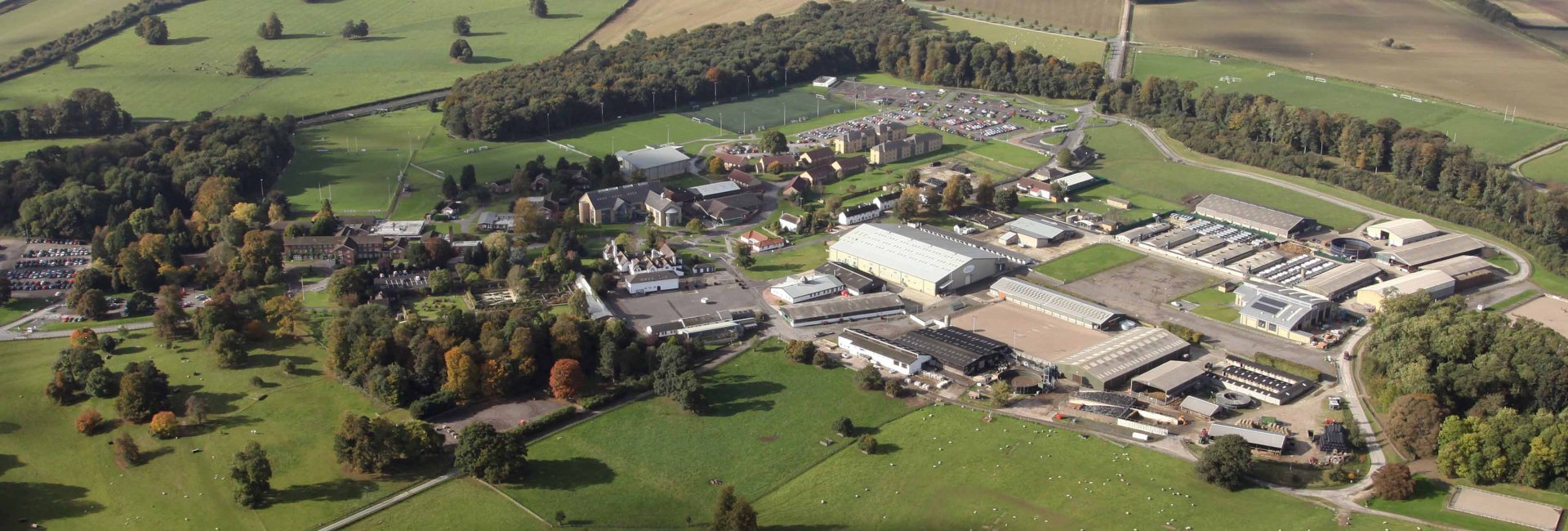
At University Centre Bishop Burton