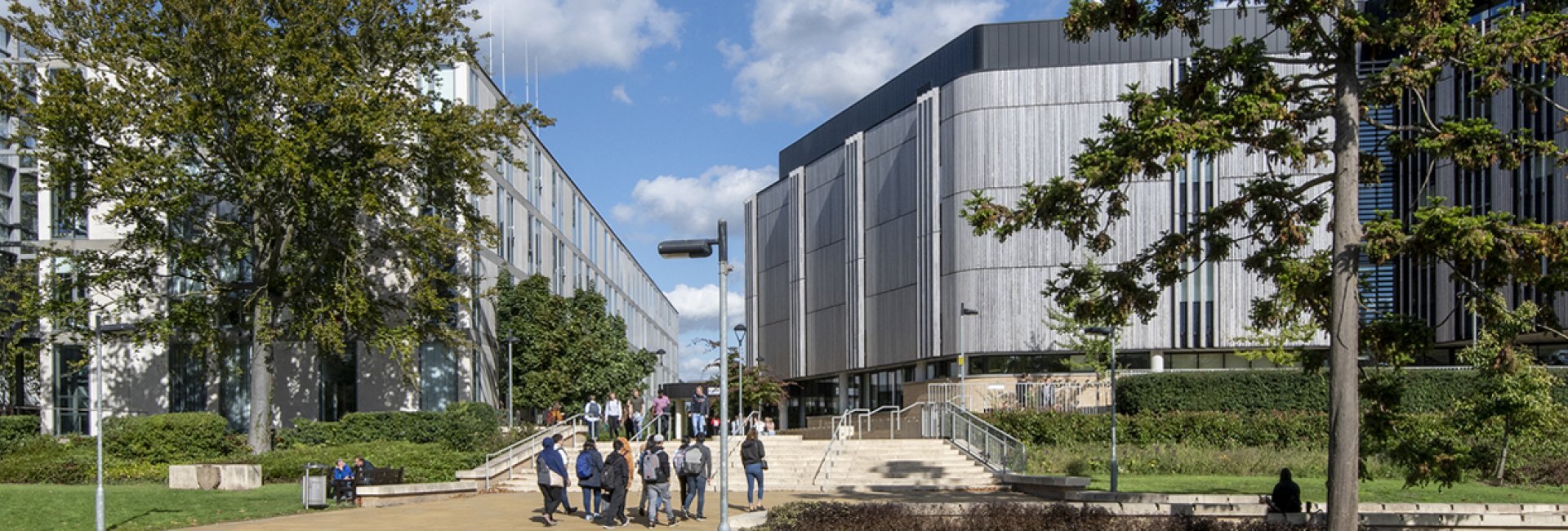
Winchester School of Art - Open Day
6 Jun 2026, 09:00
Winchester

Study Medicine at one of the UK’s leading teaching hospitals, University Hospital Southampton, as part of a supportive and ambitious community of peers and staff, to become the doctor you want to be. Medicine is a challenging and rewarding field that blends science with compassionate patient care. At Southampton, you’ll study a curriculum designed to mirror real medical practice from your very first week, exploring how we diagnose, treat, and prevent disease, seeing the whole person and not only the condition they present with. Our updated five-year BMBS Medicine (BM5) degree gives you more time learning in clinical settings and a curriculum which integrates insights into the latest research driving advances in healthcare.
After graduating with a BMBS degree, you’ll be eligible for provisional registration with the General Medical Council (GMC) and can begin your Foundation Programme as a junior doctor. Our graduates pursue a wide range of careers, from hospital medicine, surgery and general practice to public health, global health, medical education, and roles in research, healthcare management, or pharmaceuticals. Your medical degree opens doors to leadership positions that can shape the future of healthcare.
Key Features of the Course:
• Early and regular clinical placements in hospitals and community settings
• Purpose-built Life Sciences facilities and simulation suites
• Research-led teaching from leading academics and medical researchers
• Student Selected Units to explore areas of personal interest
• A final-year student assistantship to prepare you for clinical practice
• Optional intercalated master’s degree between Years 3 and 4 (study a Master's of medical science or MSc at Southampton; or an iBSc or MSc at another university)
• Elective placement in Year 5 in the UK or abroad
Student Support
From day one, you’ll be part of a friendly, supportive community of students, academics, and clinical mentors dedicated to your success. Experienced tutors and clinicians will guide you through practical and academic challenges, while small group teaching ensures you get personalised support. You’ll develop teamwork and communication skills alongside your peers, and have access to pastoral care, wellbeing services, and a wide range of student-led societies to help you thrive both academically and personally.
Further Information
This programme is open to both UK and international students. On successful completion, you’ll graduate with a BMBS degree and be eligible to apply for provisional registration with the General Medical Council (GMC). Applicants may be invited to attend a Selection Day as part of the admissions process.
Compulsory modules in Year 1: Applied Knowledge 1, Applied Knowledge 2, Applied Knowledge 3, Applied Knowledge 4, Clinical Practice 1, Health Improvement, Personal and Professional Development 1.
Compulsory modules in Year 2: Applied Knowledge 5, Applied Knowledge 6, Applied Knowledge 7, Applied Knowledge 8, Clinical Practice 2, Medical Humanities, Personal and Professional Development 2, Research as Applied to Medicine 2.
Compulsory modules in Year 3: Applied Knowledge Assessment (MCQ) Yr 3, Clinical and Professional Skills Assessment (OSCE), Clinical Teaching Series, Medicine and Elderly Care, Mental Health, Population and Planetary Health, Primary Care and Long Term Conditions, Surgery and Orthopaedics.
Compulsory modules in Year 4: Acute Care Year 4, Child Health, Clinical Professional Skills Assessment (CPSA) (Final), Medical Ethics and Law Year 4, Obstetrics and Gynaecology and Genitourinary Medicine (O and G and GUM), Psychiatry, Specialty Weeks (Dermatology, Head & Neck, Neurosciences and Ophthalmology), Year 4 Applied Knowledge Test (AKT).
Compulsory modules in Year 5: Applied Knowledge Assessment (Final), Assistantship FY, Medicine (Final), Personal and Professional Development FY, Primary Medical Care (Final), Student Selected Unit (Final) (elective, clinical placement, research, education, supplementary), Surgery (Final), Workplace Based Assessment (Final).
A range of assessment methods are used. Coursework will include: essays, reports, posters, project reports and presentations. Examinations will include: written tests and tests of clinical performance.
This course is not accepting applications at this time. Please contact the provider to find out more.
This is the equal consideration deadline. You can still apply after this date, but your application may not receive guaranteed consideration.

University of Southampton has participated in the Teaching Excellence Framework. These ratings were awarded in 2023, for four years.
See why these ratings were awarded
What does this TEF outcome mean?
This course is not accepting applications at this time. Please contact the provider to find out more.
The following entry points are available for this course:
This medicine course is open to both home and international students.
Please note all interviews are held in person on our Highfield campus, we do not offer online alternatives.
All applicants must have a minimum of AAA, including biology and one additional science (with a pass in the practical element where it is separately endorsed).
Acceptable additional science subjects are Chemistry, Physics, Psychology, Sociology, Environmental Studies or Geography.
General studies and critical thinking are not accepted. Subjects where there may be considerable overlap of material will not be accepted in combination (such as combinations of Zoology/Biology; Biology/Sports Studies/Physical Education).
Contextual offer
School leaver applicants who meet two of the University contextual admissions criteria will be made a lower offer (AAB). This offer will include an A Level in biology and one additional science (with a pass in the practical element where it is separately endorsed).
Acceptable additional science subjects are Chemistry, Physics, Psychology, Sociology, Environmental Studies or Geography.
General studies and critical thinking are not accepted. Subjects where there may be considerable overlap of material will not be accepted in combination (such as combinations of Zoology/Biology; Biology/Sports Studies/Physical Education).
Applicants must meet two of the University contextual admissions criteria. For further information about the contextual criteria please see https://www.southampton.ac.uk/courses/medicine-bm5-degree-bmbs#entry
For this programme we do not make an alternative EPQ offer, however we welcome applicants who have achieved a good grade in the EPQ.
AA from two A levels in Biology and one additional science and Pearson BTEC Level 3 National Extended Diploma (360 GLH) at Distinction. Subjects with material that overlaps with Biology A Level and the additional science may not be accepted. Applied Science is not accepted. Subject provided reviewed on a case by case basis.
Additional science subjects are Chemistry, Physics, Psychology, Sociology, Environmental Studies or Geography. Subjects where there may be considerable overlap of material will not be accepted in combination (examples of combinations include, but are not exclusive to, Zoology/Biology; Biology/Sports Studies/Physical Education).
Approved Access to Medicine courses with an appropriate scientific content may be accepted. We require 60 credits with a minimum of 45 credits at level 3 (or equivalent), all of which must be at Distinction .
Access to HE Diploma (Medicine) will be accepted. Other access courses may be considered on a case by case basis, however, online access courses will not accepted. We would expect there to be a significant amount of time between the previous qualification (where relevant) and the Access to HE Diploma (Medicine) or alternative access course. Access courses are most likely to be considered for applicants who have not taken Science qualifications. We will not consider an application from an A Level student who undertakes an Access course shortly after completing their A Levels but fails to achieve the required advertised A Level grades.
Assessed on a case by case basis . But generally, S5 minimum requirements
Highers AAAAB to include Biology and one additional science
Acceptable science subjects are Chemistry, Physics, Psychology, Sociology, Environmental Studies or Geography.
Subjects where there may be considerable overlap of material will not be accepted in combination (such as combinations of Zoology/Biology; Biology/Sports Studies/Physical Education).
AA from two A levels in Biology and one additional science and Pearson BTEC Level 3 National Extended Certificate (360 GLH) at Distinction. Subjects with material that overlaps with Biology A Level and the additional science may not be accepted. Applied Science is not accepted. Subject provided reviewed on a case by case basis.
Additional science subjects are Chemistry, Physics, Psychology, Sociology, Environmental Studies or Geography. Subjects where there may be considerable overlap of material will not be accepted in combination (examples of combinations include, but are not exclusive to, Zoology/Biology; Biology/Sports Studies/Physical Education).
Offers will be based on exams being taken at the end of S6. Subjects taken and qualifications achieved in S5 will be reviewed. Careful consideration will be given to an individual’s academic achievement, taking in to account the context and circumstances of their pre-university education.
S6 Advanced Highers
Advanced Highers to include Biology one additional science. Plus usually an additional subject at Advanced Higher or Higher.
Acceptable science subjects are Chemistry, Physics, Psychology, Sociology, Environmental Studies or Geography.
Subjects where there may be considerable overlap of material will not be accepted in combination (such as combinations of Zoology/Biology; Biology/Sports Studies/Physical Education).
Overall score of 36 points with 18 at Higher Level, with 6 in HL Biology and one additional HL science.
Acceptable science subjects are Chemistry, Physics, Psychology, Sociology, Environmental Studies or Geography.
Subjects where there may be considerable overlap of material will not be accepted in combination (such as combinations of Zoology/Biology; Biology/Sports Studies/Physical Education).
AAA to include A level Biology and one additional science (with a pass in the practical element where it is separately endorsed) or AA from two A levels in including Biology and one additional science (with a pass in the practical element where it is separately endorsed) and A from the Advanced Skills Baccalaureate Wales.
Acceptable science subjects are Chemistry, Physics, Psychology, Sociology, Environmental Studies or Geography.
Subjects where there may be considerable overlap of material will not be accepted in combination (such as combinations of Zoology/Biology; Biology/Sports Studies/Physical Education).
H1 H1 H2 H2 H2 H2, with H2 in Biology and one additional science
Acceptable science subjects are Chemistry, Physics, Psychology, Sociology, Environmental Studies or Geography.
Subjects where there may be considerable overlap of material will not be accepted in combination (such as combinations of Zoology/Biology; Biology/Sports Studies/Physical Education).
D3 D3 D3, including Biology and one additional science
Acceptable science subjects are Chemistry, Physics, Psychology, Sociology, Environmental Studies or Geography.
Subjects where there may be considerable overlap of material will not be accepted in combination (such as combinations of Zoology/Biology; Biology/Sports Studies/Physical Education).
Applicants must be 18 or over at the start of the course.
GCSE
All applicants must have a minimum of seven B grades (grade 6) at GCSE , including English language, mathematics, biology and chemistry, additional science and science, or combined science (or an equivalent standard in other qualifications approved by the University).
Information for Graduate applicants.
Degree: An upper second-class honours in your first degree in any subject. For further information regarding your first degree, please visit our BM4 page at https://www.southampton.ac.uk/courses/medicine-bm4-graduate-entry-degree-bmbs
GCSEs or equivalent: English language, maths and either biology and chemistry, or additional science and science, or combined science all at grade C (grade 4)
Mature non-graduate applicants
Non-graduate applicants over the age of 21 at the point of applying are expected to offer the following:
GCSEs: A minimum grade C (grade 4) in mathematics, English Language and either biology and chemistry, or additional science and science, or combined science
A levels: AAA, including biology and one additional science.
Acceptable science subjects are Chemistry, Physics, Psychology, Sociology, Environmental Studies or Geography
Non-academic entry requirements - for all applicants
In addition to academic entry requirements, you will be assessed against our non academic criteria.
Applicants must be able to show they:
– Are self-motivated and resilient
– Have reflected on and learnt from life experiences (this may include, work experience, paid employment and personal experiences both in and outside health and social care settings)
– Can communicate effectively
– Are able to interact successfully with others
– Can demonstrate an understanding of the values of the NHS constitution
UK Clinical Aptitude Test (UCAT)
All applicants are required to take the UCAT test. For further information, please visit https://www.ucat.ac.uk/
EU and international applicants
EU and international applicants are expected to fulfil the same academic and non-academic criteria as home applicants, and can do so through a wide range of qualifications. If you are an international or EU applicant and English is not your first language, you should offer one of the University of Southampton's recognised tests in English language. For further information please visit our Entry Requirements page. Please also see https://www.naric.org.uk/naric/ for entry requirement equivalents.
Contextual
We are committed to ensuring that all learners with the potential to succeed, regardless of their background, are encouraged to apply to study with us. The additional information gained through contextual data allows us to recognise a learner’s potential to succeed in the context of their background and experience. School leaver applicants who meet two of the University contextual admissions criteria will be made an offer which is lower than the typical offer for that programme.
For further information about the contextual criteria please see https://www.southampton.ac.uk/courses/medicine-bm5-degree-bmbs#entry
For how to apply please see
https://www.southampton.ac.uk/courses/medicine-bm5-degree-bmbs#how-to-apply
Find out more about qualification requirements for this course.
| Test | Grade | Additional details |
|---|---|---|
| IELTS (Academic) | 7 | with no component below 7.0 |
Most of the students who enrolled on this course in previous years met their offer conditions at our published entry criteria, securing their place on their chosen course.
We encourage all applicants with the potential to succeed, regardless of their background, to apply to study with us. School Leaver applicants who qualify for contextual admissions, by meeting two of the university contextual admissions criteria, will be made an offer which is lower than the typical offer for that programme.
This section shows the range of grades that students who received offers were previously accepted on to this course with (learn more).
It is designed to support your research but does not guarantee whether you will or won't get a place.
Admissions teams consider various factors, including interviews, subject requirements, and entrance tests. Check all course entry requirements for eligibility.
We are unable to show previous accepted grades for this course. This could be because the course is new, it's a postgraduate course, there isn't enough historical data, or the provider has opted out of sharing their entry grades data for this course - learn more.
| Location | Fee | Year |
|---|
* This is a provisional fee and subject to change.
Tuition fee status depends on a number of criteria and varies according to where in the UK you will study. For further guidance on the criteria for home or overseas tuition fees, please refer to the UKCISA website.
Please see our website for further details and updates: www.southampton.ac.uk/uni-life/fees-funding.page
If you are an EU or international student, please note that for 2026 entry, fees for clinical years - years 3, 4 and 5 - are £61,800 per year.
Email:AdmissionsUG.MED@soton.ac.uk
Phone:023 8059 4732
Highfield
Southampton
SO17 1BJ
At University of Southampton