
University of Worcester
Henwick Grove
Worcester
WR2 6AJ
Course contact details
Admissions Office
Email:admissions@worc.ac.uk
Phone:01905 855111
Fax: 01905 855377
By studying a combination of criminology and policing, you’ll gain the skills and knowledge to thrive in a career within the police service, prison system, or private security sector.
By studying Criminology with Policing, you’ll gain a strong understanding of crime and the criminal justice system. You’ll analyse the social-scientific theories on criminal behaviour and social deviance while learning about how these crimes are policed and the structures in place within the criminal justice system in England and Wales.
Our programme has been designed to align with the core principles of the College of Policing to provide you with essential skills like communication, ethics, evidence-based policing, and leadership. These skills will help you think critically and make well-informed decisions. You'll learn to understand different viewpoints and make choices that consider the needs of various groups and communities. Ultimately, you'll be able to better serve people in the criminal justice system and beyond.
We believe it's crucial for you to hear a diverse range of perspectives, so we invite guest speakers from various professions, including the Prison Service, Crown Prosecution Service (CPS), and Ministry of Justice, to share their insights and experiences. You’ll also hear from those who have perpetrated or experienced crimes in our society. These talks will give you a real-world perspective on the challenges and solutions within the criminal justice system, helping you develop a well-rounded understanding of the field.
Our strong connections within the industry mean you'll have opportunities to visit courts, local prisons, and parliament, giving you a firsthand look at the criminal justice system in action. You'll also benefit from extracurricular workshops and careers-focused activities supported by key organisations like West Mercia Police. These experiences will help you build a network of professional contacts and put you in a great position to pursue a career in the police force or to work alongside members of a police service.
Why the University of Worcester?
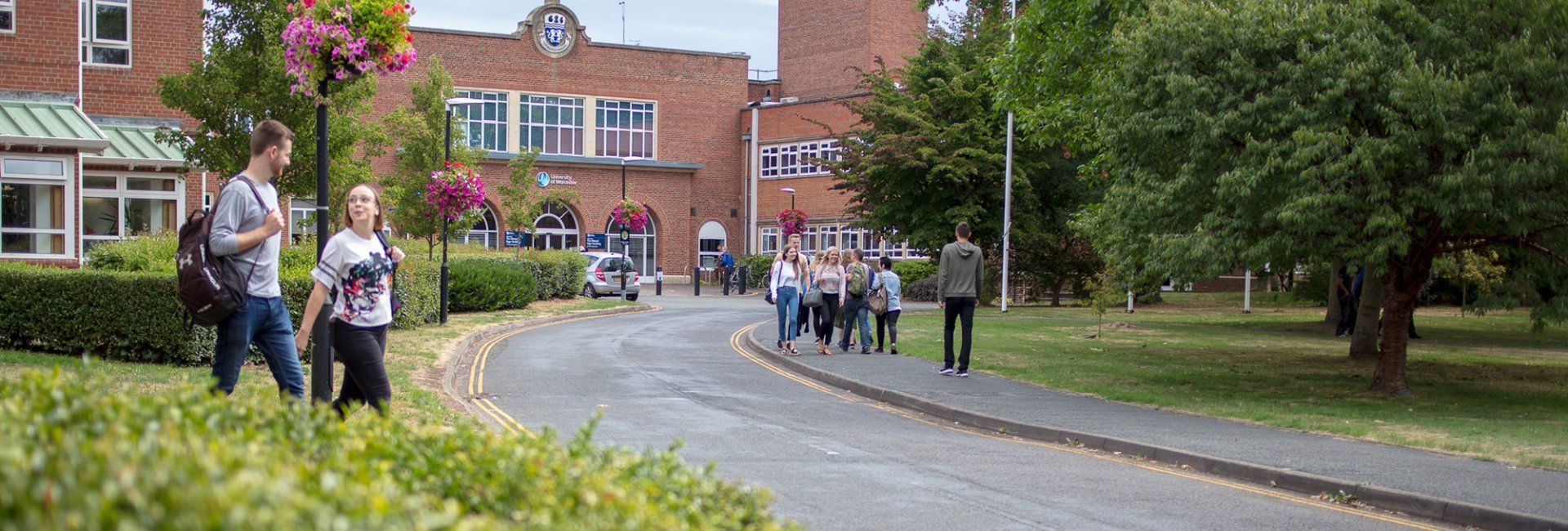
The University of Worcester is a campus university, meaning everything you need is on site. We’re based in a vibrant cathedral city just 40 mins south of Birmingham and an hour north of Bristol, and our beautiful green campuses have plenty of parking and quality on-site accommodation.
At Worcester, small class sizes, supportive tutors, and professionally focused courses mean you’ll be prepared for your dream career. These are just some of the reasons why we’re first in the UK for both graduate employment and quality education.
University of the Year finalist in the Times Higher Education Awards 2025.
First in the UK for sustained employment, further study or both, from any multidisciplinary university – Longitudinal Education Outcomes (LEO) 2017 to 2025.
First in the UK for quality education – Joint 1st in the Times Higher Education’s University Impact Rankings 2025.
Join us at one of our regular Open Days to see if the University is a good fit for you: www.worcester.ac.uk/opendays

University of Worcester has participated in the Teaching Excellence Framework. These ratings were awarded in 2023, for four years.
See why these ratings were awarded
What does this TEF outcome mean?
This section shows the range of grades students (with UK A-Levels or Pearson BTEC Level 3 National Extended Diplomas) who received offers were previously accepted with (learn more). It is designed to support your research but does not guarantee whether you will or won't get a place. Admissions teams consider various factors, including interviews, subject requirements, and entrance tests. Check all course entry requirements for eligibility.
Students aged 17/18 who applied to this course were offered a place.
See how students with your grades have been accepted onto this course in the past.
Operated by the Office for Students
Employment after 15 months (Most common jobs)
Go onto work and study
The number of student respondents and response rates can be important in interpreting the data – it is important to note your experience may be different from theirs. This data will be based on the subject area rather than the specific course. Read more about this data on the Discover Uni website.
Choose a specific option to see funding information.
Course optionsHenwick Grove
Worcester
WR2 6AJ
Email:admissions@worc.ac.uk
Phone:01905 855111
Fax: 01905 855377