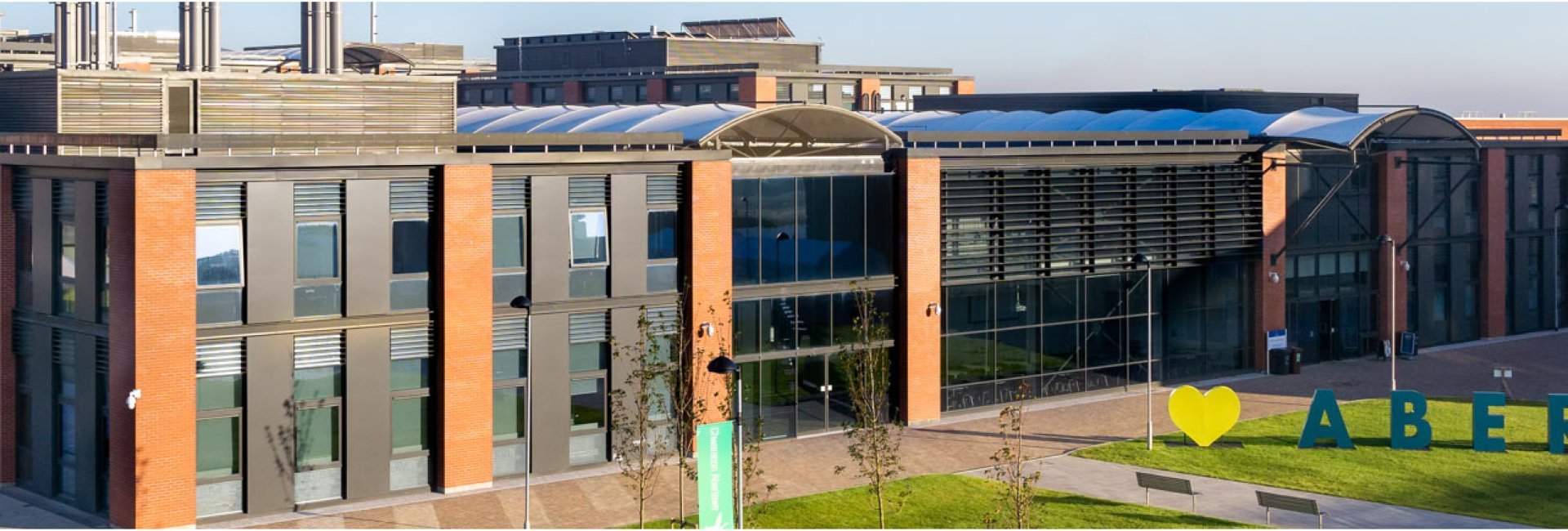
Undergraduate On-Campus Open Day at Swansea University - Singleton Park Campus and Bay Campus - 13 June 2026
13 Jun 2026, 07:30
Swansea

Studying Chemistry at Swansea will give you a strong foundation in both the theoretical principles and practical techniques that underpin the chemical sciences. You will explore major areas of chemistry, including organic, inorganic, physical, analytical, biological, medicinal, theoretical and computational chemistry, developing a broad understanding of how each discipline contributes to real scientific challenges.
From the very beginning of your degree, you will build practical skills through hands on laboratory experience. You will learn how to work safely and accurately in the lab, record and analyse data, interpret results and use a range of modern chemical techniques. As you progress, you will develop your numerical, mathematical and analytical skills, enabling you to work confidently with data, solve complex problems and communicate your findings clearly.
You will learn how chemists apply their knowledge to understand the world around us, from designing new materials and medicines to analysing environmental samples and investigating molecular behaviour. You will also develop the independent learning skills needed to evaluate information, tackle new challenges and grow your scientific expertise.
Clear and effective communication is an important part of the course. You will practise presenting ideas, explaining scientific concepts and writing reports using appropriate sources and scientific conventions. These skills are highly valued by employers and will support your success in a wide range of scientific and professional settings.
If you need additional preparation, the optional Foundation Year offers an excellent introduction to higher education. It will help you develop the skills, confidence and knowledge you need to succeed in your undergraduate degree. It is ideal if you need more support after further education or are returning to study after a break. Following successful completion of the Foundation Year, you will progress to Year One of your BSc.
In Year 0, you will typically study areas including: Foundational Scientific Skills; Elementary Chemistry; Methods of Analysis and Detection; Molecular Biology and Biochemistry; Synthesis and Analysis; Reactions and Products.
In Year 1, you will typically study areas including: Chemical Thinking; Structure and Bonding 1; Chemical Reactions 1; Chemical Practice; Structure and Bonding 2; Chemical Reactions 2.
In Year 2, you will typically study areas including: Further Inorganic Chemistry; Further Physical Chemistry; Further Organic Chemistry; Analytical Chemistry; Professional Development and Career Planning; Biological and Medicinal Chemistry; Computational and Theoretical Chemistry.
In Year 3, you will typically study areas including: Advanced Topics in Organic, Biological and Medicinal Chemistry; Advanced Topics in Inorganic and Materials Chemistry; Advanced Topics in Physical, Instrumental and Analytical Chemistry; Chemistry Project; Integrated Topics in Chemistry.
Professionally accredited courses provide industry-wide recognition of the quality of your qualification.
The following entry points are available for this course:
If you are an International Student, please visit our International pages for more information about entry requirements: http://www.swansea.ac.uk/international/students/requirements/
Discover what it's like to study Chemistry with a Foundation Year at Swansea University: insights on the course, making friends, personal statement tips, uni prep, and recommended books, podcasts, and videos.

A-Level Chemistry is required.
BTEC Level 3 Extended Diploma in Applied Science with MMM. Grade B in GCSE Maths required.
Access to HE (Science) with 27 Merits to include all Chemistry and Maths modules. Grade B in GCSE Maths required.
Swansea University accepts the Advanced Skills Baccalaureate Wales as fully equivalent to x1 A-Level.
English Language Requirements at Swansea Universityhttps://www.swansea.ac.uk/admissions/english-language-requirements/
UK applicants who meet course requirements are guaranteed a conditional offer. We assess applications on individual merit. We consider making reduced offers, eg. to Care Leavers or students with extenuating circumstances. We encourage you to disclose any relevant circumstances.
The Advanced Skills Baccalaureate Wales is considered as equivalent to one full A-Level and students can take x2 A-levels alongside this. EPQ students predicted Grade B or above will receive a one-grade offer reduction.
This section shows the range of grades that students who received offers were previously accepted on to this course with (learn more).
It is designed to support your research but does not guarantee whether you will or won't get a place.
Admissions teams consider various factors, including interviews, subject requirements, and entrance tests. Check all course entry requirements for eligibility.
We are unable to show previous accepted grades for this course. This could be because the course is new, it's a postgraduate course, there isn't enough historical data, or the provider has opted out of sharing their entry grades data for this course - learn more.
No fee information has been provided for this course
Tuition fee status depends on a number of criteria and varies according to where in the UK you will study. For further guidance on the criteria for home or overseas tuition fees, please refer to the UKCISA website.
For the latest fee information, please check the individual course page on our website. Our full range of programmes are listed here: https://www.swansea.ac.uk/undergraduate/courses/
Further information on tuition fees can be found here: https://www.swansea.ac.uk/undergraduate/fees-and-funding/tuition-fees/
You may be eligible for funding to help support your study.
To find out about scholarships, bursaries and other funding opportunities that are available please visit the University’s scholarships and bursaries page https://www.swansea.ac.uk/undergraduate/scholarships/
Academi Hywel Teifi at Swansea University and the Coleg Cymraeg Cenedlaethol offer a number of generous scholarships and bursaries for students who wish to study through the medium of Welsh or bilingually. For further information about the opportunities available to you, visit the Academi Hywel Teifi Scholarships and Bursaries page https://www.swansea.ac.uk/academi-hywel-teifi/learn/scholarships/
Email:study@swansea.ac.uk
Phone:01792 295111
Fax: 01792 295110
Singleton Park
Swansea
SA2 8PP
At Swansea University