Course contact details
Admissions Enquiries
Email:contactus@dundee.ac.uk
Phone:01382 383838
University of Dundee
Nethergate
Dundee
DD1 4HN

Urban planners collaborate with a wide range of interest groups to positively influence outcomes in the development of cities and the countryside. These include politicians, communities, property developers, the renewable energy sector, environmentalists, and the public health sectors.
Learn about the historical development of cities, as well as their current complex problems and opportunities. How cities and their surroundings develop is complicated and always changing. They result in global challenges that impact on people’s health, well-being, and access to essential services such as roads, water, housing, and transportation.
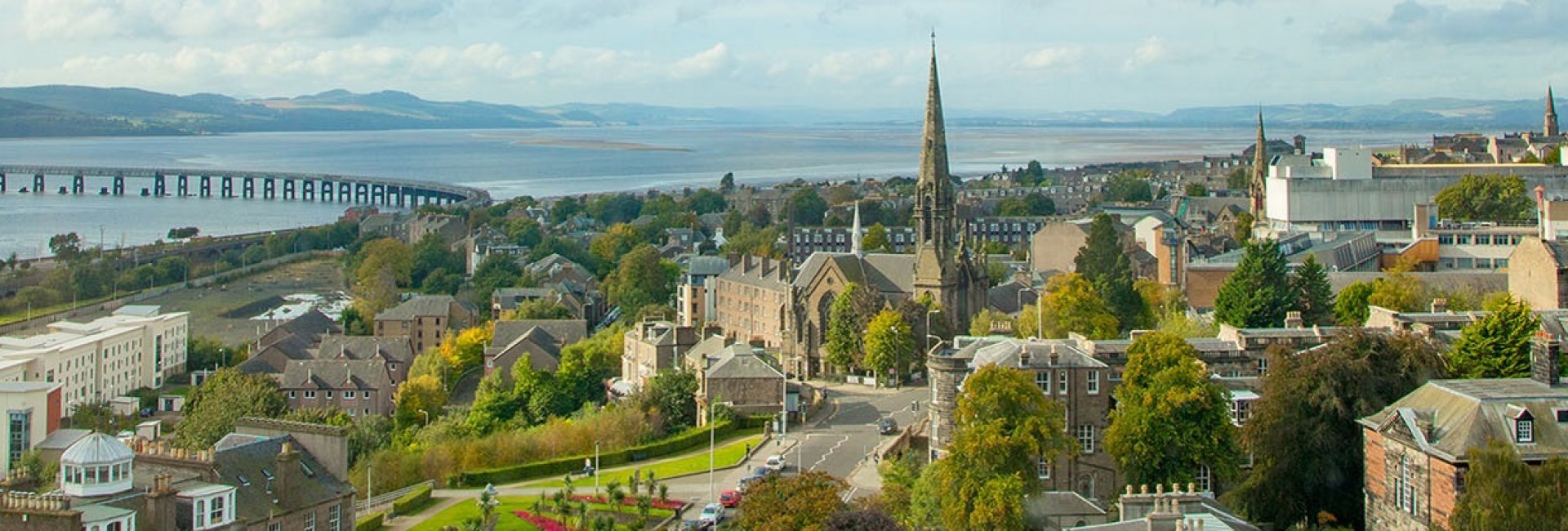
You'll develop skills so that you will be able to help shape the future outcomes of cities across the world. Dundee City itself, together with its surroundings, forms an ideal laboratory.
At Level 3 of this course, you will have an option to specialise in either urban design or environmental sustainability. You'll undertake a major individual study in a topic within your selected specialism.
In addition, relevant international trips may be organised. In the past student trips have been to countries such as the Netherlands, France, Ireland, Malta, Portugal, and Spain.
<a href="https://www.dundee.ac.uk/undergraduate/urban-planning/teaching-and-assessment">Modules can be viewed on the course webpage at dundee.ac.uk</a>
<a href="https://www.dundee.ac.uk/undergraduate/urban-planning/teaching-and-assessment">Assessment methods can be viewed on the course webpage at dundee.ac.uk</a>
Professionally accredited courses provide industry-wide recognition of the quality of your qualification.
The following entry points are available for this course:
https://www.dundee.ac.uk/undergraduate/urban-planning/entry-requirements
A relevant BTEC Level 3 Extended Diploma with MMM
28 points with 5,5,4 at Higher Level
A relevant HNC with B in the Graded Unit
A relevant HND with BB in the Graded Units
Find out more about qualification requirements for this course.
A relevant BTEC Level 3 Extended Diploma with MMP
26 points with 5,4,4 at Higher Level
General guidance for our accepted English language qualificationshttps://www.dundee.ac.uk/guides/english-language-requirements
Achieving a strong set of qualifications is key to earning a place at the University. We understand grades are influenced by things outside your control, such as the impact of deprivation where you live. That’s why each year we look at each student's application in detail including circumstances outside of your control that may have impacted your potential.
This section shows the range of grades that students who received offers were previously accepted on to this course with (learn more).
It is designed to support your research but does not guarantee whether you will or won't get a place.
Admissions teams consider various factors, including interviews, subject requirements, and entrance tests. Check all course entry requirements for eligibility.
Historical entry grades data is not currently available for University of Dundee - we are working with them to try and make it available soon - learn more.
| Location | Fee | Year |
|---|
* This is a provisional fee and subject to change.
Tuition fee status depends on a number of criteria and varies according to where in the UK you will study. For further guidance on the criteria for home or overseas tuition fees, please refer to the UKCISA website.
Tuition fees shown for Scottish students are for students starting in the 2025/26 academic year. The fees for 2026/27 have not yet been confirmed and we expect confirmation of these in March 2026.
Please note: From 2026/27, the UK Government has indicated that universities may be permitted to increase tuition fees annually in line with inflation. Any tuition fee increase will follow the process and terms set out in the University’s Student Terms and Conditions www.dundee.ac.uk/corporate-information/student-terms-and-conditions and will be communicated to you in advance.
Tuition fees for International students will increase by no more than either of the below, whichever is higher at September of the relevant academic year:
Email:contactus@dundee.ac.uk
Phone:01382 383838
Nethergate
Dundee
DD1 4HN
At University of Dundee