Course contact details
Main Contact
Email:admissions@rcs.ac.uk
Phone:0141 332 4101
Fax: 0141 332 8901
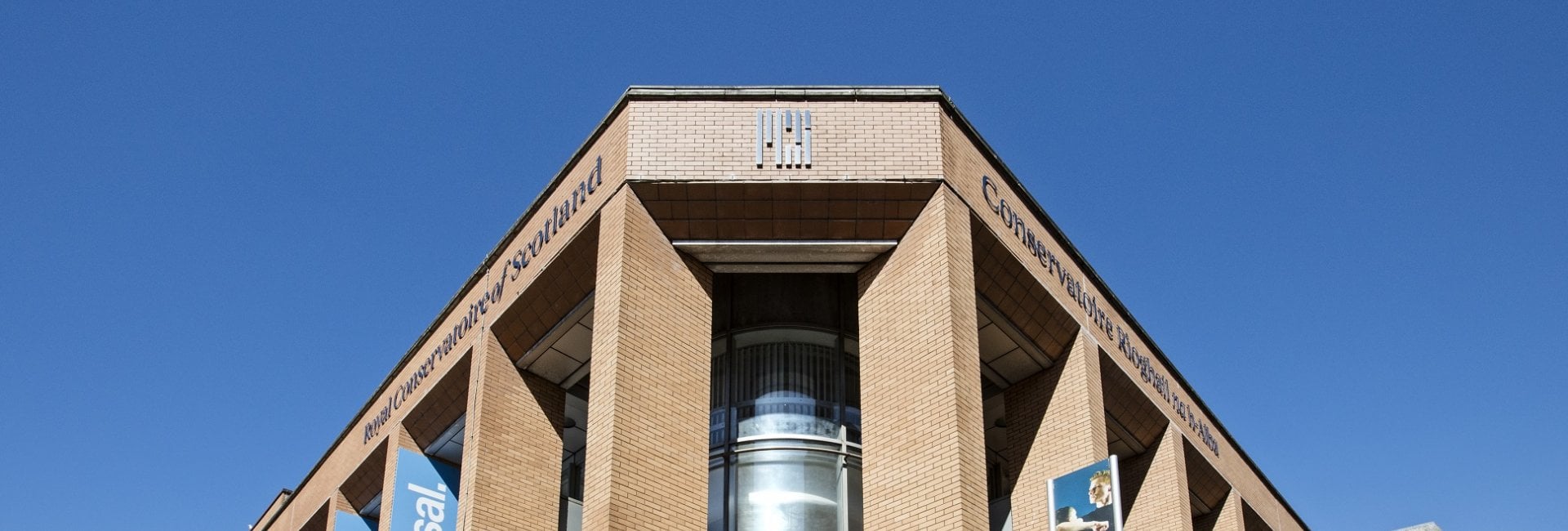
Royal Conservatoire of Scotland
100 Renfrew Street
Glasgow
G2 3DB

The application deadline for this programme is the 31 March 2027
Study from anywhere in the world. Delivered through blended or fully online learning, this one-year programme will help you shape your creative identity, develop critical thinking skills and build a sustainable career in the performing and production arts.
This practice-led, modular programme for creative graduates will evolve your practice and enhance employability in a world-leading performing and production arts education environment. As contemporary creative artists often work across and beyond the traditional boundaries of artistic disciplines, the focus will be on bespoke, individual learning. You will engage in critical inquiry to identify meaningful goals and develop essential knowledge, skills and attitudes for success in your artistic journey.
Throughout the programme, you will have the opportunity to build a professional network and receive support to critically engage with your practice in order to transform your creative identity. It will also help you enhance your skills for freelance work, employment with creative agencies or further academic study, while expanding your professional network.
This is a flexible programme, where you’ll work alongside RCS lecturers and industry experts, as well as our network of national and international partners.
The programme is designed to integrate with your existing arts practice and includes a significant amount of student-led learning. It will be complemented by intensive residencies at the beginning and end of the programme, as well as online delivery, one-to-one support, and peer group learning.
During the application and audition process, you must select which instrument(s) you wish to specialise in for the duration of your course. On this course, you can choose from the following options:
For all courses, you must select at least one specialism from the 'primary' list. For those studying primary/secondary pathways, two instruments may be selected – one from the 'primary' list and one from the 'secondary' list. Joint pathway students may select any two instruments from either list.
This programme is a blend of scheduled sessions and guided, self-directed study so you can investigate what matters to you.
Teaching is structured, regular and interactive. Learning takes place in multiple formats: group lectures and seminar discussions, regular one-to-one meetings with programme staff, and specialist tutorials tailored to your individual interests and area of practice.
This ensures you benefit from peer exchange while also receiving focused mentorship aligned to your developing specialism.
https://www.rcs.ac.uk/courses/ma-mfa-creative-arts-practice/#programme-structure
More information about what the course entails can be found on our website.
The following entry points are available for this course:
As the second cycle of higher education, postgraduate study represents a continuation of learning, training and/or experience rather than a beginning. As such, many of our applicants will have a degree qualification either in an arts subject, or in business or management. However, we recognise that traditional application processes, which show a bias towards prior learning and achievement, can perpetuate existing societal inequities, favouring those who already benefit. For this reason, we embrace the principles of widening access and participation and, whilst prior qualifications and experience may be taken into account, our application process places emphasis on students’ values, potential and readiness for Master’s level study. This is in accordance with the RCS Admissions Policy (including the Contextualised Admissions Policy). Accreditation of Prior and Experiential Learning (APEL): In some cases, applicants to the programme may already have achieved academic credit on another programme of study and are seeking to reduce the number of modules they will need to study on the programme. Applications for APEL will normally be decided prior to the applicant’s admission to the Royal Conservatoire. https://www.rcs.ac.uk/courses/ma-mfa-creative-arts-practice/#entry-requirements
| Test | Grade | Additional details |
|---|---|---|
| IELTS (Academic) | 7 | 7.0 with a minimum score of 7.0 in speaking and no component below 6.5 |
| TOEFL (iBT) | 94 | Overall score of 94, with minimum component scores of: Reading – 19, Listening – 20, Speaking – 23, Writing – 24 |
| PTE Academic | 66 | Overall score of 66 with a minimum of 66 in speaking and no component below 62 |
| Cambridge English Advanced | Overall score of 185 with a minimum of 185 in speaking and no component below 176 | |
| Cambridge English Proficiency | Overall score of 185 with a minimum of 185 in speaking and no component below 176 |
https://www.rcs.ac.uk/study/international-students/english-requirements/
In the event of a successful assessment, applicants may be invited for a further interview prior to being made an offer.
Remote assessment recordings may be accepted in the event that you cannot attend an assessment in person.
| Location | On-time Fee |
|---|---|
| Online | No Fee Charged |
| Location | On-time Fee |
|---|---|
| Online | Not Applicable |
All applicants need to complete an Acceptd account profile and application, this is part of the audition process (https://app.getacceptd.com/rcs) and needs to be completed once your UCAS application has been submitted. You can view the audition requirements and what to prepare for this course on the relevant programme page on our website. If you have any questions, please contact: hello@rcs.ac.uk
| Location | Fee | Year |
|---|---|---|
| England, Scotland, Wales, Northern Ireland, Channel Islands, Republic of Ireland, EU & International | £7571* |
* This is a provisional fee and subject to change.
Tuition fee status depends on a number of criteria and varies according to where in the UK you will study. For further guidance on the criteria for home or overseas tuition fees, please refer to the UKCISA website.
Please note, all new students are required to pay associated programme cost related fees at the start of their studies.
For more information on fees, funding and scholarship, please see our website.
There are currently no RCS scholarships available for this programme. You may be eligible for funding via the student loans companies relevant to your country, more information can be found on our website.
https://www.rcs.ac.uk/study/fees-funding/#sources-of-funding
Email:admissions@rcs.ac.uk
Phone:0141 332 4101
Fax: 0141 332 8901
100 Renfrew Street
Glasgow
G2 3DB
At Royal Conservatoire of Scotland