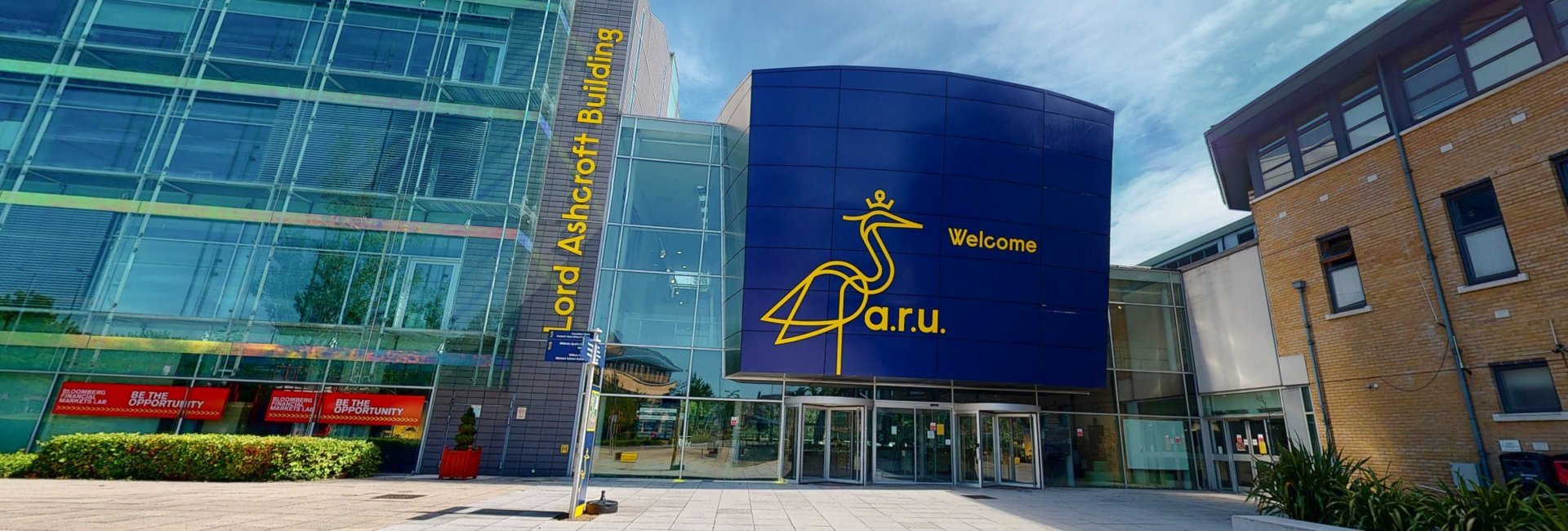
Anglia Ruskin University - Undergraduate Open Day - Cambridge
6 Jun 2026, 09:00
Cambridge

Study the science of life – a varied and exciting discipline that takes you from the molecular to whole organisms and entire ecosystems.
Whether your interests lie in cell, molecular and laboratory biology; genetics, evolution and bioinformatics; plants, microbes and biotechnology; or whole organisms, environments, and field skills, on this course you’ll learn to evaluate aspects of all life on earth, including the ways it is under threat.
You’ll discover how a variety of living organisms evolve, their physiology, how they function within their environments – and how these environments can be sustained.
Why ARU?
Cover all life on earth, from microorganisms to plants, animals and humans, and from genes to whole ecosystems.
Bring the world of work to life through Live Briefs; developed with employers to give you exposure to ‘real world’ problem-solving.
Build a strong foundation in laboratory, data science, bioinformatic, and field skills.
Tailor your degree to your ambitions and interests through optional modules, all underpinned by sustainability.
Study in Cambridge, the centre of new and emerging technologies in life sciences.
Gain experience on internships with our research-active staff, or apply for work placements.
Year 1
Interactive Learning Skills and Communication
Information and Communication Technology
Maths for Scientists
Cellular Biology
Critical Thinking
Biology: Physiology
Chemistry
Physics for Life Sciences
Year 2
Principles of Biology (30 credits)
Quantitative Techniques and Tools for Biologists (30 credits)
Introduction to Genetics and Genomics (15 credits)
Physiology of Organisms (30 credits)
Ecology and Sustainability (15 credits)
Continuing Professional Development (Level 4)
Year 3
Principles of Genetics (15 credits)
Ruskin Module (15 credits)
Preparation for Research (15 credits)
Continuing Professional Development (Level 4)
Vertebrate Biology (15 credits)*
Invertebrate Biology (15 credits)*
Plants and Microbial Sciences (15 credits)*
Laboratory Techniques in DNA Manipulation (15 credits)*
Laboratory Techniques for Bioinformatics (15 credits)*
Field Skills in Biology (15 credits)*
Animal Health and Disease (15 credits)*
GIS and Spatial Ecology (15 credits)*
Proteomics and Molecular Structures (15 credits)*
Year 4
Undergraduate Project (30 credits)
Developmental Biology and Genetics (15 credits)
Policy, Globalisation, and Economics of Sustainability (15 credits)
Biogeography (15 credits)*
Comparative Ecophysiology (15 credits)*
Human-Animal Interactions (15 credits)*
Microbial Pathogenicity (15 credits)*
Molecular Cell Biology (15 credits)*
Current Advances in Bioinformatics (15 credits)*
Current Advances in Plant and Microbial Sciences (15 credits)*
Current Advances in Evolution and Biodiversity (15 credits)*
Systems Biology (15 credits)*
*optional
Throughout the course, we’ll use a range of assessment methods to measure your progress. Besides exams, these include essays, practical reports, computer-based assessments, presentations, debates, classroom- or laboratory-based tests, and reviews of scientific papers.
This is the equal consideration deadline. You can still apply after this date, but your application may not receive guaranteed consideration.

Anglia Ruskin University has participated in the Teaching Excellence Framework. These ratings were awarded in 2023, for four years.
See why these ratings were awarded
What does this TEF outcome mean?
The following entry points are available for this course:
5 GCSEs at grade D, or grade 3, or above and evidence of two years post-GCSE study at Level 3.
If you have achieved at least grade E in one A level, or equivalent, you are exempt from the two years post-GCSE study requirement, but you still must meet the GCSE requirements.
Applicants who do not meet the two years post GCSE study at level 3 may be considered based on their satisfactory employment history, which must be a minimum of two years full time employment supported by employer evidence and deemed appropriate by the University for meeting the course of study applied for. https://www.aru.ac.uk/study/undergraduate/biology
| Test | Grade | Additional details |
|---|---|---|
| IELTS (Academic) | 5.5 | With minimum 5.5 in each component |
Equivalent English Language qualifications, as recognised by Anglia Ruskin University, are also accepted.
This section shows the range of grades that students who received offers were previously accepted on to this course with (learn more).
It is designed to support your research but does not guarantee whether you will or won't get a place.
Admissions teams consider various factors, including interviews, subject requirements, and entrance tests. Check all course entry requirements for eligibility.
We are unable to show previous accepted grades for this course. This could be because the course is new, it's a postgraduate course, there isn't enough historical data, or the provider has opted out of sharing their entry grades data for this course - learn more.
| Location | Fee | Year |
|---|---|---|
| England, Scotland, Wales, Northern Ireland, Channel Islands & Republic of Ireland | £10050 |
Tuition fee status depends on a number of criteria and varies according to where in the UK you will study. For further guidance on the criteria for home or overseas tuition fees, please refer to the UKCISA website.
https://www.aru.ac.uk/student-life/preparing-for-study/help-with-finances/undergraduate
https://www.aru.ac.uk/study/tuition-fees
International fee TBC
Email:answers@aru.ac.uk
Phone:+44 (0)1245 686868
Email:international@anglia.ac.uk
Phone:+44 1245 683680
East Road
Cambridge
CB1 1PT
At Anglia Ruskin University