Course contact details
Main Contact
Email:admissions@rcs.ac.uk
Phone:0141 332 4101
Fax: 0141 332 8901
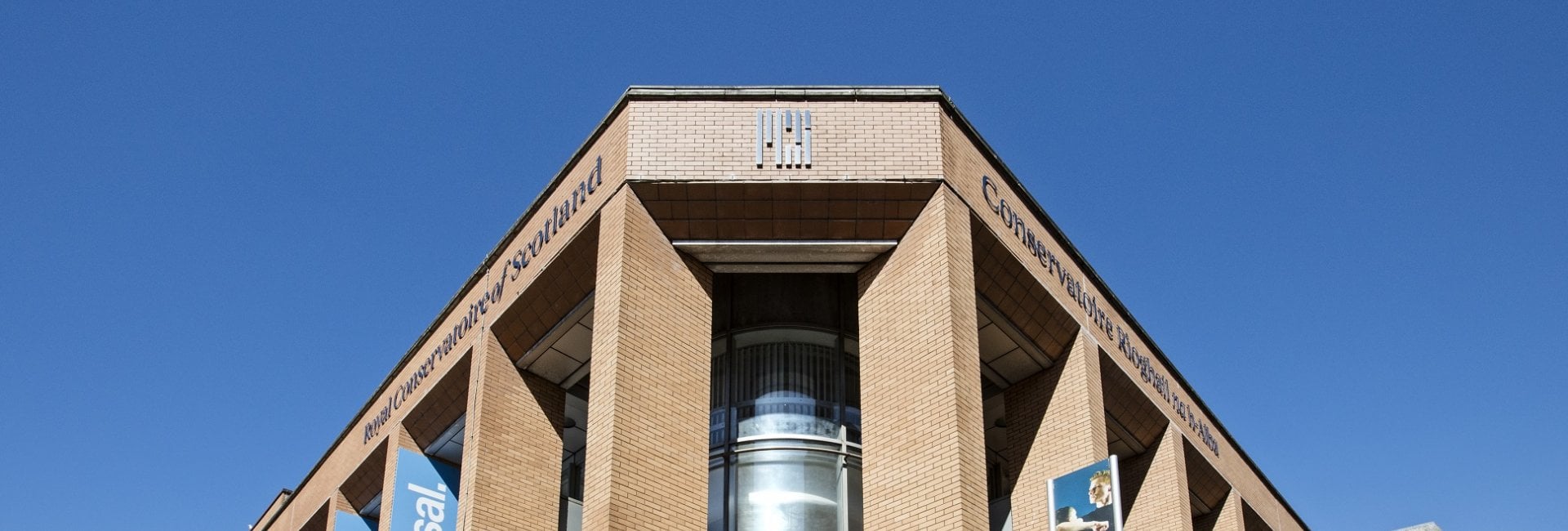
Royal Conservatoire of Scotland
100 Renfrew Street
Glasgow
G2 3DB

You begin your postgraduate studies with the core of your musical personality – the skills, understandings and attitudes that define you as a traditional musician or piper – already established. Your postgraduate studies should nurture that existing artistic personality so that you can make a difference in the fields in which you choose to work.
The programme offers advanced training to talented traditional musicians from diverse undergraduate degrees or their equivalent. We have designed the programme so that you take ownership of the learning process throughout the degree and beyond, whether in the professional world or further studies (such as a PhD).
Our staff are professional performers, composers, and scholars of Scottish traditional music (and beyond) with active careers. They understand the challenges that you’ll face in your career and can provide help and advice as you progress. As well as working with our core staff, you’ll get the opportunity to learn from visiting artists and academics from all over the world.
There’s a great atmosphere in the department and the Conservatoire as a whole. We have a close-knit community where you will perform and gig with other students and staff, making friends for life.
As for professional and institutional collaborations, we work closely with the National Piping Centre, Sabhal Mòr Ostaig and the Celtic Connections and Piping Live festivals in delivering a varied and vocationally robust experience for its students.
Piping tuition on the MMus is delivered in collaboration with the National Piping Centre — an internationally recognised centre of excellence in Highland Bagpipe teaching.
During the application and audition process, you must select which instrument(s) you wish to specialise in for the duration of your course. On this course, you can choose from the following options:
For all courses, you must select at least one specialism from the 'primary' list. For those studying primary/secondary pathways, two instruments may be selected – one from the 'primary' list and one from the 'secondary' list. Joint pathway students may select any two instruments from either list.
The MMus in Traditional Music can be studied part-time across three or four years. The possible patterns are:
Stage 1 full time, Stage 2 part time over two years (three years total)
Stage 1 part time over two years, Stage 2 full time (three years total)
Stage 1 part time over two years, Stage 2 part time over two years (four years total)
Your part-time programme will be negotiated individually, but will typically involve spreading your Principal Study tuition over two years, with B assessment/s in the first part-time year and the A assessment as the culmination of the second. Graduate Studies activities will be distributed across the two years, while any Options chosen will occupy a single part-time year.
MMus Stage 1
Principal Study 1 – 80 Credits
Individual instrumental/vocal lessons
Two negotiated performance assessments
Graduate Studies 1 – 30/20/10 Credits
Practice Research – 10 Credits
Options – 0/10/20 Credits
MMus Stage 2
Principal Study 2 – 90 Credits
Individual instrumental/vocal lessons
Two negotiated performance assessments
Graduate Studies 2 – 30/20/10 Credits
Options – 0/10/20 Credits
https://www.rcs.ac.uk/courses/mmus-ma-traditional-music/#programme-structure
Please see our webpage for more information about the course.
The following entry points are available for this course:
A standard of performance commensurate with the BMus final year public recital is sought at the entrance audition for this programme. Therefore, candidates at audition should be prepared to demonstrate a range of skills & competencies, as well as an understanding of traditional music, which taken together can produce a comprehensive insight into their performance standard:
| Test | Grade | Additional details |
|---|---|---|
| IELTS (Academic) | 6 | 6.0 with no component below 5.5 |
| TOEFL (iBT) | 80 | Overall score of 80, with minimum scores of: Reading – 18, Listening – 17, Speaking – 20, Writing – 17 |
| PTE Academic | 59 | Overall score of 59 with a minimum of 59 in all components (reading, listening, speaking, writing) |
| Cambridge English Advanced | Overall score of 169 with a minimum of 162 in all components | |
| Cambridge English Proficiency | Overall score of 169 with a minimum of 162 in all components |
In the event of a successful assessment, applicants may be invited for a further interview prior to being made an offer.
Remote assessment recordings may be accepted in the event that you cannot attend an assessment in person.
| Location | On-time Fee |
|---|---|
| Recording | Not available at this location |
| RCS (Glasgow) | Not available at this location |
| Location | On-time Fee |
|---|---|
| Recording | No Fee Charged |
| RCS (Glasgow) | Not Applicable |
All applicants need to complete an Acceptd account profile and application regardless of which location you choose, this is part of the audition process (https://app.getacceptd.com/rcs) and needs to be completed once your UCAS application has been submitted. All live in-person auditions will be scheduled through the Acceptd platform. If you don't have an acceptd application, we won't be able to audition you. Applicants submitting performance recordings via our Acceptd platform, may be asked to a follow-up live online interview with the department you are applying for. For the best audition experience, we would encourage all UK applicants (and where possible international applicants) to attend in-person. You can view the audition requirements and what to prepare for this course at the following page on our website: https://www.rcs.ac.uk/courses/mmus-ma-traditional-music/
| Location | Fee | Year |
|---|---|---|
| England, Scotland, Wales, Northern Ireland, Channel Islands & Republic of Ireland | £6853* |
* This is a provisional fee and subject to change.
Tuition fee status depends on a number of criteria and varies according to where in the UK you will study. For further guidance on the criteria for home or overseas tuition fees, please refer to the UKCISA website.
Please note, all new students are required to pay associated programme cost related fees at the start of their studies.
For more information on fees, funding and scholarship, please see our website.
This pathway is not available for international students who require a visa to study.
Within the School of Music, the majority of scholarship awards are made following an audition and offer of a place at the RCS. Scholarships are made based on ability and potential with some for financial need. Many School of Music scholarships are made for the duration of the programme. There is no separate scholarship application for the School of Music as everyone is automatically considered.
Email:admissions@rcs.ac.uk
Phone:0141 332 4101
Fax: 0141 332 8901
100 Renfrew Street
Glasgow
G2 3DB
At Royal Conservatoire of Scotland