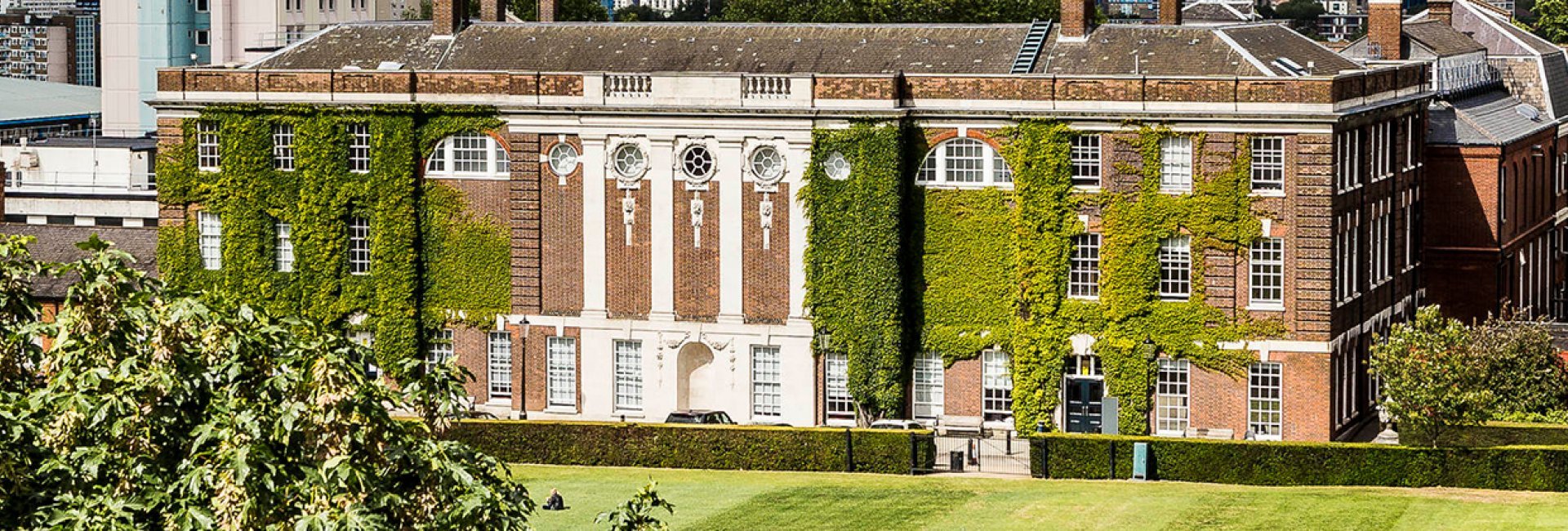
Goldsmiths, University of London - Virtual Campus Tour
25 Nov 2025, 12:00
London

Develop a specialist understanding of the key conceptual and technological issues in artificial intelligence and data science computation.
Why study BSc Computer Science (Artificial Intelligence and Data Science)
In this BSc Computer Science pathway, you'll develop and understand cutting-edge machine learning models, alongside their implications. You'll also get to grips with the theoretical underpinnings and implementation of machine learning.
You'll develop key skills in applying datasets to a range of models including deep learning neural networks, and applying models to a range of divergent problems.
You'll also explore the ethical and social implications of the deployment of machine learning models, and consider their limitations and validity.
You'll learn how to extract useful information from large collections of data, using software mining techniques.
The degree is hands-on and practical from the start. You'll be creating your own web and mobile applications, data visualisations, and games. You will explore your potential through these practical projects while learning relevant technical skills for your future career.
In your third year, you'll have the opportunity to undertake a year-long industry placement (making this programme four years full-time, or eight years part-time). This gives you valuable experience to build confidence and contacts, further develop your skills and industry insight, and enhance your career prospects.
Year 1
In your first year, you'll take the following compulsory modules:
Introduction to Programming
User Experience and the Web
Logic and Computer Architecture
Computing Project 1
Graphics 1
Algorithms 1
Identity, Agency & Environment 1
Identity, Agency & Environment 2
Year 2
In your second year, you'll take the following compulsory modules:
Software Development and Design
Computing Project 2
Object Oriented Programming
Data Programming for Artificial Intelligence
Algorithms 2
Fundamentals of Computer Science
The Goldsmiths Elective
Optional modules
You'll then take 2 optional modules from the following list:
Networks and Operating Systems
Information Security
The Goldsmiths Project
Optional placement year
Our degree include an optional industrial placement year after the second year of study. You'll be responsible for securing a placement, but we can support you through this process.
The industrial placement year is a great opportunity for you to gain work experience, build confidence and contacts, develop your skills and industry insight, and enhance your career prospects.
You'll be supported throughout your placement year by a placement tutor, who will provide you with guidance and liaison between you and your employer.
Although we encourage you to take the opportunity of a placement year, you can also complete your degree in three years.
Year 3 (or year 4 with placement year)
In your final year, you'll complete the following compulsory modules:
Final Project in Computer Science
Artificial Intelligence
Neural Networks
Machine Learning
Data Mining
You'll then use your remaining 15 credits to take an optional module from a list provided annually by the Department of Computing.
*Please note that due to staff research commitments not all of these modules may be available every year.

Goldsmiths, University of London has participated in the Teaching Excellence Framework. These ratings were awarded in 2023, for four years.
See why these ratings were awarded
What does this TEF outcome mean?
This course may be available at alternative locations, please check if other course options are available.
Course optionsIf you do not have a Science or Mathematics-based A-level, you should normally have at least Grade B/Grade 6 at GCSE Mathematics.
Each application will be considered on its individual merits. Where the T Level subject area does not directly match the degree programme being applied for, the personal statement and reference will be particularly important in demonstrating interest, enthusiasm and suitability for the subject.
If you do not have a Science or Mathematics-based Higher, you should normally have at least Grade B/Grade 6 at GCSE Mathematics or equivalent.
Pass with 45 Level 3 credits including 24 Distinctions and a number of merits/passes in subject specific modules.
If you do not have a Science or Mathematics-based A-level equivalent, you should normally have at least Grade B/Grade 6 at GCSE Mathematics.
If you do not have a Science or Mathematics-based Advanced Higher, you should normally have at least Grade B/Grade 6 at GCSE Mathematics or equivalent.
With three Higher Level subjects at 555.
If you do not have a Science or Mathematics-based Higher Level, you should normally have at least Grade B/Grade 6 at GCSE Mathematics equivalent.
If you do not have a Science or Mathematics-based A-level equivalent, you should normally have at least Grade B/Grade 6 at GCSE Mathematics.
If you do not have a Science or Mathematics-based Higher Level, you should normally have at least Grade B/Grade 6 at GCSE Mathematics or equivalent.
If you do not have a Science or Mathematics-based A-level equivalent, you should normally have at least Grade B/Grade 6 at GCSE Mathematics.
Entry requirements for students joining after Year 1:
120 credits at Level 4 and a 2:1 average in a comparable programme, and meet the standard qualification requirements for Year 1 of the programme.
| Test | Grade | Additional details |
|---|---|---|
| IELTS (Academic) | 6 | With no element lower than 5.5 |
We pay careful attention to your personal statement which is your opportunity to demonstrate your interest in your desired subject. Referees are also welcome to include any relevant contextual comments around your academic achievements. We consider all these things when making a decision as well as your qualifications and grades, and may still be able to offer you a place.
If you are unsure about applying, we would be happy to advise you.
This section shows the range of grades that students who received offers were previously accepted on to this course with (learn more).
It is designed to support your research but does not guarantee whether you will or won't get a place.
Admissions teams consider various factors, including interviews, subject requirements, and entrance tests. Check all course entry requirements for eligibility.
This course may have Historical entry grades data available, please select a course option to view.
Course options| Location | Fee | Year |
|---|---|---|
| England, Scotland, Wales, Northern Ireland, Channel Islands & Republic of Ireland | TBC | |
| EU & International | TBC |
Tuition fee status depends on a number of criteria and varies according to where in the UK you will study. For further guidance on the criteria for home or overseas tuition fees, please refer to the UKCISA website.
To find out more about fees and funding, please check our undergraduate fees guidance or contact the Fees Office https://www.gold.ac.uk/ug/fees-funding/
Email:course-info@gold.ac.uk
Phone:020 7078 5300
New Cross
Lewisham
SE14 6NW
At Goldsmiths, University of London