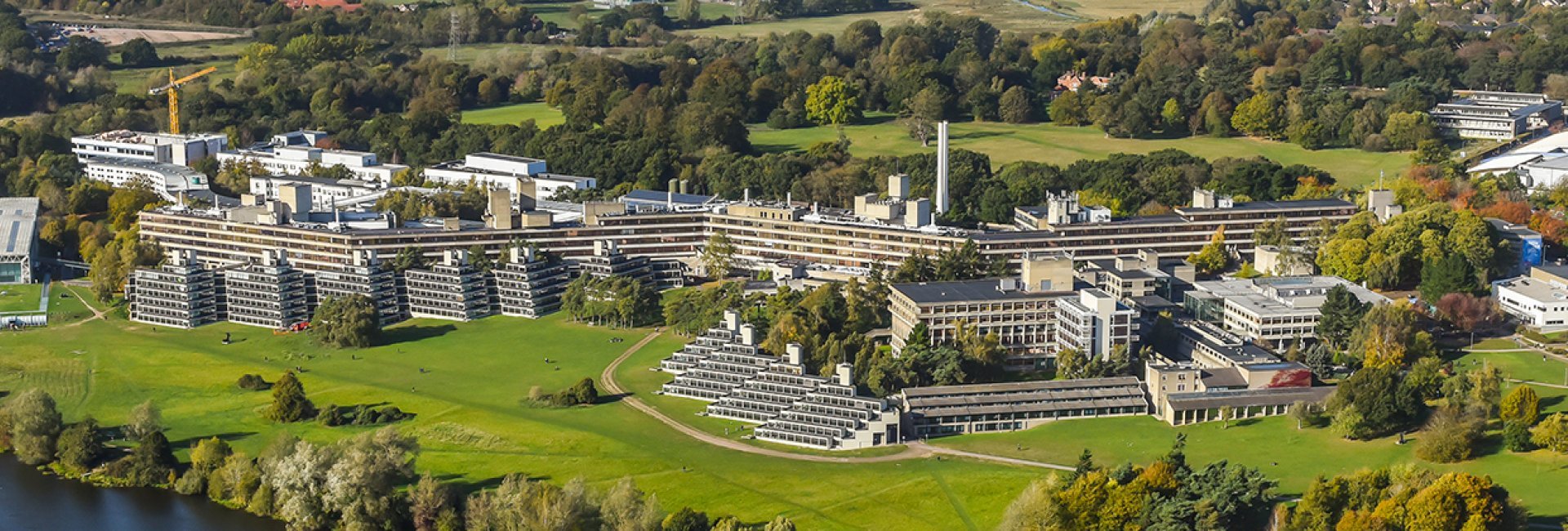
University of East Anglia UEA - Open Day
4 Jul 2026, 08:00
Norwich

Why BSc Sustainable Development at UEA?
A new generation of graduates is urgently needed to make the crucial transition to a just and sustainable future. Be prepared to shape future solutions to issues such as climate change, biodiversity loss, pollution and food insecurity.
Why choose UEA?
Tailor your degree: From food production to politics, from economics to philosophy, you'll choose modules that support your own interests and career goals
Real world experiences: Modules will take you from cleaning the River Wensum in Norwich to exploring sustainable development in East Africa
Expert teaching: Learn from global experts in development and sustainability in a department ranked first in the UK for research quality
What is BSc Sustainable Development?
Why does pollution and inequality occur if we have the knowledge to prevent it? If we have tools to address climate change, why hasn’t it happened yet? You'll explore these questions and more, using case studies from diverse places, including North Norfolk, Lake Victoria and Indonesia.
You’ll learn to think critically, communicate confidently, and solve complex problems. You’ll benefit from our academic skills and employability programmes and small module sizes with individual attention to support you in your transition to university and beyond.
You’ll join our close-knit community, with experts from multiple disciplines all housed within the School of Global Development. You’ll make links with leading sustainability organisations such as the Norwich Institute for Sustainable Development and the Tyndall Centre for Climate Change Research.
Disclaimer
Course details are subject to change. You should always confirm the details on the provider's website: www.uea.ac.uk

University of East Anglia UEA has participated in the Teaching Excellence Framework. These ratings were awarded in 2023, for four years.
See why these ratings were awarded
What does this TEF outcome mean?
This course may be available at alternative locations, please check if other course options are available.
Course optionsDiscover what it's like to study Sustainable Development at University of East Anglia UEA: insights on the course, making friends, personal statement tips, uni prep, and recommended books, podcasts, and videos.

GCSE Requirements: GCSE English Language grade C or 4 and GCSE Mathematics grade C or 4.
We welcome a wide range of qualifications - for further information please visit our website www.uea.ac.uk https://www.uea.ac.uk/about/school-of-global-development
| Test | Grade | Additional details |
|---|---|---|
| IELTS (Academic) | 6 | IELTS: 6.0 overall (minimum 5.5 in each component) |
We welcome applications from students from all academic backgrounds. We require evidence of proficiency in English (including speaking, listening, reading and writing).https://www.uea.ac.uk/apply/our-admissions-policy/english-language-equivalencies
This course may make contextual offers. This means that we use additional information to understand and recognise your potential to succeed at UEA. Using this insight, we could provide you with an offer with reduced entry requirements to study at UEA. You don’t need to do anything to be considered – if eligible we will process your contextual offer automatically, based on the data we hold in your application. We do not make contextual offers during clearing. Check our website for eligibility.
We accept many international qualifications for entry to this course. For specific details about your country, view our information for International Students https://www.uea.ac.uk/study/international-students/country-map
This section shows the range of grades that students who received offers were previously accepted on to this course with (learn more).
It is designed to support your research but does not guarantee whether you will or won't get a place.
Admissions teams consider various factors, including interviews, subject requirements, and entrance tests. Check all course entry requirements for eligibility.
This course may have Historical entry grades data available, please select a course option to view.
Course options| Location | Fee | Year |
|---|---|---|
| England, Scotland, Wales & Northern Ireland | £10050 | |
| International | £24250 |
Tuition fee status depends on a number of criteria and varies according to where in the UK you will study. For further guidance on the criteria for home or overseas tuition fees, please refer to the UKCISA website.
Tuition fees are reviewed annually and subject to increase. Some fees are regulated by the UK government and will be changed in line with advice from them. Fees for continuing students (i.e. those on courses of greater than one year in length) will normally increase annually. This increase will not exceed 4% or the % increase of the UK Government regulated fee whichever is higher. The fee increase is based on the fee for the year that you register. For further information about additional costs for your course and information on fee status please see our website.
Email:admissions@uea.ac.uk
Phone:01603 591515
Norwich Research Park
Norwich
NR4 7TJ
At University of East Anglia UEA