University Centre Bishop Burton - Open Day Event
20 Jun 2026, 09:00
Beverley

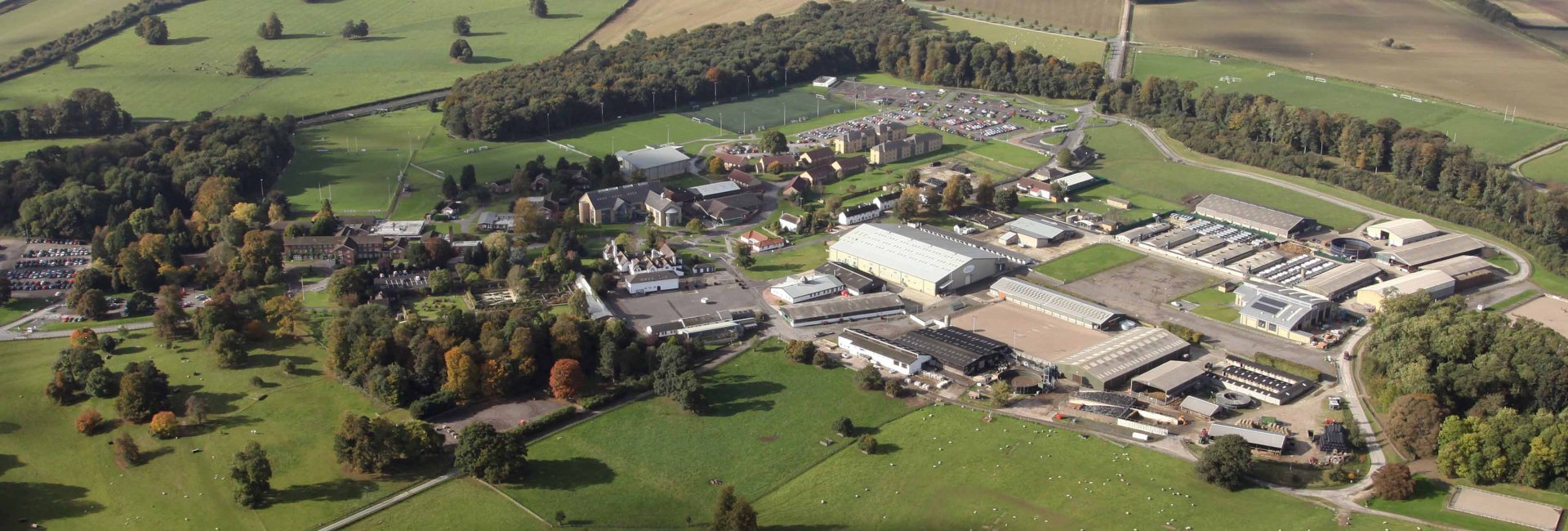
Focused on animal behaviour and welfare, this programme is designed to allow those with a relevant level 5 qualification to top up to a level 6 BSc (Hons) degree. With an emphasis on applied knowledge and skills, you will learn in a flexible environment that encourages you to achieve your full potential within a structured and vigorous framework. Your academic curriculum will be supported by our extensive facilities. Our Animal Management Centre houses a wide range of animals including invertebrates, amphibians, fish, reptiles, birds, small mammals and primates. In addition, you will have access to Bishop Burtons licensed boarding kennels and grooming parlour, a well-stocked livestock farm and large equine yard housing over 80 horses.
Course Aims
This course will allow you to develop your academic and practical knowledge of the disciplines and factors that relate to animal behaviour and welfare.
You will be provided with the opportunity to acquire detailed knowledge of animal behaviour and welfare that can be related to a range of species and situations, whilst gaining a combination of academic and practical competence required within the behaviour and welfare industry. Mastering of these skills will be encouraged through the vocational and applied nature of the course content.
Learning and Teaching Approach
This programme is delivered with a variety of learning and teaching approaches to include all students' learning styles and preferences.
For all modules, theory lectures are delivered that aim to provide the core content and underpinning knowledge.
To complement the theory lectures, you will have group seminars and practical sessions that are used to reinforce concepts delivered theoretically.
The teaching methods focus on facilitating a student-centred approach to enhance the independent learning that takes place outside of the classroom.
What is the contact time?
Approximately up to 9 hours a week (full-time) to include lectures, seminars, practical's and tutorials. Students are expected to carry out a significant amount of private study (approx. 25-30 hours a week) Independent study includes extra reading and research, preparing for tutorials and seminars, preparing for and completing module assessments, and applying theoretical knowledge in practical settings where the opportunity arises, forming an essential part of a student’s learning journey. The part-time route incorporates approximately 5 hours of contact time per week, and independent study of (approximately 12-15 hours a week).
Students can expect to receive their timetables during induction week.
Progression
Graduates may be able to progress to the MSc Animal Behaviour and Welfare or the MSc Applied Animal Behaviour and Training (with relevant training experience), which are available through blended learning at University Centre Bishop Burton.
What kind of job could I get when I graduate?
After developing extensive knowledge of animal behaviour and welfare, Graduates may pursue a number of varied careers, including but not limited to, welfare inspectors (e.g. DEFRA, RSPCA), laboratory animal technician, welfare researcher, environmental enrichment co-ordinator, behaviour advisor, animal training, charity employee (Dogs Trust, Guide Dogs for the blind etc) zoo keeping or education.
Behavioural Assessment of Welfare
Animal Cognition and Ethics
Science of Welfare
Animals in Society
Dissertation
This course may be available at alternative locations, please check if other course options are available.
Course optionsApplicants should have a relevant Level 5 qualification and an appropriate academic reference. Life and/or experience of non-traditional students will be taken into account when considering applications.
The successful completion of an entry task will be required when considering applications without the required formal entry qualifications.
If first language is not English, GCSE grade C/4 English or equivalent is not held, English language proficiency level such as International English Language Testing System (IELTS) 6.0 overall (with a minimum 5.5 in each skill) will need evidencing.
This section shows the range of grades that students who received offers were previously accepted on to this course with (learn more).
It is designed to support your research but does not guarantee whether you will or won't get a place.
Admissions teams consider various factors, including interviews, subject requirements, and entrance tests. Check all course entry requirements for eligibility.
This course may have Historical entry grades data available, please select a course option to view.
Course options| Location | Fee | Year |
|---|---|---|
| England, Scotland, Wales & Northern Ireland | £9250 | |
| International | £13177 |
Tuition fee status depends on a number of criteria and varies according to where in the UK you will study. For further guidance on the criteria for home or overseas tuition fees, please refer to the UKCISA website.
No additional fees or cost information has been supplied for this course, please contact the provider directly.
Email:admissions@bishopburton.ac.uk
Phone:01964 553000
Email:admissions@bishopburton.ac.uk
Phone:01964 553000
Bishop Burton
Beverley
HU17 8QG
At University Centre Bishop Burton