UWE Bristol Undergraduate Open Day - City Campus
6 Jun 2026, 08:00
Bristol

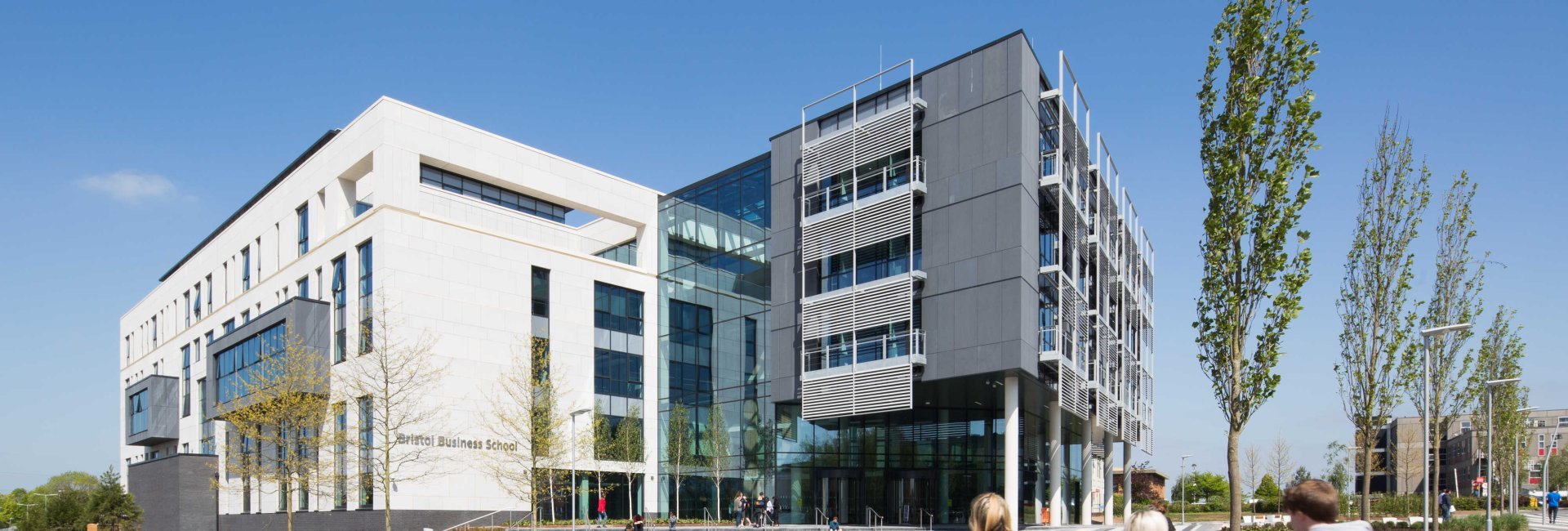
Work with leading social researchers to develop your own ideas and insights to help improve lives and the social structures around them, while gaining an excellent skillset that will put you in a strong position in the job market.
Why study sociology and psychology?
Studying people and society, and the science of the mind, helps us understand what shapes different behaviours, beliefs and attitudes in different communities and parts of the world.
By exploring the cultural, political, economic and human factors that influence the way we live, we can engage with, research and formulate solutions to social issues from a more informed place.
You'll an in-depth understanding of sociology and psychology plus research, presentation, writing, critical analysis, and listening skills. You'll learn to use a diverse range of information sets to employ a contextual and holistic approach to social issues and problems.
Why UWE Bristol?
BSc(Hons) Sociology with Psychology focuses on making a difference to 'self and society' by exploring aspects of both of these disciplines.
In the first year, you'll split your time equally between both, before choosing to specialise in one subject.
Through a broad curriculum, and the support of our staff who are leaders in their field, you'll engage with real issues, and develop fresh insights and solutions to help improve people's lives from a social and psychological perspective. Two modules on the course are accredited by the Institute of Leadership and Management (ILM).
You'll learn to evaluate evidence, approach problems from multiple angles, and build your expertise in research, analysis and communication.
You'll carry out your own research projects to develop, test and apply new solutions to contemporary social and psychology-related issues. Students have done projects on body image and the media, anxiety and depression in young adults, impressions of mental health in education, the psychological power of fascism, and social insecurity in the job market for young people. These are a small snapshot of the types of projects that students undertake.
You'll gain industry insights from guest speakers, and take part in work-based learning, through our links with organisations such as the Bristol Youth Offending Team, Bristol Youth Education Service and the police.
Activities such as volunteering, placements and internships will build valuable vocational experience, and deepen your skills and knowledge further, to make you highly sought after when you graduate.
Recent graduate Sophia Hanke was inspired by her course to make a short three-minute film titled 'Welcome to Sociology at UWE Bristol', which features students and lecturers talking about their course.
Where can it take me?
The broad skills and industry-focused experience you'll gain will make you attractive to a wide range of employers.
You could pursue a career in research, education, social work, charity work or counselling, or work in the legal or media sectors.
You could also go on to do a postgraduate course or research degree.

Bristol, UWE has participated in the Teaching Excellence Framework. These ratings were awarded in 2023, for four years.
See why these ratings were awarded
What does this TEF outcome mean?
This course may be available at alternative locations, please check if other course options are available.
Course optionsDiscover what it's like to study Sociology with Psychology (with Foundation Year) at Bristol, UWE: insights on the course, making friends, personal statement tips, uni prep, and recommended books, podcasts, and videos.

This section shows the range of grades students (with UK A-Levels or Pearson BTEC Level 3 National Extended Diplomas) who received offers were previously accepted with (learn more). It is designed to support your research but does not guarantee whether you will or won't get a place. Admissions teams consider various factors, including interviews, subject requirements, and entrance tests. Check all course entry requirements for eligibility.
We are unable to show previous accepted grades for this course. This could be because the course is new, it's a postgraduate course, there isn't enough historical data, or the provider has opted out of sharing their entry grades data for this course - learn more.
Subject Spotlights give you the chance to try a higher education course before you apply. Delivered by the lecturers themselves you will gain insight into what it's like to study the course and give your personal statement a boost.

Choose a specific option to see funding information.
Course optionsColdharbour Lane
Frenchay
Bristol
BS16 1QY
Email:Admissions@uwe.ac.uk
Phone:+44 (0)117 32 83333