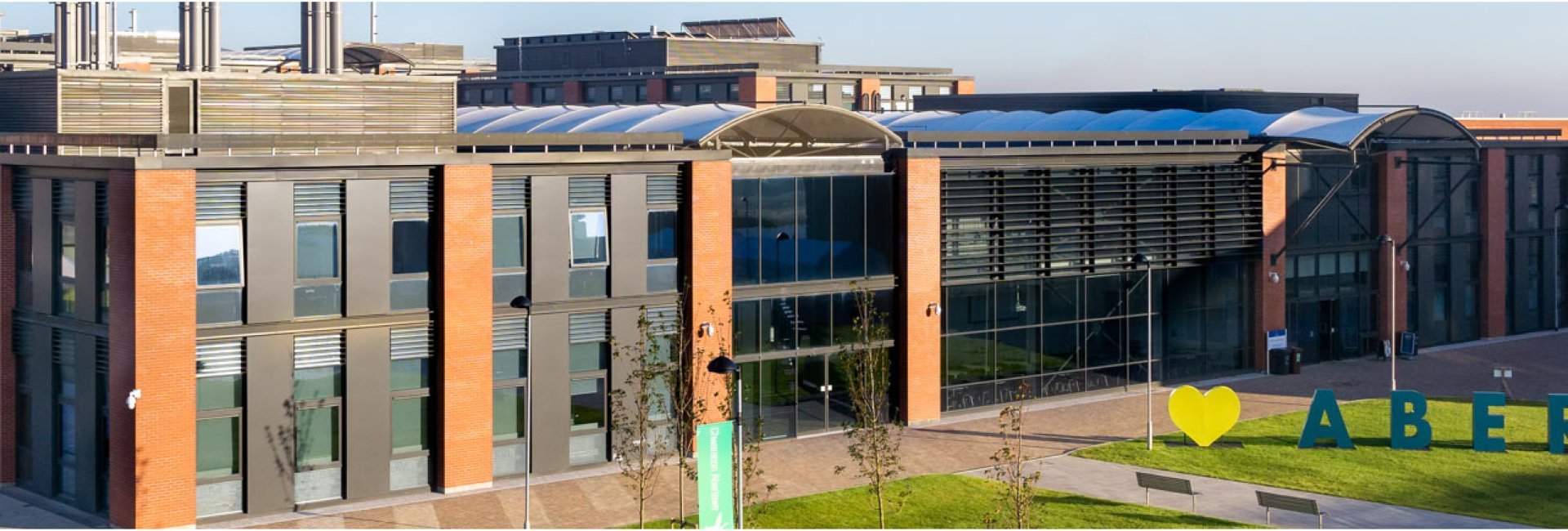
Undergraduate On-Campus Open Day at Swansea University - Singleton Park Campus and Bay Campus - 13 June 2026
13 Jun 2026, 07:30
Swansea

In a world increasingly shaped by digital technologies, media literacy is essential, not only for understanding the world around us but for actively shaping it.
Our BA in Media and Communication offers a dynamic blend of critical theory, hands-on experience and forward thinking that will equip you with the skills to analyse, create, and innovate across journalism, public relations, digital media, and film.
This programme embeds critical thinking, media literacy, and research-led learning from the outset. You’ll benefit from expert-led teaching, that’s directly related to cutting-edge media research, delivered alongside real-world projects, authentic assessments and a suite of innovative practice modules that reflect industry practice.
Our BA in Media and Communication ensures you are both critically informed and practically skilled, ensuring you graduate with the essential skills to become an adaptable, reflective media professional ready to navigate and contribute to the fast-changing media landscape.
Through the study of concepts such as media history and identity, algorithmic bias and the digital political economy, you’ll gain a critical understanding of how media transforms societies and influences everyday life.
The programme also includes the opportunity to study a Year Abroad or a Year in Industry. A Year Abroad allows you to hone your intercultural awareness, developing your skills in relation to international journalism and content creation.
In Year 1, you will typically study areas including: Introduction to Media and Communication; Delivering and Decoding the News; Principles of Mediation; Creative Media Platforms; Introduction to Film Studies.
In Year 2, you will typically study areas including: Theorising the Media; Social Media Cultures; Digital Content Creation; Misinformation, Fake News and Fact-Checking; All Ears: The Art of Podcasting; Activist PR: The Democratisation of Public Relations; Adaptation: Storytelling Across Media.
In Year 3: Year spent in Industry
In Year 4, you will typically study areas including: Dissertation Preparation; Graphic Novel; Media and Identities; Sports Public Relations; Digital Futures; Science Fiction and Media.
Studying Media and Communications at Swansea University allows students to enhance their future employability prospects through assessments that replicate the kind of experiences you will face in the creative communications industries, often with the involvement of industry professionals to offer feedback and advice. Some examples of these are:
For full breakdown of course structure and assessment please visit our course page: https://www.swansea.ac.uk/undergraduate/courses/culture-communication/media-comms-journalism-pr/ba-journalism-media-communications or get in touch with us at study@swansea.ac.uk
The following entry points are available for this course:
If you are an international applicant please visit our international pages for more information and details on how to apply:
http://www.swansea.ac.uk/international/
Discover what it's like to study Media and Communication with a Year in Industry at Swansea University: insights on the course, making friends, personal statement tips, uni prep, and recommended books, podcasts, and videos.

Any range of scores leading up to a minimum of 112 UCAS Tariff points will be considered.
International students will also require a score of 4 at Higher Level English Language or Literature, or 5 at Standard Level English Language or Literature.
Swansea University accepts the Advanced Skills Baccalaureate Wales as fully equivalent to x1 A-Level.
Swansea University will accept the Welsh Baccalaureate - Advanced Skills Challenge Certificate as fully equivalent to one A-Level.
We recognise the EPQ as an excellent indicator of success.
If you are predicted a grade B or above in the EPQ, you will receive an offer with a one
grade reduction, to include your EPQ with a grade B.
GCSEs: English/Welsh Language Grade C
English Language Requirements at Swansea University https://www.swansea.ac.uk/admissions/english-language-requirements/
UK applicants who meet course requirements are guaranteed a conditional offer. We assess applications on individual merit. We consider making reduced offers, eg. to Care Leavers or students with extenuating circumstances. We encourage you to disclose any relevant circumstances.
The Advanced Skills Baccalaureate Wales is considered as equivalent to one full A-Level and students can take x2 A-levels alongside this. EPQ students predicted Grade B or above will receive a one-grade offer reduction.
This section shows the range of grades that students who received offers were previously accepted on to this course with (learn more).
It is designed to support your research but does not guarantee whether you will or won't get a place.
Admissions teams consider various factors, including interviews, subject requirements, and entrance tests. Check all course entry requirements for eligibility.
We are unable to show previous accepted grades for this course. This could be because the course is new, it's a postgraduate course, there isn't enough historical data, or the provider has opted out of sharing their entry grades data for this course - learn more.
No fee information has been provided for this course
Tuition fee status depends on a number of criteria and varies according to where in the UK you will study. For further guidance on the criteria for home or overseas tuition fees, please refer to the UKCISA website.
For the latest fee information, please check the individual course page on our website. Our full range of programmes are listed here: https://www.swansea.ac.uk/undergraduate/courses/
Further information on tuition fees can be found here: https://www.swansea.ac.uk/undergraduate/fees-and-funding/tuition-fees/
You may be eligible for funding to help support your study.
To find out about scholarships, bursaries and other funding opportunities that are available please visit the University's scholarships and bursaries page https://www.swansea.ac.uk/undergraduate/scholarships/
Academi Hywel Teifi at Swansea University and the Coleg Cymraeg Cenedlaethol offer a number of generous scholarships and bursaries for students who wish to study through the medium of Welsh or bilingually. For further information about the opportunities available to you, visit the Academi Hywel Teifi Scholarships and Bursaries page https://www.swansea.ac.uk/academi-hywel-teifi/learn/scholarships/
Ask us a question - undergraduate enquiries.
Email:study@swansea.ac.uk
Phone:01792 295111
Singleton Park
Swansea
SA2 8PP
At Swansea University