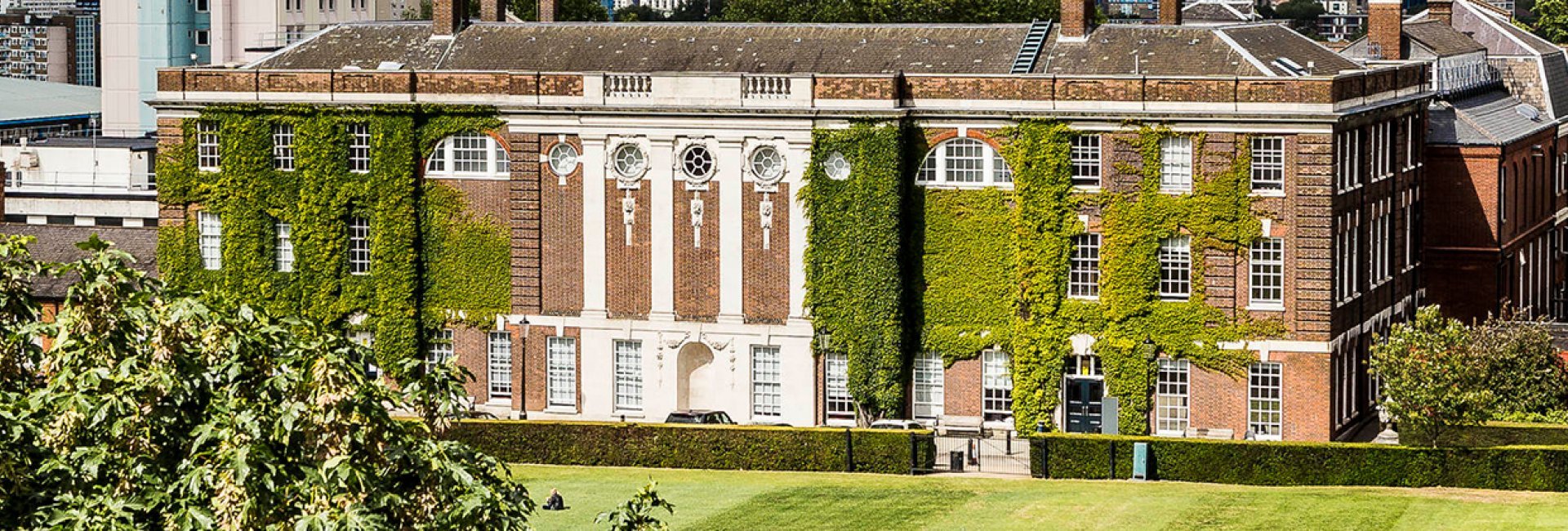
Goldsmiths, University of London - Virtual Campus Tour
25 Nov 2025, 12:00
London

Why study BA English with Creative Writing at Goldsmiths
The degree is ideal if you are curious about literature, with the imagination to turn that curiosity into creativity.
This flexible BA English with Creative Writing degree allows you to choose from a range of topics – comparisons of literature across different cultures and art forms (also known as comparative literature), American literature and culture, and diverse aspects of language use in linguistics modules.
You'll have the space to develop your own creative writing practice, while our Work Placement module also offers valuable workplace experience in professional environments relevant to your area of study.
Goldsmiths has one of the most established and long-running creative writing centres in UK Higher Education, and many of our graduates are now leading writers and editors in their field, winning major literary awards and appearing on the shortlists of national prizes.
Our teaching staff of celebrated writers and scholars are ready to support you and your work as a Goldsmiths student.
We’re regularly visited by literary guest speakers, and our students have recently enjoyed events with Ali Smith, Bernadine Evaristo, C A Conrad, George Saunders, Nikesh Shukla, Michael Rosen, Eimear McBride, Joelle Taylor, Olivia Laing, Rachael Allen and Eley Williams.
Our forward-thinking approach to the fields of creative writing and literary studies is supported by our hosting and running of the Goldsmiths Prize, awarded annually to work that pushes the boundaries of the novel.
Your literary and creative studies will be supported by lectures and seminars that will give you practical advice to help you improve your essay writing and refine your research strategies.
Our location on the doorstep of central London means that you will have easy access to one of the most diverse, historic, and dynamic literary centres in the world.
Year 1
In your first year, you'll take the following compulsory modules:
Explorations in Literature
Genre
Foundation Workshop in Creative Writing
Critical Writing
Contemporary Creative Industries
Year 2
In your second year, you will study the following compulsory modules:
Creative Writing Workshop
Writing in Revolutions and Society
Special Topics in English
The Goldsmiths Project
Special Topics in English
Within this module, you will choose and study from a selection of specialist topics in literary studies. Indicative topics include American Gothic; Aesthetics; Homer and Contemporary Literature; Shakespeare Then and Now; Language and Society; and Post-1945 Poetry.
Optional modules
You will also choose one optional module. Modules vary from year to year, but may include the following:
Work Placement (English)
The Goldsmiths Elective
Weird Fictions
Goldsmiths Elective
The Elective allows students to take a module outside of English, provided by a different Subject Area of Goldsmiths. Or students may wish to take the current English Elective in Weird Fictions.
The Work Placement
You can choose to take a work placement module as one of your option modules in your second year. This module allows you to undertake a work placement which will benefit your studies, your skillset and your CV.
Students have previously been placed with Penguin; the Poetry Library, Southbank Centre; Macmillan publishers; Wandsworth Council; the Museum of London; Prototype Publishing; the homeless charity HARP; and leading international poetry magazine Poetry London which is in-house at Goldsmiths English and has two placements available every year.
Year 3
In your final year, you'll take the following compulsory modules:
Modern and Contemporary Literatures
Challenging World Literature: Diversity and Difference
Research Topics in English
Project Development
Research Topics in English
Within this module, you will choose and study from a selection of specialist topics in literary studies. Indicative topics include Caribbean Women Writers; Decadence; Shakespeare’s Sisters (Women’s Writing: 1920s to the Present); Language and Society; Contemporary Indigenous American Literatures and Cultures; and American Crime Fiction.
Please note that due to staff research commitments not all of these modules may be available every year.

Goldsmiths, University of London has participated in the Teaching Excellence Framework. These ratings were awarded in 2023, for four years.
See why these ratings were awarded
What does this TEF outcome mean?
This course may be available at alternative locations, please check if other course options are available.
Course optionsIncluding English Literature, or Language and Literature, or Language. A-level General Studies is not accepted.
Each application will be considered on its individual merits. Where the T Level subject area does not directly match the degree programme being applied for, the personal statement and reference will be particularly important in demonstrating interest, enthusiasm and suitability for the subject.
Grade C in English Literature, or Language and Literature, or Language is required.
Pass with 45 Level 3 credits including 24 Distinctions and a number of merits/passes in subject specific modules.
Including English Literature, or Language and Literature, or Language.
With three Higher Level subjects at 555 including English Literature, or Language and Literature, or Language.
Including English Literature, or Language and Literature, or Language.
Including English Literature, or Language and Literature, or Language.
A selection of recent written work will also be required.
A-level General Studies is not accepted.
We welcome students with a range of educational experiences. If you believe you may not meet the standard qualification requirements we would still encourage you to apply because we consider all aspects of your application when making a decision.
Entry requirements for students joining after Year 1: 120 credits at Level 4 and a 2:1 average in a comparable programme, and meet the standard qualification requirements for entry to Year 1 of the programme.
| Test | Grade | Additional details |
|---|---|---|
| IELTS (Academic) | 6.5 | With a 6.5 in writing and no element lower than 6.0 |
We pay careful attention to your personal statement which is your opportunity to demonstrate your interest in your desired subject. Portfolio programmes offer you the opportunity to demonstrate your potential in your desired subject. Referees are also welcome to include any relevant contextual comments around your academic achievements. We consider all these things when making a decision as well as your qualifications and grades. If you are unsure about applying, we would be happy to advise you.
This section shows the range of grades that students who received offers were previously accepted on to this course with (learn more).
It is designed to support your research but does not guarantee whether you will or won't get a place.
Admissions teams consider various factors, including interviews, subject requirements, and entrance tests. Check all course entry requirements for eligibility.
This course may have Historical entry grades data available, please select a course option to view.
Course options| Location | Fee | Year |
|---|---|---|
| England, Scotland, Wales, Northern Ireland, Channel Islands & Republic of Ireland | TBC | |
| EU & International | TBC |
Tuition fee status depends on a number of criteria and varies according to where in the UK you will study. For further guidance on the criteria for home or overseas tuition fees, please refer to the UKCISA website.
To find out more about fees and funding, please check our undergraduate fees guidance or contact the Fees Office https://www.gold.ac.uk/ug/fees-funding/
Email:course-info@gold.ac.uk
Phone:020 7078 5300
New Cross
Lewisham
SE14 6NW
At Goldsmiths, University of London