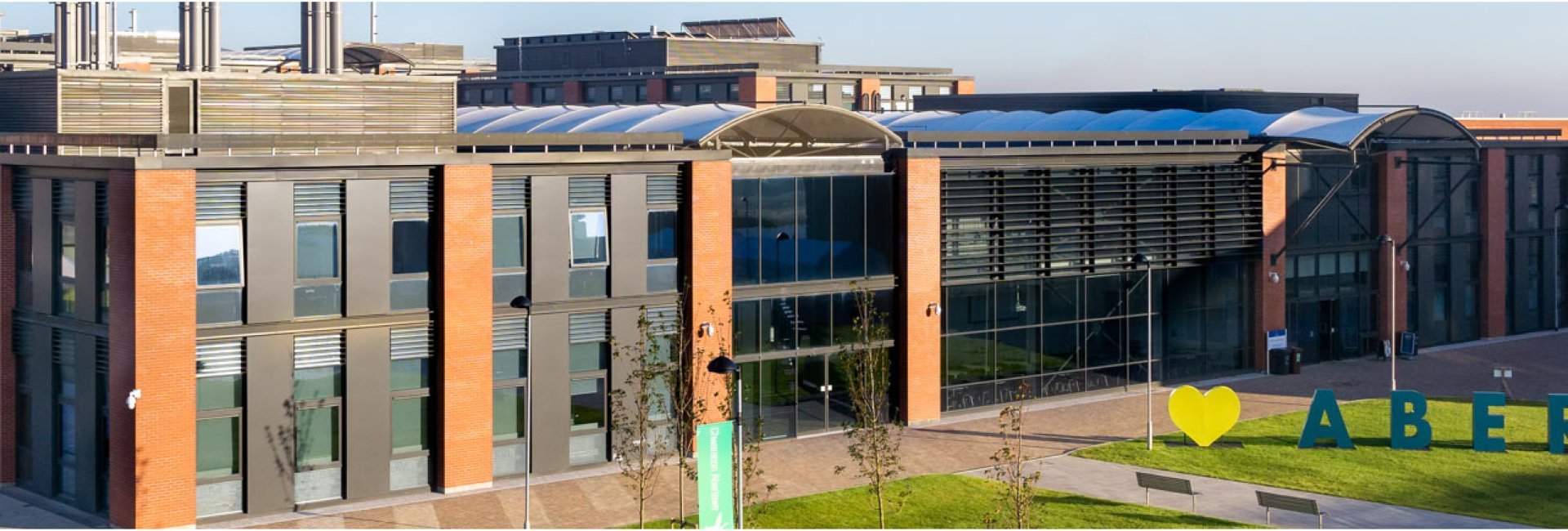
Undergraduate On-Campus Open Day at Swansea University - Singleton Park Campus and Bay Campus - 28 March 2026
28 Mar 2026, 08:30
Swansea
The demand for translators and interpreters is growing rapidly as more companies, institutions and people do business globally but expect to use services in their own language.
Our specialist Modern Languages, Translation and Interpreting degree with a Year in Industry will provide you with excellent language skills in either one or two languages (French, German and Spanish), as well as theoretical, vocational and practical translation and interpreting skills.
French, German and Spanish can be studied at the following levels and in the following combinations:
• Two advanced languages: suitable for you if you have an A-level or equivalent qualification/experience in both languages.
• One advanced language and one beginner’s language: suitable for you if you have an A-level in a single language, and wish to continue with that language, while adding a second language to your skillset.
• One advanced language: suitable for you if you have an A-level or equivalent qualification/experience and wish to focus exclusively on one language.
On completion of this programme, you will have a critical understanding of translation and interpreting in different specialist areas and contexts, as well as a high level of proficiency in your selected languages.
Modern Languages at Swansea is ranked:
• 1st in the UK for Teaching Satisfaction (Guardian University Guide 2025)
• 1st for Learning Opportunities (NSS 2024)*
• 2nd for Teaching (NSS 2024)*
• 2nd for Student Voice (NSS 2024)**
• 5th in the UK Overall (Guardian University Guide 2025)
A. Based on the average positivity score across questions 5 to 9 in the NSS 2024, when ranked against universities featured in the Times Good University Guide.
B. Based on the average positivity score across questions 1 to 4 in the NSS 2024, when ranked against universities featured in the Times Good University Guide.
C. Based on the average positivity score across questions 22 to 25 in the NSS 2024, when ranked against universities featured in the Times Good University Guide.
This programme also includes a dedicated Year in Industry, in the UK or further afield (expected proficiency B2-C1).
The Year in Industry can be spent in the UK or overseas (overseas locations are dependent on VISA restrictions per country), giving valuable experience. The University advocates for paid placements, with an average salary of £20,000+. Unpaid placements are considered on a case-by-case basis. Although securing a placement is the responsibility of the student, we work with several organisations that provide a range of opportunities. Students are supported throughout the application journey with advice, guidance and resources. If you are unable to secure a placement by the end of the second year of study, you will transfer onto the equivalent degree programme.
This programme is open to native speakers of the languages on offer, who may choose to learn a second or third language as per the combinations listed above. Students may also wish to study their first language, with a view to becoming a professional interpreter or translator in their country of origin.
Your first year will include a mixture of compulsory and optional modules, with examples of compulsory modules from recent years including:
• Grammar and Meaning in Translation and Interpreting
In your second and fourth year you will study a mixture of compulsory and optional modules, from a large range of subject areas. Examples of optional modules in recent years have included:
• World Englishes
• French Language
• German Language
• Spanish Language
• Hispanic Identities.
This programme also includes a dedicated Year in Industry, in the UK or further afield.
The Year in Industry can be spent in the UK or overseas (overseas locations are dependent on VISA restrictions per country), giving valuable experience.
Your final year will include an optional independent dissertation project.
We offer a variety of assessment methods within our programmes. In addition to traditional examinations and essays, examples of alternative assessment include:
• Presentations
• Group Work
• Oral Examinations
Throughout your undergraduate Modern Languages, Translation and Interpreting degree, you will develop excellent research and analytical skills and learn to present your ideas effectively both verbally and in writing.
The following entry points are available for this course:
If you are an International Student, please visit our International pages for more information about entry requirements: http://www.swansea.ac.uk/international/students/requirements/
Discover what it's like to study Modern Languages, Translation and Interpreting with a Year in Industry at Swansea University: insights on the course, making friends, personal statement tips, uni prep, and recommended books, podcasts, and videos.
Our standard entry requirement is ABB-BBC (UCAS tariff points 112-128). A GCSE at minimum grade C (4) in a modern foreign language is preferable but not essential.
All offers are made following a review of the application form, predicted/achieved grades and subjects, the reference and personal statement. We will always take a holistic view of all applicants and consider not just their academic merit but also their wider achievements, circumstances, and potential.
We also accept a range of advanced level qualifications including: International Baccalaureate 32; Advanced Skills Baccalaureate Wales - grade equivalent to A-level; Access to Higher Education and Open University qualifications, and Extended Project.
English Language Requirements at Swansea University https://www.swansea.ac.uk/admissions/english-language-requirements/
UK applicants who meet course requirements are guaranteed a conditional offer. We assess applications on individual merit. We consider making reduced offers, eg. to Care Leavers or students with extenuating circumstances. We encourage you to disclose any relevant circumstances.
The Advanced Skills Baccalaureate Wales is considered as equivalent to one full A-Level and students can take x2 A-levels alongside this. EPQ students predicted Grade B or above will receive a one-grade offer reduction.
This section shows the range of grades students (with UK A-Levels or Pearson BTEC Level 3 National Extended Diplomas) who received offers were previously accepted with (learn more). It is designed to support your research but does not guarantee whether you will or won't get a place. Admissions teams consider various factors, including interviews, subject requirements, and entrance tests. Check all course entry requirements for eligibility.
We are unable to show previous accepted grades for this course. This could be because the course is new, it's a postgraduate course, there isn't enough historical data, or the provider has opted out of sharing their entry grades data for this course - learn more.
No fee information has been provided for this course
Tuition fee status depends on a number of criteria and varies according to where in the UK you will study. For further guidance on the criteria for home or overseas tuition fees, please refer to the UKCISA website.
For the latest fee information, please check the individual course page on our website. Our full range of programmes are listed here: https://www.swansea.ac.uk/undergraduate/courses/
Further information on tuition fees can be found here: https://www.swansea.ac.uk/undergraduate/fees-and-funding/tuition-fees/
Singleton Park
Swansea
SA2 8PP
Visit our website Visit our course page
Ask us a question - undergraduate enquiries.
Email:study@swansea.ac.uk
Phone:01792 295111
Email:study@swansea.ac.uk
Phone:01792 295111
Fax: 01792 295110
At Swansea University