Course contact details
The Admissions Office, Swansea University
Email:study@swansea.ac.uk
Phone:01792 295111
Fax: 01792 295110
Swansea University
Singleton Park
Swansea
SA2 8PP

This Computing and Digital Technologies degree covers the creation and use of digital data and systems, and their impact on societies around the world. Its broad scope will enable you to develop your knowledge and understanding of the digital world, and how digital technologies can be made and deployed creatively, productively, and safely. The focus is on application, understanding, and critical evaluation of technologies.
Throughout the three-year programme, you will encounter topics that will expand your appreciation of the societal, cultural, economic, and political impacts of Computing and Digital Technologies. You will be able to utilise a set of industry standard tools to plan, develop and produce digital products ranging from marketing campaigns to computer games.
By the end of the degree, you will be digitally capable, equipped with the skills ready to enter a substantial number of different digital-based roles across a wide spectrum of industries and public services. You will also benefit from significant transferable skills in research, communication, and engagement.
WHY COMPUTING AND DIGITAL TECHNOLOGIES AT SWANSEA?
This degree programme sits within the Department of Computer Science at Swansea University, which has a strong innovative research reputation developed by our international student and staff community.
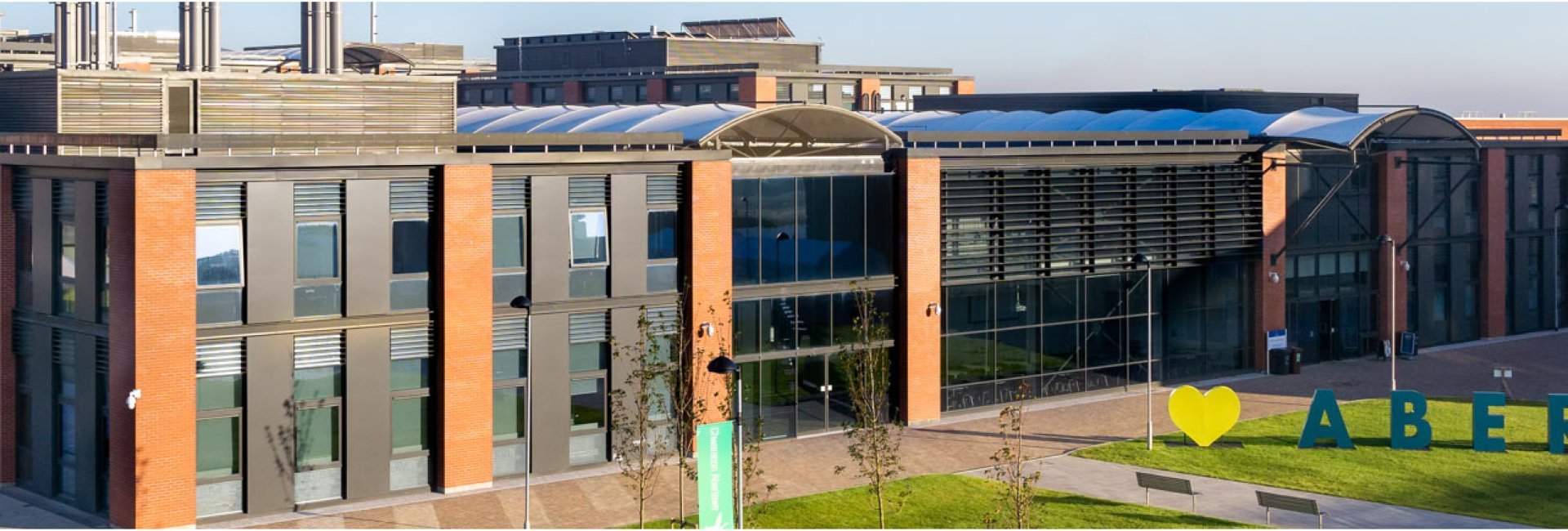
Within the £32.5 million Computational Foundry you will have access to dedicated computer laboratories and specialised equipment for projects, such as Arduinos, smart home technologies, and virtual reality headsets. You will benefit from world-leading experimental set-ups, equipment, devices and prototypes to accelerate innovation; and have the opportunity to learn about and work with these facilities.
In Year 1, you will typically study areas including: Concepts of Computer Science, Digital Devices, Technologies for Information Presentation, Programming for Digital Technology.
In Year 2, you will typically study areas including: Technologies and Society, Digital Content Creation, Database Systems, Intelligent Robotics.
In Year 3, you will typically study areas including: Invention and Innovation in Computing, Digital Controversies: Understanding the Impacts of Technology, User Experience. You will also undertake a Computer Science Project Implementation and Dissertation.
The following entry points are available for this course:
Discover what it's like to study Computing and Digital Technologies at Swansea University: insights on the course, making friends, personal statement tips, uni prep, and recommended books, podcasts, and videos.

Swansea University accepts the Advanced Skills Baccalaureate Wales as fully equivalent to x1 A-Level.
For applicants whose first language is not English we require a minimum overall IELTS score of 6.0 (or equivalent) and no less than 5.5 in each component.https://www.swansea.ac.uk/admissions/english-language-requirements/
UK applicants who meet course requirements are guaranteed a conditional offer. We assess applications on individual merit. We consider making reduced offers, eg. to Care Leavers or students with extenuating circumstances. We encourage you to disclose any relevant circumstances.
The Advanced Skills Baccalaureate Wales is considered as equivalent to one full A-Level and students can take x2 A-levels alongside this. EPQ students predicted Grade B or above will receive a one-grade offer reduction.
This section shows the range of grades that students who received offers were previously accepted on to this course with (learn more).
It is designed to support your research but does not guarantee whether you will or won't get a place.
Admissions teams consider various factors, including interviews, subject requirements, and entrance tests. Check all course entry requirements for eligibility.
We are unable to show previous accepted grades for this course. This could be because the course is new, it's a postgraduate course, there isn't enough historical data, or the provider has opted out of sharing their entry grades data for this course - learn more.
No fee information has been provided for this course
Tuition fee status depends on a number of criteria and varies according to where in the UK you will study. For further guidance on the criteria for home or overseas tuition fees, please refer to the UKCISA website.
Please refer to the Swansea course pages for tuition fee information.
Email:study@swansea.ac.uk
Phone:01792 295111
Fax: 01792 295110
Singleton Park
Swansea
SA2 8PP
At Swansea University