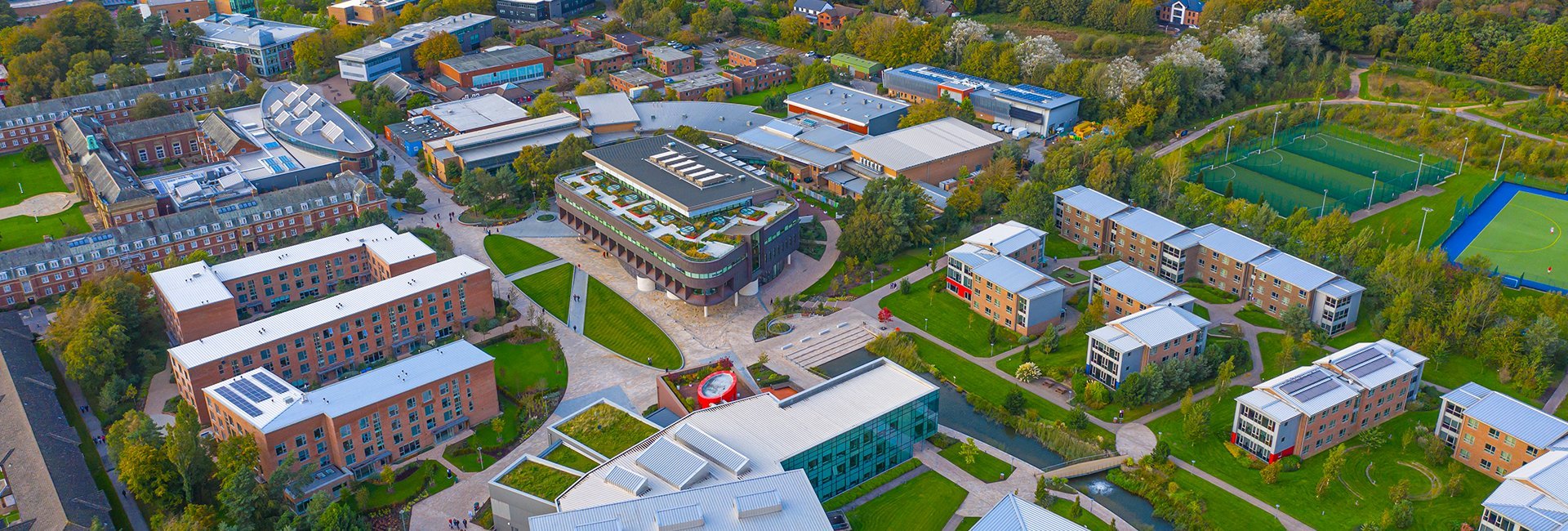
Edge Hill University - Open Day
19 Jun 2026, 09:00
Ormskirk

Are you curious about how global crises shape communities around the world? Do you want to develop the analytical, problem-solving, and negotiation skills needed to provide effective humanitarian responses to emergencies? The world needs professionals who can think critically, act ethically, and respond decisively in times of crisis. This integrated master’s degree equips you with the political insight and humanitarian expertise to do exactly that.
Our unique programme combines world-class teaching with real-world impact. For the first three years, you will study cutting-edge international relations and politics at our award-winning Ormskirk campus, building a strong academic foundation. In your fourth year, you will advance your learning at the internationally-recognised Liverpool School of Tropical Medicine (LSTM), where you will specialise in addressing humanitarian emergencies and contemporary global challenges. With LSTM’s unmatched expertise in real-world humanitarian response and strong connections to United Nations agencies, NGOs, and ministries of health, this course offers an unparalleled pathway to a global career making a meaningful difference.
Throughout the course, you will develop the skills needed to thrive in a competitive professional world, while gaining a deep understanding of international politics and the world’s most pressing humanitarian challenges.
You will also build a wide range of discipline-specific and transferable skills, including analysis, critical evaluation, research, ethical decision-making, and communication, through a combination of independent study and collaborative teamwork. The programme also allows you to tailor your degree to your own interests and career ambitions, combining core learning with optional modules that reflect your passions and goals.
By studying in multidisciplinary environments, you will gain the confidence to exchange ideas, collaborate across cultures, and build lasting professional networks.
By the time you graduate, you will be well prepared to pursue careers in humanitarian action, international organisations, policy, research, or further study, equipped with the knowledge, practical insight, and confidence to make a meaningful global impact.
Please visit our website for information on available modules.
https://www.edgehill.ac.uk/course/international-relations-and-humanitarian-action/
The course contains a wide range of assessments, from essays and reports to speech-writing, scenario responses and submissions to Parliamentary work groups. There are a limited number of examinations.
This is the equal consideration deadline. You can still apply after this date, but your application may not receive guaranteed consideration.

Edge Hill University has participated in the Teaching Excellence Framework. These ratings were awarded in 2023, for four years.
See why these ratings were awarded
What does this TEF outcome mean?
The following entry points are available for this course:
If you have a minimum of two A Levels (or equivalent), there is no maximum number of qualifications that we will accept UCAS points from. This includes additional qualifications such as Extended Project Qualification (EPQ), AS Levels that haven’t been continued to A Level, and General Studies AS or A Level awards.
For further information on how you can meet the entry requirements, including details of alternative qualifications, please visit www.edgehill.ac.uk/offers or contact our Course Enquiries Team on 01695 657000 or email study@edgehill.ac.uk. https://www.edgehill.ac.uk/study/apply/entry-requirements/
We have a long-standing commitment to widening access to higher education and our entry requirements have flexibility to make appropriate offers to applicants based on their background. Most of our courses publish a tariff-point range for entry to allow flexibility to consider an applicant’s full portfolio, including any contextual information provided. We assess the entire application in our decision making and encourage applicants to provide contextual information.
This section shows the range of grades that students who received offers were previously accepted on to this course with (learn more).
It is designed to support your research but does not guarantee whether you will or won't get a place.
Admissions teams consider various factors, including interviews, subject requirements, and entrance tests. Check all course entry requirements for eligibility.
We are unable to show previous accepted grades for this course. This could be because the course is new, it's a postgraduate course, there isn't enough historical data, or the provider has opted out of sharing their entry grades data for this course - learn more.
| Location | Fee | Year |
|---|---|---|
| England, Scotland, Wales, Northern Ireland, Channel Islands & Republic of Ireland | £10050 |
Tuition fee status depends on a number of criteria and varies according to where in the UK you will study. For further guidance on the criteria for home or overseas tuition fees, please refer to the UKCISA website.
Visit edgehill.ac.uk/moneymatters for more information.
Email:study@edgehill.ac.uk
Phone:+44 (0)1695 657000
St Helens Road
Ormskirk
L39 4QP
At Edge Hill University