Course summary
The Bachelor of Veterinary Science (BVSci) programme is a full-time five-year degree offering scientific and clinical training in veterinary medicine, leading to qualification as a veterinary surgeon (course pending accreditation by RCVS).
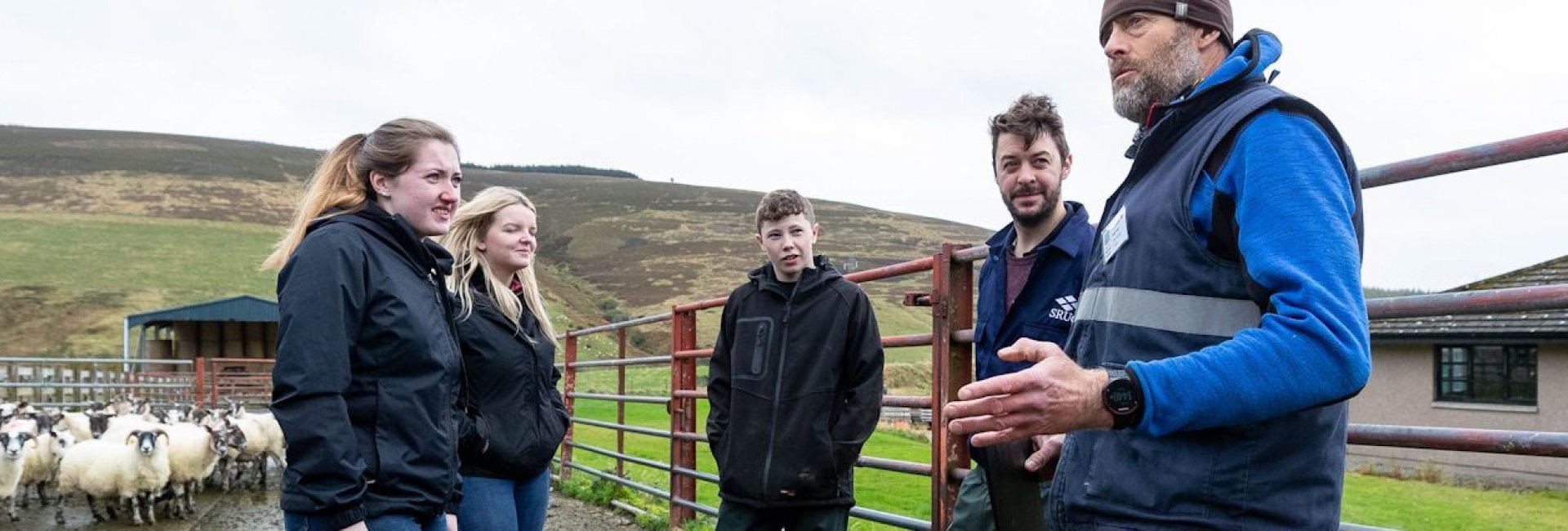
Overall, this programme will adopt an approach to learning and teaching that is multi-varied and blended. It will comprise a mixture of digitally enhanced didactic, active and experiential classroom, small-group and hands-on teaching that is supported by directed online learning. It will capitalise on Aberdeen and SRUC partnerships and professional links to enable exposure to and engagement in authentic veterinary practice from year one. It will integrate problem-based and project-based learning to develop professional competencies. It will operate a distributed model for final year learning, promoting graduate resilience through mentored experience in career settings.
On successful completion of this programme, Graduates entering the workplace will be uniquely positioned through diversity, experience, and education to have resilient and fulfilling careers, increasing engagement with the key societal roles that underpin Scotland’s Natural Economy. Graduates will be able to:
-
Embody the clinical knowledge, skills and values essential to achieve RCVS Day One competences and succeed within the veterinary profession.
-
Evaluate and audit their personal and professional knowledge, skills and values to design development plans regarding life-long learning, personal improvement and a career pathway that may encompass the full breadth of veterinary careers.
-
Integrate the various and situationally relevant contexts (e.g., legislative, animal welfare, health & safety, political, inclusivity, emotional, environmental, economic, public health etc.) in the enactment of duties, adapting their professional approach as required and in accordance with the RCVS Code of Professional Conduct.
-
Diagnose deviations from normal function on an individual animal and population basis to justify appropriate therapeutic regimens and preventative plans.
-
Display agility, empathy and confidence in the application of their veterinary skillsets to achieve successful and resilient careers in support of the natural economy.
-
Effectively participate within inter-professional teams and be able to appraise, communicate, and lead within and beyond these veterinary teams and with clients to ensure optimal empathetic and concise advocacy of evidence-based, best-practice.
-
Enact veterinary practice within current and emerging digital environments, anticipating and adapting to advancements in technology.
-
Evaluate relevant evidence (studies, data and design) and integrate applicable findings and processes into their practice and contextualise this within the wider veterinary science field.
Currently SRUC can only consider applications from Home (Scottish and Rest of UK) and Republic of Ireland applicants for this programme..
Modules
Course Modules
Vertical themes running through first 4 years are Essentials of Professional and Clinical Practice, and Public Health, Food Safety and Animal Welfare.
Year 1&2 features Animal Systems and Husbandry, and the Veterinary Biology course which will be taught in a systems based approach.
Years 3&4 feature Sustainable Animal Production, and the Veterinary Clinical Medicine & Surgery course which will again be delivered in a systems approach.
Additional details can be found on the website
Assessment method
There are varied assessment types throughout the programme, involving both formative and summative components which should support different styles of learners. Assessment types include Portfolio submissions (essays, reports, reflections), MCQ, EMQ, SAQ, Essays, Individual and Group Presentations, Posters, Industry and Enterprise Reports, Observable Structured Clinical Exams (OSCES), Spot tests, Online Assessments.
Professional bodies
Professionally accredited courses provide industry-wide recognition of the quality of your qualification.
- Veterinary Surgeons, Royal College of